Disclosure: This post contains affiliate links and I will be compensated if you make a purchase after clicking through my links. Learn More
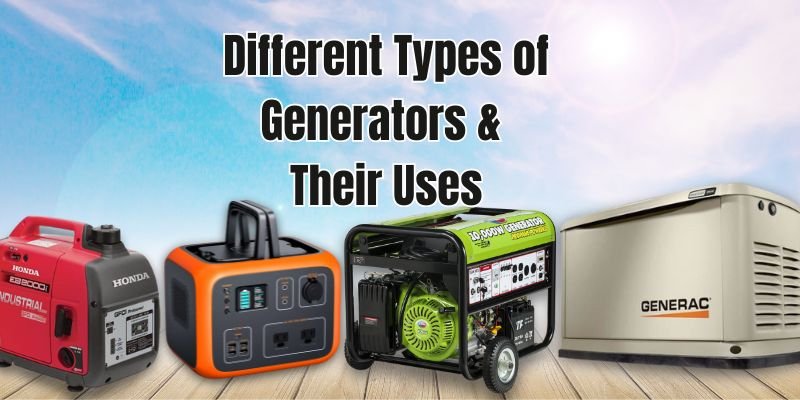
A 3000 watt generator will run only small welders, and even then, performance will be limited. Most stick, MIG, and TIG welders need more power, especially on higher settings. Carefully check your welder’s specs before using a 3000W generator.
Can A 3000 Watt Generator Really Run A Welder?
Many people want portable power for welding in places without electricity. Maybe you need to repair a fence, fix farm equipment, or work on a remote job site. A 3000 watt generator seems convenient, but the real question is: is 3000W enough for welding? The answer depends on your welder, the type of welding you do, and how much power your machine draws.
If you’re hoping to run a powerful welder or work long hours, a 3000 watt generator is likely too small. Yet, for light-duty work and some small welders, it might work. This article explains the details, shows you what really matters, and helps you decide if a 3000W generator fits your welding needs.
Understanding Generator Wattage And Welder Requirements
Wattage isn’t just a number on a sticker. It decides what tools you can run—and for how long. Wattage equals volts times amps. For a generator, wattage tells you its power output. For welders, it shows how much power they consume.
Most welders list their input requirements in amps and volts. To see if your 3000W generator is up to the task, check these numbers:
- Input voltage (usually 120V or 240V)
- Input current (amps)
- Duty cycle (how long you can weld before the machine overheats)
Multiply amps by volts to get watts. For example, a 120V welder drawing 20 amps uses 2,400 watts. But remember: starting a welder often needs more power than steady running. This is called “surge” or “starting” watts.
Example Calculation
Suppose your welder needs 120V and 20A.
120v × 20a = 2,400 Watts
That fits within 3,000 watts. But if your welder surges to 28A for a moment, you need:
120v × 28a = 3,360 Watts
Suddenly, a 3,000W generator isn’t enough—even for a second.

Credit: uk.jackery.com
Types Of Welders And Their Power Needs
Not all welders are the same. The power you need depends on your welding process and the material thickness.
1. Stick (smaw) Welders
Stick welders are tough and simple. They draw more current, especially on high settings. Many 120V stick welders (up to 140A) will run on a 3,000W generator—if you keep the amperage low. Thicker rods and higher amps need much more power. Many industrial stick welders need 5,000W or more.
Key point: Small stick welders (up to 90A, 120V) can run on 3,000W. Higher amps or 240V models need bigger generators.
2. Mig Welders
MIG (GMAW) welders use a wire feed and shielding gas. They’re popular for auto repair and light fabrication. Entry-level MIG welders (using 120V, up to 90A) may work with 3,000 watts. Welders above 120V or 100A usually need more.
Key point: Only low-amp, 120V MIG welders are safe on a 3,000W generator.
3. Tig Welders
TIG (GTAW) welders are precise but need stable power. They often require more wattage because of their electronics. Most portable TIG welders (120V, 10-80A) may run at low settings, but you risk tripping the generator at higher amps or during start-up.
Key point: Small, low-amp TIG welders may work, but stability and power quality matter.
4. Plasma Cutters
Plasma cutters use a lot of power quickly. Even small units may need over 3,000W. Most 3,000W generators can’t handle plasma cutting.
Real-world Examples: What Welders Work With 3000w?
Let’s look at some real machines and their power draw.
- Hobart Handler 140 MIG: 120V, max 20A input. Needs 2,400 watts. Can run on 3,000W, but only at lower settings.
- Lincoln Stick Welder K1170: 225A, 230V, 50A input. Needs 11,500 watts. Not possible on 3,000W.
- Forney Easy Weld 100ST Stick: 120V, 20A input. Needs 2,400 watts. Suitable for 3,000W.
- Miller Maxstar 150 TIG/Stick: 120/240V, 16A at 120V. Needs 1,920 watts. Works on 3,000W, but only at 120V.
Expert tip: Always check your welder’s manual for input requirements, not just the max output amps.
What Limits A 3000 Watt Generator?
Three main things hold you back with a 3,000 watt generator:
- Starting (Surge) Watts: Welders draw more current for a split second when you strike an arc. If your generator can’t handle this, it will shut down or trip the breaker.
- Continuous Output: Running a welder at max settings for long periods pushes the generator hard. Most 3,000W generators are not built for heavy, continuous loads.
- Power Quality: Welders need stable, clean electricity. Cheap generators may produce voltage spikes or “dirty” power. This can damage sensitive welders, especially inverter types.
Inverter Vs. Transformer Welders
Welders come in two main power designs: inverter and transformer.
- Inverter welders use electronics to control power. They are lighter, more efficient, and use less power at the plug. Most small inverter welders can run on less than 3,000W—if you keep the amps low.
- Transformer welders are heavier and less efficient. They usually need more power and are not a good match for small generators.
Pro insight: If you must weld with a small generator, choose an inverter welder. They are more forgiving on limited power.
How To Check If Your Welder Will Work
Don’t guess. Use these steps:
- Read the welder manual. Find “input power” or “input current.”
- Look at the generator’s nameplate. Find “running watts” and “surge watts.”
- Calculate watts needed: Volts × Amps.
- Add 25% for surge. If your welder needs 2,400W, budget at least 3,000W.
- Check duty cycle. If you weld at high amps for long stretches, you need more power.
If you’re close to the limit, your welder may still work—but you risk tripping the generator, damaging equipment, or getting bad welds.
Table: Common Welder Power Needs Vs. 3000w Generator
Here’s a quick comparison for popular welder types:
| Welder Type | Input Voltage | Input Amps | Total Watts Needed | 3,000W Generator OK? |
|---|---|---|---|---|
| Small Stick (Inverter) | 120V | 20A | 2,400W | Yes (Low Amps) |
| Medium Stick (Transformer) | 240V | 30A | 7,200W | No |
| Small MIG | 120V | 20A | 2,400W | Yes |
| Large MIG | 240V | 25A | 6,000W | No |
| Small TIG | 120V | 16A | 1,920W | Yes |
| Plasma Cutter | 120V | 30A | 3,600W | No |
Credit: generatorist.com
Practical Tips For Using A 3000w Generator With Welders
If you need to weld with a 3,000 watt generator, use every trick to make it work safely:
- Use the lowest possible amperage. Smaller rods (for stick) and thinner wire (for MIG) keep power draw down.
- Avoid extension cords. Long cords cause voltage drop, making it harder for your welder to run.
- Weld in short bursts. Let the generator cool down between welds.
- Monitor voltage. Some generators have gauges. If voltage drops, your welds will suffer.
- Don’t run other tools at the same time. The generator can only handle so much.
- Use a high-quality inverter generator. These provide stable, “clean” power, which helps sensitive electronics in modern welders.
The Risks Of Running A Welder On A Small Generator
Running close to your generator’s limit brings problems:
- Frequent tripping or shutdowns: The generator may overload and stop, interrupting your work.
- Poor weld quality: Low voltage causes weak, ugly welds. You might see spatter, porosity, or bad penetration.
- Damage to tools: Unstable power can hurt your welder or even void its warranty.
- Generator wear: Constant high loads shorten the generator’s life.
Non-obvious insight: Even if your generator seems to run your welder, it may produce “dirty” power that you can’t see. This can slowly damage sensitive inverter welders over time.
How To Choose The Right Generator For Welding
If you want reliable welding away from mains power, size your generator carefully. Here’s what matters:
- Wattage: Start with the welder’s max input. Add 25–30% for surge. Always round up.
- Power quality: Look for inverter generators or models labeled as “clean power” (less than 5% total harmonic distortion, or THD).
- Fuel type: Gasoline is common, but propane and diesel options exist. Fuel type affects run time and cost.
- Portability: Lightweight units are easier to move, but may not have enough power for big welders.
- Noise level: Quiet generators are better for residential or indoor work.
- Duty cycle: Welders used for long periods need more power and a generator built for heavy loads.
Table: Generator Size Vs. Welder Output
This chart shows typical generator wattages needed for different welder outputs:
| Welder Output (Amps) | Input Voltage | Generator Size Needed |
|---|---|---|
| 90A | 120V | 3,000W |
| 140A | 120V | 3,500–4,000W |
| 180A | 240V | 6,000–7,000W |
| 225A | 240V | 10,000W+ |
Expert tip: Never size your generator for “just enough.” Go at least 30% higher than your welder’s stated input to avoid trouble.
Signs Your Generator Is Too Small
Watch for these warning signs:
- Welder struggles to start: The arc won’t strike, or the machine resets.
- Breaker trips on generator: You lose power during welding.
- Loud generator noise: The generator strains or bogs down when you start welding.
- Dim or flickering lights: If you have a work light on the same generator, it dims when you weld.
If you see any of these, stop and rethink your setup before you damage equipment.
Alternatives To A 3000 Watt Generator For Welding
If you find 3,000 watts isn’t enough, consider these options:
- Use a larger generator: 5,000–7,000 watts covers most portable welding needs.
- Rent a welder/generator combo: These are made for field welding and provide plenty of clean power.
- Weld at lower settings: For thin metal, you can use less amperage, but this limits your work.
- Use battery-powered welders: New cordless welders are available, but they’re limited to small jobs.
What About Dual-voltage Welders?
Some welders work on both 120V and 240V. On 120V, they use less power but deliver lower maximum amperage. On 240V, they offer more power but need a bigger generator.
If you have a dual-voltage welder, you can use it on a 3,000W generator—just stick to 120V input and lower amps.
Pro insight: Running on 120V limits your thickness and weld quality. If you need more power, upgrade your generator or use 240V from the grid.
The Role Of Duty Cycle
The duty cycle shows how long you can weld before the machine needs to cool down. For example, a 20% duty cycle at 90A means you can weld for 2 minutes out of every 10.
Small generators can overheat if you push the duty cycle, especially on hot days. Always give both your welder and generator time to rest.
Fuel Consumption And Run Time
A 3,000 watt generator running a welder will use a lot of fuel. Most small generators burn 0. 5–1 gallon per hour at full load. If you weld for a few hours, you’ll need extra gas.
Non-obvious insight: Running a generator at full load for long periods is less efficient than running a larger generator at partial load.
Safety Precautions When Welding With A Small Generator
Safety matters. Here’s what to do:
- Ground your generator and welder: Prevent electric shock and fire.
- Keep the generator outside: Never run it indoors. Carbon monoxide is deadly.
- Let the generator cool before refueling: Hot engines can ignite gasoline.
- Check cords and plugs: Damaged wires can cause shorts and fires.
- Use a surge protector: Protects your welder from power spikes.
How To Improve Performance With Limited Power
You can get better results, even on a small generator:
- Use high-quality rods or wire: Cheap consumables make poor welds worse.
- Set the welder to the lowest usable amps: More power means more heat, but only use what you need.
- Keep cables short and connections tight: Prevent voltage drop.
- Weld in short passes: Avoid overheating the machine and generator.
Table: Welders That Can Run On A 3000w Generator
Here are some real models that work with a 3,000 watt generator (check latest specs before buying):
| Welder Brand/Model | Process | Max Input (Volts/Amps) | Wattage Needed |
|---|---|---|---|
| Forney Easy Weld 100 ST | Stick | 120V/20A | 2,400W |
| Hobart Handler 140 | MIG | 120V/20A | 2,400W |
| Lincoln Electric K2185-1 | MIG | 115V/20A | 2,300W |
| Miller Maxstar 161 | TIG/Stick | 120V/15A | 1,800W |
What Beginners Often Overlook
- Startup surge is higher than running watts: If you only look at “running watts,” you’ll miss the power spike needed to start the arc.
- Generator quality matters: Cheap generators can damage welders, even if the wattage matches.
- Duty cycle is critical: Many users try to weld continuously and overheat both welder and generator.
- Voltage drop from long cords: Every foot of extension cord reduces voltage and can cause poor welds or machine shutdown.
Expert Guidance: When Is 3,000 Watts Enough?
If you only do light repairs, work with thin metals, and use a small inverter welder, a 3,000 watt generator can get the job done. If you need to weld thicker steel, use high amps, or run a 240V welder, you need more power.
Confident advice: For most professionals or serious DIYers, a 5,000–7,000 watt generator is the smart choice. You’ll have fewer headaches and better welds.
Where To Learn More
For official data on generator sizing and welding machine requirements, check resources like the Welding Power Supply Wikipedia page. This gives you detailed background and industry standards.
Credit: tomahawk-power.com
Final Thoughts
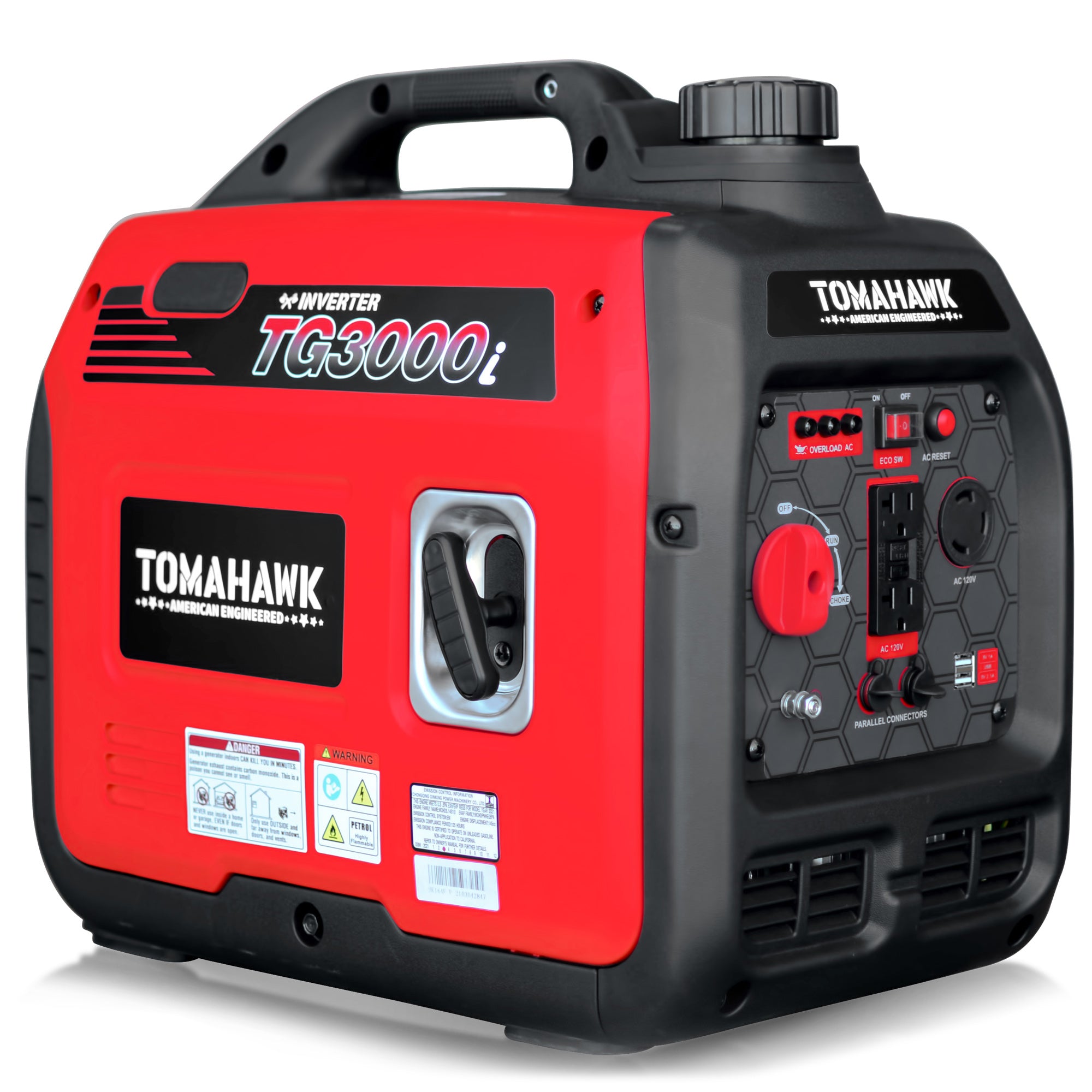
A 3,000 watt generator can run only certain small welders, usually at low settings. If you stick to inverter welders and keep your power draw low, you’ll get by for light jobs. But for serious welding, a bigger generator is worth every penny.
Always check your welder’s manual, calculate total power needs, and leave room for surge. Cutting corners on power leads to frustration, poor welds, and damaged gear. Invest wisely, and your work will show the difference.
Frequently Asked Questions
Can I Use A 3000 Watt Generator For A 140 Amp Welder?
No, most 140 amp welders need more than 3,000 watts, especially at high settings. You might run the welder at low output, but you risk tripping the generator or poor weld quality. Always check your welder’s input specs first.
What Happens If My Generator Is Too Small For My Welder?
If your generator is too small, you’ll get frequent shutdowns, poor welds, and possible damage to your welder or generator. Low power leads to unstable arcs and can shorten the life of your equipment. Upgrade to a bigger generator for reliable performance.
Is Inverter Or Transformer Welder Better For Small Generators?
An inverter welder is much better for small generators. Inverter welders use less power, are more efficient, and handle limited generator wattage better. Transformer welders need more power and are less suitable for portable setups.
Can I Weld Thick Metal With A 3,000 Watt Generator?
Welding thick metal usually needs high amps, which draws more than 3,000 watts. With a small generator, you’re limited to thin sheet metal and light repair work. For thick materials, upgrade to a larger generator and welder.
How Can I Improve Welding Performance With A Small Generator?
Keep amperage low, use short cables, weld in short bursts, and don’t run other tools at the same time. Choose an inverter welder for better efficiency. Always check for stable voltage and avoid overloading your generator. This improves results and protects your gear.