Disclosure: This post contains affiliate links and I will be compensated if you make a purchase after clicking through my links. Learn More
Welding stainless steel railings is a common task in construction, architecture, and interior design. Railings made from stainless steel are strong, rust-resistant, and have a smooth finish. These qualities make them popular for homes, offices, shopping malls, and public spaces.
But to get the best result, you need to choose the right welding process. Making the wrong choice can lead to weak joints, unsightly marks, and even costly repairs. This article explains the best welding process for stainless steel railings, compares different methods, and gives guidance for beginners and professionals.
Why Stainless Steel Railings Need Special Welding Care
Stainless steel is different from regular steel. It contains chromium, nickel, and other elements that help it resist corrosion and keep a bright finish. But these elements also make welding more challenging.
Key reasons welding stainless steel railings needs care:
- Stainless steel can warp or distort with too much heat.
- Heat can cause discoloration or “heat tint” near the weld.
- The wrong welding method can reduce corrosion resistance.
- Joints must be strong and smooth for both safety and appearance.
If you do not use the correct welding process, the railing may look rough, rust faster, or even fail under pressure.
Main Welding Processes For Stainless Steel Railings
There are several ways to weld stainless steel, but not all are good for railings. The main welding processes are:
- TIG Welding (GTAW)
- MIG Welding (GMAW)
- Stick Welding (SMAW)
- Spot Welding
- Flux-Cored Arc Welding (FCAW)
- Laser Welding
- Plasma Arc Welding
Each process works differently and gives different results. Let’s look at each method in detail, so you can decide which is best for your project.
Tig Welding (gtaw): The Top Choice
TIG welding, also called Gas Tungsten Arc Welding (GTAW), is often the best process for stainless steel railings. It uses a non-consumable tungsten electrode and an inert gas (usually argon) to protect the weld area.
Why TIG welding is preferred for stainless steel railings:
- Gives very clean, neat welds with no spatter.
- Allows full control over heat and filler material.
- Produces strong, corrosion-resistant joints.
- Leaves a smooth finish, which is important for visible railings.
TIG welding is slower than some other methods, but it gives the best appearance and strength for railings, especially on thin or decorative parts.
Example: A luxury hotel lobby uses stainless steel railings with mirror finishes. TIG welding ensures no visible marks or discoloration, keeping the look perfect.
Common mistake: Beginners often move the torch too fast or use too little shielding gas, causing oxidation or rough welds.
Mig Welding (gmaw): Faster And Easier
MIG welding, or Gas Metal Arc Welding (GMAW), uses a wire electrode fed through a gun and a shielding gas to protect the weld. It is faster than TIG and easier for beginners.
Benefits for stainless steel railings:
- Good for long, straight joints (like on handrails).
- Faster than TIG, can be more cost-effective for big projects.
- Easier to learn and operate.
Limitations:
- Welds are not as smooth as TIG; may need more grinding or polishing.
- More spatter, which can mark the surface.
- Less control over heat, which can cause warping or burn-through on thin sections.
Example: A commercial stair railing in a shopping mall uses MIG welding for its long, straight sections. Workers finish with grinding and polishing to hide the welds.
Key insight: Use pulse MIG welding to get better control over heat and reduce spatter on stainless steel.
Stick Welding (smaw): Simple But Less Common
Stick welding, or Shielded Metal Arc Welding (SMAW), is a basic method using a flux-coated rod. It works well outdoors and does not need a shielding gas cylinder.
Pros:
- Good for outdoor or repair work.
- Equipment is cheap and portable.
Cons:
- Welds are rough and need a lot of finishing.
- Hard to use on thin or delicate railings.
- More chance of slag inclusion and defects.
Example: Stick welding repairs a broken section of a stainless steel railing on a construction site.
Common mistake: Using too high a current can burn through thin stainless steel, making the joint weak.
Spot Welding: For Thin Sections
Spot welding joins metal sheets together by pressing them between two electrodes and passing a current through the spot. It is fast and clean but works only for thin materials.
When it works well:
- Good for attaching stainless steel sheet panels to rail frames.
- Almost invisible welds, no filler material needed.
Limits:
- Not suitable for thick or structural parts.
- Needs expensive spot welding machines.
Example: Elevator handrails made from thin stainless steel sheets are often assembled with spot welding.
Key insight: Spot welding is best for factory work, not for onsite repairs or custom installations.
Flux-cored Arc Welding (fcaw): High Productivity
Flux-cored arc welding is similar to MIG, but the wire has a flux core that creates shielding gas. Some FCAW wires work without extra gas (self-shielded), but for stainless steel, gas-shielded wires are preferred.
Benefits:
- High deposition rate, good for thick sections.
- Useful where wind may blow away shielding gas.
Drawbacks:
- Creates more spatter and slag than TIG or MIG.
- Welds need cleaning and polishing.
- Not common for decorative railings.
Example: Industrial staircases with thick stainless steel supports might use FCAW for fast assembly.
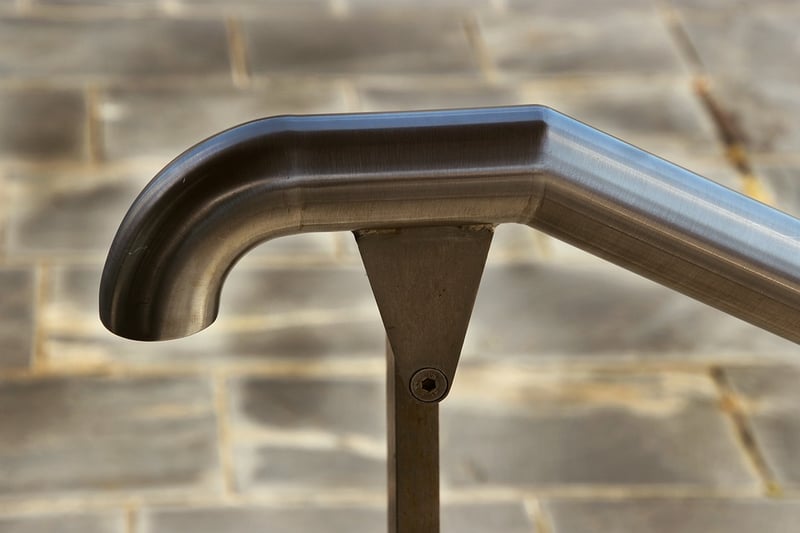
Laser Welding: High-tech, Precise, Expensive
Laser welding uses a focused laser beam to melt and join stainless steel. It is very precise and fast but needs special, costly equipment.
Advantages:
- Very clean, narrow welds with little heat input.
- Minimum distortion, good for thin parts.
Disadvantages:
- Expensive machines and setup.
- Not practical for small jobs or field work.
Example: Medical equipment railings are often laser welded for perfect finish and hygiene.
Key insight: Laser welding is best for factory mass production, not for onsite railing installation.
Credit: blog.glwengineering.co.uk
Plasma Arc Welding: Similar To Tig, More Powerful
Plasma arc welding is similar to TIG but uses a smaller, hotter plasma arc. It gives deep, narrow welds.
Pros:
- Good for automated production.
- Fast on thin stainless steel.
Cons:
- Equipment is expensive and complex.
- Not needed for most railing work.
Example: High-end factory railings with many identical joints may use plasma welding.
Comparison Of Welding Processes For Stainless Steel Railings
To help you see the main differences, here is a comparison of the most used processes:
| Process | Best For | Weld Quality | Speed | Finish | Cost | Skill Needed |
|---|---|---|---|---|---|---|
| TIG (GTAW) | Decorative, thin railings | Excellent | Slow | Smooth | Medium-High | High |
| MIG (GMAW) | Long, straight joints | Good | Fast | Needs finishing | Medium | Medium |
| Stick (SMAW) | Outdoor repairs | Fair | Medium | Rough | Low | Low |
| Spot Welding | Sheet to frame | Good | Very fast | Invisible | High | High |
| FCAW | Thick, outdoor railings | Good | Very fast | Needs cleaning | Medium | Medium |
| Laser | Factory, precision work | Excellent | Very fast | Perfect | Very high | High |
| Plasma | Automated, thin railings | Excellent | Fast | Good | Very high | High |
Key Factors For Choosing The Best Welding Process
Not every railing project is the same. You should consider these factors before choosing a welding process:
Thickness Of Material
Thin stainless steel (1-3 mm) is common for handrails and decorative railings. TIG welding gives the best results for thin sections. MIG can work, but may cause burn-through if not set correctly.
For thick posts or heavy-duty railings, MIG or FCAW may be faster.
Appearance And Finish
Visible railings in public or luxury spaces need a smooth, mirror finish. TIG welding is best because it leaves clean beads and little to no discoloration.
If the railing will be painted or covered, MIG or stick welding may be enough.
Location: Shop Or Field
Welding in a controlled workshop allows for TIG, laser, or plasma. Field work may need portable MIG or stick welding equipment.
Outdoor work is better with stick or FCAW, since wind can blow away shielding gas used in TIG and MIG.
Budget And Equipment
TIG and laser welding need more expensive machines and skilled welders. MIG is cheaper and faster for long runs. Stick welding is most affordable but gives rough results.
Skill Level
TIG welding needs a steady hand and practice. MIG is easier to learn and use. Stick welding is very simple but harder to make clean welds on stainless steel.
Production Volume
For one-off or custom railings, TIG or MIG are common. For mass production, laser, spot, or plasma welding save time and labor.
Practical Tips For Welding Stainless Steel Railings
Welding stainless steel well is not just about picking the right process. You need good technique and preparation.
1. Clean the metal before welding. Stainless steel must be free of oil, dirt, and rust. Use a stainless steel brush and acetone. This prevents contamination.
2. Use the right filler material. Match the filler rod or wire to the stainless steel grade (like 304 or 316). Using the wrong filler can cause weak joints or rust.
3. Control the heat. Too much heat causes warping and discoloration. Use low amperage, move steadily, and avoid lingering in one spot.
4. Shield the weld well. Use enough argon or mix gas for TIG and MIG. If the shielding is weak, the weld will oxidize and lose its shine.
5. Back-purge for best results. For tube or pipe railings, fill the inside with argon gas during welding. This protects the inner surface from oxidation.
6. Remove heat tint after welding. Use pickling paste, polishing, or brushing to remove the colored oxide layer. This restores corrosion resistance.
7. Test the welds. For safety, especially on railings, test the weld strength by bending or pulling samples.
Non-obvious insight: Many beginners forget to keep tools and brushes separate for stainless steel. Using tools that touched carbon steel can transfer particles and cause rust spots.

Credit: www.youtube.com
Welding Defects To Watch Out For
Even with the best process, defects can happen. Here are common problems and how to avoid them:
- Porosity: Small holes caused by poor shielding or dirty metal. Always clean well and check gas flow.
- Cracking: Can happen if the weld cools too fast or if you use the wrong filler metal.
- Distortion: Railings can twist or bend if overheated. Clamp the parts, use low heat, and weld in short sections.
- Undercut: A groove along the weld toe. Move the torch correctly and do not use too high current.
Example: A railing in a busy office building had surface rust just months after installation. The problem? Welders used carbon steel brushes on the stainless joints, causing contamination.
Case Study: Tig Vs Mig For Balcony Railings
Imagine you need to install stainless steel balcony railings for a high-rise apartment. The architect wants a smooth, shiny finish. The contractor wants a method that saves time and money.
TIG welding gives the best appearance. Welds are almost invisible and need little finishing. But it is slow. Each 1-meter joint can take 12-15 minutes.
MIG welding is faster, taking about 5 minutes per meter. But the welds need grinding and polishing to match the TIG finish. If labor is cheap and speed matters, MIG might win. If quality is most important, TIG is better.
Key learning: Choose TIG for high-visibility projects where finish matters most. Choose MIG for speed on projects with less need for a perfect look.
Real-world Data: Welding Speed And Cost
The following table shows average welding speed and cost per meter for each process, based on typical railing projects:
| Process | Speed (m/hr) | Labor Cost (USD/m) | Finishing Required |
|---|---|---|---|
| TIG | 4 | 12-18 | Minimal |
| MIG | 10 | 7-10 | Some |
| Stick | 6 | 6-9 | Major |
| Spot | 50+ | 5-7 | Minimal |
Note: These numbers can change based on location, worker skill, and project size.
Common Mistakes When Welding Stainless Steel Railings
1. Using the wrong filler metal. Always match the filler to the base metal grade.
2. Overheating the metal. Causes warping, color change, and loss of strength.
3. Not cleaning after welding. Heat tint and slag can reduce corrosion resistance.
4. Using carbon steel tools. Always use brushes and clamps made for stainless only.
5. Ignoring joint preparation. Poor fit-up leads to weak, ugly welds.
Example: On a hotel staircase, welders used a carbon steel grinder for finishing. Rust stains appeared within weeks, causing complaints and costly repairs.
Post-weld Treatment For Stainless Steel Railings
After welding, you must treat the surface for maximum corrosion resistance and appearance.
- Pickling: Uses acid paste to remove heat tint and restore the chromium layer.
- Passivation: Further cleans the surface and boosts corrosion resistance.
- Polishing: Makes the welds blend into the rest of the railing. Use only stainless steel polishing tools.
Skipping these steps leaves the railing open to rust and stains.
Which Welding Process Is Best For Stainless Steel Railings?
Based on all the factors, TIG welding is the best all-around process for stainless steel railings, especially for visible, decorative, or thin parts. It gives strong, clean welds with little need for grinding or polishing.
MIG welding is a good alternative for speed and long joints, but needs more finishing work to match TIG quality.
Stick welding and FCAW are suitable for rough, outdoor, or repair work, but not for high-end appearance.
Laser, plasma, and spot welding are best for factory production, not for field or custom work.
Non-obvious insight: For safety railings in public spaces, always ask for test certificates for both the stainless steel and the welds to ensure they meet safety standards.
For more technical details, you can visit the Welding of Stainless Steel page on Wikipedia.

Credit: www.thefabricator.com
Frequently Asked Questions
What Grade Of Stainless Steel Is Best For Railings?
304 is the most common grade for indoor railings. 316 is better for outdoor or marine use because it resists salt and chemicals. Always match the filler metal to the base grade.
Can You Weld Stainless Steel Without Gas?
No, you need shielding gas for TIG and MIG to protect the weld. Stick welding does not need gas, but gives rough welds. For best results, always use shielding gas.
How Do You Prevent Discoloration When Welding Stainless Steel?
Use proper shielding gas, control the heat, and move steadily. After welding, remove heat tint with pickling paste or polishing.
How Strong Is A Tig-welded Stainless Steel Railing?
TIG welds are as strong as the base metal if done well. They can handle heavy loads and meet building codes for safety.
What Safety Gear Do You Need For Welding Stainless Steel?
Use a welding helmet with the right shade, gloves, long sleeves, and good ventilation. Stainless steel welding creates harmful fumes, so use an exhaust fan or respirator.
—
Welding stainless steel railings needs the right process, good technique, and proper finishing. TIG welding stands out for its clean finish and strong joints, making it the top choice for most visible and high-quality projects. Choose the process that fits your needs, prepare carefully, and always focus on safety and corrosion resistance for railings that last for years.