Disclosure: This post contains affiliate links and I will be compensated if you make a purchase after clicking through my links. Learn More
People often ask which welding method is best for trailer repair. This question matters because trailers face stress, vibration, and weather. A weak weld can lead to failure, accidents, and expensive repairs. Choosing the right welding method makes a big difference in safety, cost, and how long the repair lasts.
Every trailer is different. Some are made from steel, others from aluminum. Some parts are thick, and some are thin. This means that no single welding process works for all trailer repairs. The best method depends on the material, the damaged area, the tools, and the welder’s skill.
In this article, you will learn about the most common welding methods for trailer repair, their advantages and limits, and when each one works best. You will also see comparisons, practical tips, and common mistakes to avoid. The goal is to help you choose the most reliable and cost-effective welding method for your trailer repair work.
Why Welding Method Matters For Trailer Repair
Trailers carry heavy loads. They face constant road vibration, bumps, weather, and sometimes rust. These stresses test every part of a trailer, especially the joints and frames. If a weld fails, a trailer can break or cause an accident. This is why using the right welding process is not just about saving time or money—it is about safety and reliability.
Different welding methods create different types of welds. Some are strong but need more skill. Others are easy to use but not as strong. The wrong choice can leave weak spots or cracks. Sometimes, people use the fastest method, but the weld does not last.
Experienced repair shops know that matching the welding process to the trailer’s material and damage is key.
Common Materials In Trailers
Most trailers use steel or aluminum. Each material needs different welding methods and filler metals.
- Steel: Most utility, cargo, and boat trailers use mild steel. Some heavy trailers use high-strength steel. Steel is strong and affordable, but it rusts.
- Aluminum: Some trailers use aluminum to save weight and prevent rust. Aluminum is light and resists corrosion, but it is softer and needs special welding methods.
- Galvanized steel: This is steel with a zinc coating to prevent rust. Welding burns off the zinc, so repairs need special care.
Knowing the trailer’s material helps you choose the right welding process, filler, and safety steps.
Overview Of Main Welding Methods For Trailer Repair
Many welding processes exist, but only a few are common for trailer repairs. Here are the main methods:
- Shielded Metal Arc Welding (SMAW or Stick Welding)
- Gas Metal Arc Welding (GMAW or MIG Welding)
- Gas Tungsten Arc Welding (GTAW or TIG Welding)
- Flux-Cored Arc Welding (FCAW)
- Oxy-Acetylene Welding (OAW)
Each method has its own pros and cons. The next sections will explain each process in detail, compare them, and help you pick the best one.
Stick Welding (smaw)
Stick welding, also called Shielded Metal Arc Welding (SMAW), is one of the oldest and most used welding methods for trailer repair. It works by using a metal rod (electrode) covered in flux. As the rod melts, the flux makes a gas cloud that protects the weld.
Advantages
- Works outdoors: Wind or rain do not affect the weld much.
- Good for rusty or dirty metal: The flux helps clean the metal during welding.
- Strong welds: Stick welding makes deep, strong welds in thick steel.
- Low cost: The machines are simple and cheap.
Limits
- Not for thin metal: It can burn holes in thin trailer panels.
- Not good for aluminum: Stick welding does not work well on most aluminum trailers.
- Slag cleaning: Each weld makes a layer of slag that you must chip off.
When To Use Stick Welding
Stick welding is best for:
- Repairing trailer frames made from thick steel.
- Outdoor repairs where wind would blow shielding gas away.
- Repairing old or rusty trailers where cleaning is hard.
Many mobile repair shops use stick welding because it is reliable and does not need bottled gas. But for thin panels or aluminum parts, another process is better.
Mig Welding (gmaw)
Gas Metal Arc Welding (GMAW), also known as MIG welding, uses a wire fed through a gun. A shielding gas protects the weld from air. MIG stands for “Metal Inert Gas”.
Advantages
- Fast and easy: MIG welding is quick and easy to learn. Many beginners pick it up fast.
- Clean welds: The welds have little slag, so less cleaning.
- Works on thin metal: You can adjust settings for thin trailer walls or fenders.
- Good for steel and aluminum: With the right wire and gas, MIG can weld both.
Limits
- Wind sensitive: The shielding gas can blow away in outdoor repairs.
- Metal must be clean: Rust, paint, or oil can cause weak welds.
- Needs a power source and gas: You need electricity and a gas bottle.
When To Use Mig Welding
MIG welding is best for:
- Shop repairs where you can control wind and clean the parts.
- Thin metal repairs like trailer floors, walls, or fenders.
- Aluminum trailers (with a spool gun and the right setup).
MIG welding is popular in trailer shops because of its speed and neat welds. For field repairs, stick or flux-cored welding might be better.
Tig Welding (gtaw)
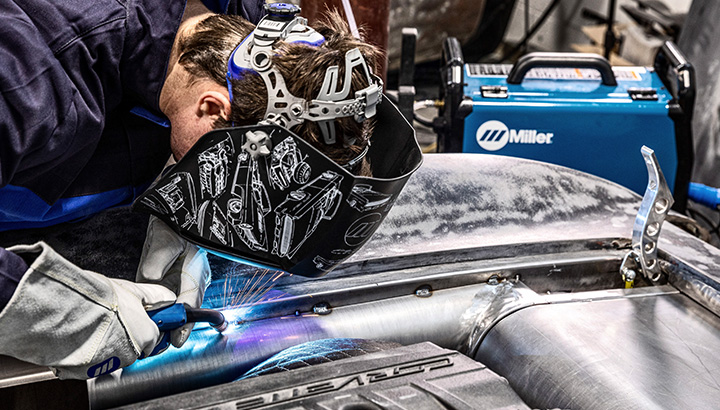
Gas Tungsten Arc Welding (GTAW), or TIG welding, uses a tungsten electrode and a separate filler rod. It uses shielding gas (often argon) to protect the weld.
Advantages
- Very precise: TIG gives full control over the weld bead.
- Best for aluminum: TIG makes the strongest, cleanest welds on aluminum.
- Good for thin or tricky parts: You can weld thin panels or small parts without burning through.
- Clean finish: No spatter or slag.
Limits
- Slow: TIG welding takes more time than other methods.
- Needs clean metal: Dirt or rust will ruin the weld.
- High skill: TIG is harder to learn and takes practice.
- Needs a stable workspace: Not good for quick field repairs.
When To Use Tig Welding
TIG welding works best for:
- High-quality aluminum repairs (like horse trailers or custom builds).
- Thin or detailed work where neatness matters.
- Repairs in a shop (not outdoors or on the road).
TIG is the top choice for show trailers, visible repairs, and thin aluminum. But it is not practical for quick, rough field repairs.
Credit: www.millerwelds.com
Flux-cored Arc Welding (fcaw)
Flux-Cored Arc Welding (FCAW) is similar to MIG welding, but the wire has flux inside. There are two types: gas-shielded and self-shielded. Self-shielded FCAW does not need an extra gas bottle, which makes it good for outdoor work.
Advantages
- Good for outdoor repairs: Wind does not affect the weld as much as MIG.
- Penetrates rusty or dirty metal: The flux helps clean the weld area.
- Works on thick steel: FCAW gives deep, strong welds.
- Fast: Repairs go quickly.
Limits
- Makes slag: You need to clean off slag after each weld.
- Not for thin aluminum: Not suitable for aluminum trailers.
- Can be messy: More spatter than MIG or TIG.
When To Use Fcaw
FCAW is best for:
- Field repairs on steel trailers.
- Thick frame repairs where strength matters.
- Windy or dirty conditions where gas-shielded methods fail.
Many mobile welders use FCAW for its speed and reliability outside the shop. For thin, clean metal, MIG or TIG is better.
Oxy-acetylene Welding (oaw)
Oxy-Acetylene Welding (OAW) uses a flame from burning oxygen and acetylene gas to melt the metal and filler rod.
Advantages
- No electricity needed: Good for remote repairs.
- Works on steel and aluminum: With the right filler and flux.
- Can cut metal too: The same setup is used for cutting steel.
Limits
- Slow: Not efficient for long welds.
- Low strength on thick parts: Not as strong as arc welding for frames.
- Heats a large area: Can warp thin metal.
When To Use Oaw
Use OAW for:
- Small repairs on steel or aluminum.
- Cutting out damaged sections.
- When no power is available.
OAW is mostly for old trailers or simple repairs. Most trailer shops now use arc welding instead.
Comparing Welding Methods For Trailer Repair
To help you compare the main methods, here is a summary of their strengths and weaknesses for trailer repair:
| Method | Best For | Works On | Portability | Skill Needed | Speed |
|---|---|---|---|---|---|
| Stick Welding | Thick steel, outdoors | Steel | High | Medium | Medium |
| MIG Welding | Thin steel/aluminum, shop | Steel, Aluminum | Low | Low | High |
| TIG Welding | Thin aluminum, high quality | Steel, Aluminum | Low | High | Low |
| FCAW | Thick steel, field repairs | Steel | High | Medium | High |
| OAW | Simple repairs, no power | Steel, Aluminum | Medium | Medium | Low |
Choosing The Right Method For Your Trailer Repair
The best welding method depends on the repair job. Here is how to choose:
1. Identify The Material
- Steel trailers: Stick, MIG, and FCAW all work. For thick frames, stick or FCAW is best. For thin panels, MIG is better.
- Aluminum trailers: Use TIG for the strongest, cleanest welds. MIG works for many jobs, especially with a spool gun. OAW works for small repairs.
- Galvanized steel: Avoid welding if you can, as burning zinc makes toxic fumes. If you must weld, use stick or FCAW and clean the area well.
2. Check The Work Area
- Shop repairs: MIG and TIG are easy to use in a clean, wind-free shop.
- Field repairs: Stick or FCAW work better outdoors or on the road.
3. Look At The Damage
- Cracked frame: Use stick or FCAW for strong welds.
- Broken fender or floor: MIG works best for thin metal.
- Small holes or patching: TIG works for neat, small repairs.
4. Match Your Skill Level
- Beginner: MIG is easiest to learn. Stick is also a good choice for strong repairs.
- Experienced welder: TIG allows the most control and best finish.
5. Consider Equipment And Cost
- Stick welders: Cheap and portable.
- MIG welders: Need a gas bottle and power.
- TIG welders: Expensive and need skill.
- FCAW welders: Simple, especially for field work.
Real-world Examples
Many trailer shops use a mix of methods. For example:
- A steel utility trailer frame cracks. A welder uses stick welding to repair the frame because it gives a strong, deep weld even on rusty metal.
- An aluminum horse trailer has a broken floor panel. The shop uses TIG welding for a clean, strong, and neat repair.
- A mobile repair truck fixes a trailer by the highway. The technician uses flux-cored welding because wind would blow away shielding gas.
- A small farm trailer fender is thin and rusty. MIG welding is used in the shop after cleaning the area.
Key Factors For Strong And Safe Trailer Welds
No matter which method you choose, certain steps make the weld stronger:
- Clean the area well: Remove rust, paint, oil, and dirt.
- Use the right filler metal: Match the filler to the trailer’s material.
- Check the weld size: Make sure the weld is big enough to handle the load.
- Watch for cracks or defects: Bad welds can fail quickly.
- Protect from the weather: Paint or coat the weld to stop rust.
Here is a simple guide to match method, material, and part:
| Trailer Part | Material | Best Method | Reason |
|---|---|---|---|
| Frame | Steel | Stick or FCAW | Strength and deep weld |
| Frame | Aluminum | TIG | Clean, strong weld |
| Floor panel | Steel | MIG | Thin metal, clean weld |
| Fender | Steel or Aluminum | MIG or TIG | Thin, visible part |
| Hinge/Bracket | Steel | Stick | Small, strong weld |
Two Insights Most Beginners Miss
Many new welders overlook these points:
- Weld preparation matters more than the process. Even the strongest weld will fail if the metal is dirty or rusty. Cleaning the area takes time but prevents cracks and weak spots.
- Heat control is key for thin parts. Many beginners burn holes in trailer floors or fenders by using too much heat. Test your settings on scrap metal first and keep the weld moving to avoid burn-through.
Common Mistakes In Trailer Repair Welding
Even experienced welders make errors. Here are frequent problems and how to avoid them:
- Using the wrong process for the metal: For example, using stick welding on thin aluminum leads to weak or cracked welds.
- Skipping cleaning: Welding over rust or paint causes pores and weak joints.
- Welding in the wind with MIG: The gas blows away, and the weld is full of holes.
- Not checking for full penetration: A weld that only sticks to the surface will break under stress.
- Ignoring safety: Welding on galvanized metal creates toxic zinc fumes. Always grind off the coating and work in a ventilated area.
Safety Tips For Trailer Repair Welding
Welding can be dangerous. Always follow these rules:
- Wear a proper helmet with the right shade lens.
- Use gloves and long sleeves to protect your skin.
- Work in a well-ventilated area to avoid fumes, especially with galvanized metal.
- Keep a fire extinguisher nearby.
- Let hot parts cool before touching them.
Choosing Welding Supplies
- Electrodes for stick welding: For trailer frames, use E6011 or E7018 rods.
- Wire for MIG welding: Use solid wire ER70S-6 for steel, ER4043 or ER5356 for aluminum.
- Gas: Use 75% argon/25% CO2 for steel MIG welding, and pure argon for aluminum or TIG.
- Filler rods for TIG: Match the rod to the metal type.
Buy supplies from trusted brands. Cheap wire or rods can cause problems.

Credit: thetrailerpartsoutlet.com
Cost Of Welding Trailer Repairs
The price depends on the method, tools, and how much repair is needed.
- Stick welding: Machines cost less than $300.
- MIG welding: Good machines start at $400, plus a gas bottle.
- TIG welding: Machines often cost $800 or more.
- FCAW: Similar to MIG, but you may not need a gas bottle.
Shop rates for welding repairs range from $60 to $120 per hour in the US. DIY repairs can save money, but poor welds may cost more later.
When To Call A Professional
Some trailer repairs need more than skill—they need experience, special tools, and safety checks. Call a professional if:
- The trailer carries heavy loads or people.
- The frame has major cracks or rust.
- You are not sure what welding method or filler to use.
- You do not have the right tools.
A certified welder can test the welds and make sure the trailer is safe for the road.
Environmental Impact Of Welding Methods
Each welding method produces different fumes and waste. Stick and FCAW welding make more smoke and slag, while TIG and MIG are cleaner. Always collect waste and use fume extraction or a mask if possible. Do not weld on galvanized metal without removing the coating, as it produces toxic fumes.
Latest Trends In Trailer Repair Welding
Welding tools keep improving. New inverter welders are lighter and use less power. Spool guns for MIG welding make aluminum repairs easier. Some shops use robotic welding for new trailer builds, but most repairs are still done by hand.
There is also more interest in using low hydrogen electrodes and advanced shielding gases to make welds stronger and stop rust. If you are buying new equipment, look for features that fit your trailer repair needs.
More Help And Further Reading
If you want to learn more about welding processes, safety, or trailer repair standards, you can read the American Welding Society’s guidelines at AWS.org.
Frequently Asked Questions
What Is The Strongest Welding Method For Trailer Frames?
Stick welding (SMAW) and flux-cored arc welding (FCAW) make the strongest welds on thick steel trailer frames. They give deep penetration and can handle dirty or rusty metal. For aluminum frames, TIG welding makes the strongest weld.
Can I Use Mig Welding For Outdoor Trailer Repairs?
MIG welding is not the best for outdoor repairs because wind can blow away the shielding gas. This can cause weak or porous welds. For outdoor work, use stick or self-shielded flux-cored welding.
What Welding Method Should I Use For Aluminum Trailers?
TIG welding is the best for aluminum trailers because it makes clean, strong welds. MIG welding with a spool gun also works for many jobs. Stick and FCAW are not good for aluminum.
How Do I Avoid Burning Holes In Thin Trailer Panels?
To avoid burning through, use MIG or TIG welding with low heat settings. Move the weld quickly and do not stay in one spot. Test your settings on scrap metal first.
Is It Safe To Weld On Galvanized Trailer Parts?
Welding on galvanized steel creates toxic fumes. Remove the zinc coating before welding and work in a well-ventilated area. Wear a mask and do not breathe the smoke.

Credit: www.arccaptain.com
Final Thoughts
Trailer repair is a serious job. The right welding method depends on the trailer’s material, the repair location, and your tools and skill. Stick and FCAW are best for thick steel frames and outdoor repairs. MIG and TIG are best for thin metal and shop work, with TIG leading for aluminum.
Preparing the metal, using the right filler, and following safety rules matter as much as the welding process. Take your time, check your work, and do not rush. A strong weld keeps trailers safe on the road for years to come.