Disclosure: This post contains affiliate links and I will be compensated if you make a purchase after clicking through my links. Learn More
Welders need a lot of power. Many people use extension cords with welders because the main outlet is far from the workspace. But using the wrong size extension cord is dangerous. It can cause the cord to get hot, damage the welder, or even start a fire.
Choosing the right cord is not always easy. There are numbers, ratings, and safety rules to understand. This article explains exactly what size extension cord is safe for a welder. You will learn how to choose the right cord, what mistakes to avoid, and how to use your welder safely.
Why Extension Cord Size Matters For Welders
Extension cord size means the thickness of the wires inside, called gauge. The lower the gauge number, the thicker the wire. Thicker wires carry more electricity safely. Welders often need a lot of amps (electrical current) to work. If the wire is too thin, it overheats. This can melt the insulation and start a fire. Also, a thin cord causes voltage drop, which makes the welder perform poorly. The machine may not weld well, or may shut off.
Many people think any heavy cord will work. This is a mistake. Even a strong cord can be unsafe if it is not the right size for your welder and the distance you need. Always check the cord’s amp rating and length.
Key Factors For Choosing A Safe Extension Cord
You must check three things to choose the right cord:
- Welder’s Amperage: Find out how many amps your welder uses. This is usually on the machine or in its manual.
- Cord Length: The longer the cord, the thicker it must be. Longer cords lose more voltage.
- Wire Gauge: This is the number that tells you how thick the wires are.
Let’s look at each factor more closely.
1. Welder’s Amperage
Most home welders use between 20 to 50 amps. Small MIG or stick welders might use 20-30 amps. Bigger 240V welders may need 40-50 amps. Always check the label on your welder. Never guess. If you use a cord rated for less amps than your welder, it is not safe.
2. Cord Length
The farther you are from the power source, the more the cord resists the flow of electricity. This is called voltage drop. If the voltage drops too much, your welder will not work right. For every 25 feet, you need a thicker wire.
3. Wire Gauge
Gauge is written as a number. The most common for welders are 8-gauge, 6-gauge, and 10-gauge. Remember: A lower number is thicker. A 6-gauge wire is thicker than 8-gauge.
How To Match Cord Size To Your Welder
To choose the right size, combine the amp rating and the length you need. Use the tables below to see what gauge you need for your welder.
Extension Cord Gauge Vs. Amps And Length
Here is a simple guide for common welder sizes and cord lengths:
| Welder Amps | Max Cord Length | Recommended Gauge |
|---|---|---|
| 20A | 25 ft | 12 AWG |
| 20A | 50 ft | 10 AWG |
| 30A | 25 ft | 10 AWG |
| 30A | 50 ft | 8 AWG |
| 40A | 25 ft | 8 AWG |
| 40A | 50 ft | 6 AWG |
| 50A | 25 ft | 6 AWG |
| 50A | 50 ft | 4 AWG |
If your welder uses a different amp rating, use the next thicker wire. For example, if your welder uses 35A, use the 8 AWG cord for 40A.
Example: Choosing For A 30a Welder
If your welder uses 30 amps and you need a 25-foot cord, use a 10-gauge cord. If you need to reach 50 feet, use an 8-gauge cord.
Why Not Use A Thinner Cord?
A cord that is too thin can get hot, melt, or even catch fire. Also, your welder may not work properly. It can damage your machine and your project.
Common Welder Extension Cord Types
There are a few types of extension cords that people use with welders. You should know the difference:
General-purpose Extension Cords
These are for household items like lamps and small power tools. Never use these with a welder. They are usually 14-gauge or thinner, which is not safe for welders.
Heavy-duty Extension Cords
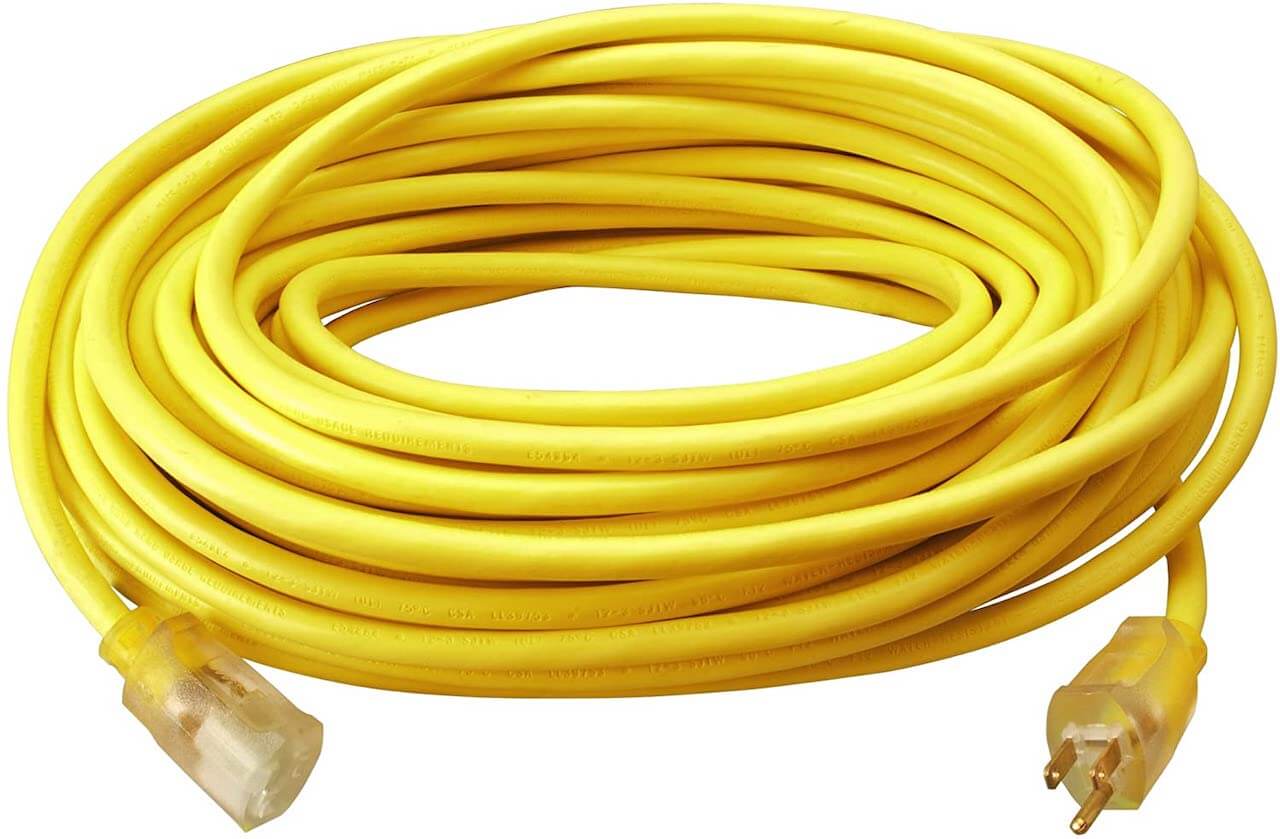
These are made for large power tools and welders. Look for cords marked as 8 AWG, 6 AWG, or 4 AWG. They have thick insulation and strong connectors.
Specialty Welder Extension Cords
Some companies make cords just for welders. They have the correct connectors and are rated for 40-50 amps or more. These are usually the safest choice.
Plug And Outlet Types For Welders
Not all welders use the same plug. You must match the plug on your extension cord to your welder and your wall outlet. The most common plugs are:
- NEMA 6-50: For many 240V welders, up to 50 amps.
- NEMA 14-50: For larger welders or some generators.
- NEMA 5-15 or 5-20: For small welders that run on regular 120V outlets.
Check your welder’s plug before buying an extension cord. Using the wrong plug can damage your machine or cause a shock.
How To Read Extension Cord Ratings
Every extension cord has information printed on it. You will see numbers like 8/3 or 10/3. Here’s what they mean:
- The first number (8 or 10) is the gauge.
- The second number (3) means three wires (hot, neutral, ground).
- You may also see the amp rating and voltage rating, like “50A 250V”.
Always check these numbers. Do not use a cord if the numbers are missing or hard to read.
Common Mistakes People Make
Many people make simple mistakes with extension cords and welders. These mistakes can cost you money or even cause injury. Here are mistakes to avoid:
- Using a household cord: Never use a cord made for lamps or small tools.
- Using the wrong gauge: If you are not sure, use a thicker cord.
- Ignoring cord length: Always use the shortest cord possible.
- Damaged cords: Never use a cord with cuts, cracks, or exposed wires.
- Wrong connectors: Use the correct plug for your welder.
Voltage Drop Explained
Voltage drop happens when electricity travels a long way through a wire. The longer and thinner the wire, the more voltage drops. For welders, this means less power at the machine. You may notice:
- The welder does not start well.
- The arc is weak.
- The welder shuts off by itself.
To avoid voltage drop, use the thickest cord you can and keep it as short as possible.
Practical Example Of Voltage Drop
Suppose you use a 50-foot, 10-gauge cord for a 40A welder. The voltage at the welder might drop by several volts. This is enough to cause problems. If you use a 6-gauge cord instead, the voltage drop is much less, and your welder will work better.
How Extension Cord Material Affects Safety
Most extension cords are made with copper wires. Copper carries electricity well and does not get hot easily. Some cheap cords use aluminum wires. These are not as safe. Aluminum wires get hot faster and can melt. Always choose a cord with copper wires for your welder.
Outdoor Use And Weather
If you weld outside, your cord must be rated for outdoor use. Outdoor cords have thicker insulation to protect against water, oil, and sunlight. Look for labels like SJTW or SOW on the cord. Never use an indoor-only cord outside. Wet cords can shock you or cause a fire.
How To Store And Check Your Extension Cord
After use, unplug the cord and roll it up loosely. Do not wrap it tightly around your arm, as this can damage the wires. Keep the cord dry. Before each use, check for:
- Cuts or cracks in the insulation.
- Burn marks or melted spots.
- Loose or bent connectors.
If you see any damage, do not use the cord. Replace it right away.
Practical Tips For Extension Cord Safety
Here are some tips to stay safe and get the best results with your welder:
- Use the shortest cord possible. The shorter the cord, the less voltage drop.
- Always use the correct gauge. When in doubt, go one size thicker.
- Never run cords under carpets or through doorways.
- Do not use a cord that is coiled while in use. Uncoil it fully so it can cool.
- Do not use a cord with multiple adapters or splitters.
- Keep cords away from water and oil.
- Label your welder cord clearly to avoid using it for other tools.
Comparing Extension Cord Sizes For Popular Welder Types
Many welders use a standard plug and need a certain amp rating. Here is a comparison of common home/shop welder types and the extension cord size they require:
| Welder Type | Typical Amps | Voltage | Recommended Cord Gauge (25 ft) |
|---|---|---|---|
| Small MIG (120V) | 20A | 120V | 12 AWG |
| Medium MIG/TIG (240V) | 30A | 240V | 10 AWG |
| Large Stick Welder (240V) | 40A | 240V | 8 AWG |
| Industrial MIG/TIG (240V) | 50A | 240V | 6 AWG |
This table helps you match your welder type to the right cord. Always check your welder’s real amp draw before buying.
Extension Cord Certification And Labels
Look for cords with UL (Underwriters Laboratories) or ETL certification. These marks mean the cord meets safety standards. Also, check for these labels:
- SJTW: Heavy-duty, outdoor use, water-resistant.
- SOW: Oil and weather-resistant.
- AWG: American Wire Gauge, tells the wire thickness.
If your cord does not have these labels, do not use it for a welder.

Credit: www.weldclass.com.au
What Happens If You Use The Wrong Cord?
Using the wrong size extension cord can cause problems:
- The cord gets hot and may melt.
- The welder may shut off or break.
- Your welds may be weak or uneven.
- There is a higher risk of fire or shock.
Always use the correct cord. If you are unsure, ask a professional or check your welder’s manual.
Is A Thicker Extension Cord Always Better?
A thicker cord (lower gauge number) is always safer, but it costs more and is heavier. For welders, it is better to spend a little more for a thick cord. You get:
- Less voltage drop
- Cooler operation
- Longer cord life
But do not use a cord that is much thicker than needed for other household tools. They may not fit the plug.
Practical Examples: Safe Extension Cord Choices
Here are some real-life examples to make it clear:
Example 1: Small Garage Welder
You have a 20A, 120V welder. The outlet is 25 feet away. Use a 12-gauge cord. Never use a thinner cord, even if it reaches.
Example 2: 240v Stick Welder
Your welder uses 40A. The outlet is 50 feet away. Use a 6-gauge cord. An 8-gauge cord is not safe for this length and amp load.
Example 3: Large Mig Welder
You run a 50A, 240V MIG welder in your workshop. The outlet is 25 feet away. Use a 6-gauge cord. If you need to go 50 feet, use a 4-gauge cord.
How To Calculate Extension Cord Size For Your Welder
If you want to do your own math, you can use a voltage drop calculator. But for most people, following the chart is enough. If you want to be exact, you need:
- The amp draw of your welder
- The length of the cord
- The wire gauge
You can use online calculators or charts from electrical supply websites. For more technical details, check resources like the American Wire Gauge Wikipedia page.
Extension Cords And Generator Use
Some people use welders with portable generators. The same rules apply: use a cord that matches the amp draw and length. Many generators have their own outlet types, so check the plug compatibility. Never try to run a welder and other heavy tools through the same cord at the same time.
Safety Standards And Local Codes
Always follow local electrical codes. In some places, you may need a special cord or outlet for welding. If you are not sure, ask an electrician. Using the wrong cord or outlet can void your insurance if there is a fire.

Credit: toolguyd.com
Signs Your Extension Cord Is Not Safe
Watch for these signs when using your cord:
- The cord gets hot to the touch.
- You smell burning plastic.
- The welder shuts off or acts weak.
- You see sparks at the plugs.
If you notice any of these, stop using the cord right away.
Non-obvious Insights Beginners Usually Miss
- Voltage drop is a hidden problem. Even if the cord does not feel hot, a small voltage drop can make your welder perform poorly. Always use the thickest, shortest cord you can.
- Plugs and outlets must match. Many people buy a thick cord but forget about plug type. If your cord does not fit your welder or outlet, do not use adapters unless they are rated for the same amps.
- Cord insulation matters. Thicker insulation protects the wires from cuts and weather. Cheap cords may have thin insulation, which is not safe outdoors.
- Label your cord. Many shops have many extension cords. If you use your welder cord for other tools, it can get mixed up and used for the wrong job.
Credit: weldguru.com
Frequently Asked Questions
What Gauge Extension Cord Is Best For A 225-amp Welder?
Most 225-amp welders use about 50 amps at 240V. For a 25-foot cord, use a 6-gauge cord. For 50 feet, use a 4-gauge cord. Always check your welder’s manual for exact requirements.
Can I Use A 10-gauge Extension Cord For My Welder?
A 10-gauge cord is safe for welders up to 30 amps and up to 25 feet. For higher amps or longer cords, use a thicker wire (8-gauge or 6-gauge).
What Happens If My Extension Cord Is Too Long?
Long cords cause voltage drop. Your welder may not get enough power, which causes weak welds or the machine to shut off. Use the shortest cord possible and the correct gauge for the length.
Is It Safe To Use Adapters With Welder Extension Cords?
Only use adapters rated for the same or higher amps as your welder. Cheap adapters can overheat and cause a fire. It is better to use a cord with the correct plug already attached.
Can I Repair A Damaged Extension Cord For My Welder?
Do not try to repair a damaged cord for high-amp tools like welders. Even a small repair can fail and cause a fire. Replace the cord with a new one rated for welders.
Choosing the right size extension cord for your welder is not just about power—it is about safety, machine life, and getting good results. Always check your welder’s amp draw, use the shortest cord you can, and pick the correct gauge.
Avoid common mistakes, and check your cord before every use. If you do this, you will weld safely and get the best from your machine every time.