Disclosure: This post contains affiliate links and I will be compensated if you make a purchase after clicking through my links. Learn More
An arc welder is used to join metal parts by melting them together with an electric arc. It’s vital in construction, automotive repair, shipbuilding, manufacturing, and art. Arc welding offers strong, reliable, and cost-effective metal connections for countless projects.
What Is An Arc Welder?
An arc welder is a machine that fuses two pieces of metal by generating intense heat through an electric arc. The arc forms between an electrode and the workpiece, melting the metals so they bond together as they cool. Arc welding is one of the most widely used welding processes in the world because it is reliable, affordable, and highly versatile.
Arc welders come in different types, such as stick welders (SMAW), MIG welders (GMAW), and TIG welders (GTAW). Each type serves unique applications and offers different benefits depending on the welding task. The basic principle, however, remains the same: an electric arc produces heat that joins metals.
Arc welding is essential for projects where strength and durability matter. The process is used everywhere from home garages to massive industrial sites. Its adaptability makes it a favorite among professionals and hobbyists alike.
Core Uses Of An Arc Welder
Arc welders stand out for their ability to handle a wide range of metal joining tasks. Here are the main uses:
1. Construction And Infrastructure
Arc welders build the backbone of modern cities. They are key for:
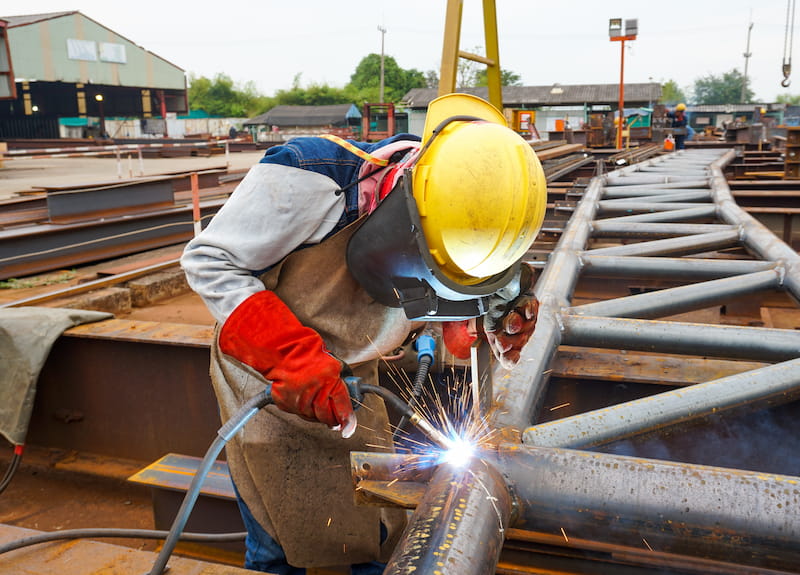
- Steel building frames: Skyscrapers, bridges, and industrial warehouses use arc welding to connect heavy steel beams.
- Rebar in concrete: Arc welders secure rebar grids, which add strength to concrete structures like highways and buildings.
- Pipeline assembly: Oil, gas, and water pipelines require high-strength, leak-proof welds that only arc welding can deliver.
Arc welding’s high-strength bonds are non-negotiable for safety and reliability in construction.
2. Automotive Repair And Fabrication
Almost every auto body shop uses arc welders. Their main roles include:
- Bodywork repair: Fixing rusted panels, broken frames, and exhaust systems.
- Custom parts: Fabricating roll cages, bumpers, and custom engine mounts.
- Chassis reinforcement: Strengthening frames for racing or off-road vehicles.
Without arc welders, repairing or customizing vehicles would be nearly impossible.
3. Manufacturing And Industrial Production
Arc welding drives the production of machinery, tools, and consumer products:
- Heavy machinery: Bulldozers, cranes, and tractors are assembled with arc-welded joints.
- Appliances: Washing machines, refrigerators, and ovens use welded steel frames and panels.
- Shipbuilding: Large sections of ships are fused together for watertight, durable construction.
Manufacturers choose arc welding for its speed, consistency, and cost-effectiveness.
4. Farm And Agricultural Equipment
Farms rely on arc welders to keep equipment running and build custom solutions:
- Repairing implements: Fixing plows, harvesters, and trailers on-site.
- Building gates and fences: Welding steel gates, posts, and feeders.
- Custom modifications: Adapting machinery for unique crops or land conditions.
Arc welding offers farmers independence and quick solutions when breakdowns happen.
5. Art, Sculpture, And Creative Projects
Artists use arc welders to shape metal into expressive forms:
- Metal sculpture: Creating abstract, figurative, or functional art pieces.
- Public installations: Building large outdoor sculptures and decorative structures.
- Furniture and decor: Welding unique tables, chairs, and home accents.
Arc welding lets artists realize bold ideas that would be impossible with glue or bolts.
6. Home And Diy Projects
Homeowners and DIY enthusiasts use arc welders for repairs and custom builds:
- Repairing fences and gates: Fixing broken hinges or rails.
- Building grills, smokers, and fire pits: Creating durable outdoor cooking gear.
- Crafting tools and racks: Making custom workbenches, bike racks, or tool holders.
Arc welding saves money and increases self-sufficiency for handy homeowners.
7. Shipbuilding And Marine Applications
Arc welders play a critical role in marine environments:
- Hull construction: Ensuring strong, watertight seams on ships and boats.
- Dock and pier repairs: Welding underwater or in harsh coastal conditions.
- Offshore platforms: Maintaining oil rigs and wind turbines.
Arc welding stands up to saltwater corrosion and constant stress, making it ideal for marine use.
8. Aerospace And Defense
Precision and reliability are non-negotiable in aerospace and defense work:
- Aircraft frames: Welding lightweight but strong structures.
- Rocket parts: Joining specialized alloys for high heat and stress.
- Military vehicles: Assembling tanks, armored cars, and support equipment.
Arc welding meets strict quality standards that these industries require.
9. Pipeline Construction And Repair
Pipelines demand airtight, high-pressure welds:
- Oil and gas lines: Preventing leaks and environmental disasters.
- Water and sewage lines: Ensuring safe, reliable infrastructure.
- High-pressure steam pipes: Used in power plants and industrial facilities.
Arc welders deliver the strength and reliability pipelines need to run safely for decades.
10. Railroad And Track Maintenance
Railroads rely on arc welders for safety and uptime:
- Track welding: Ensuring smooth, continuous rails.
- Car repairs: Fixing train cars, couplings, and undercarriages.
- Bridge maintenance: Rebuilding worn or cracked steel bridges.
Arc welding keeps trains running and passengers safe.
Credit: fractory.com
How Does An Arc Welder Work?
Arc welders use electricity to generate extreme heat. Here’s a simplified breakdown:
- Current flows from the welder through the electrode and into the workpiece.
- The electrode is brought close to the metal until a short circuit occurs, creating an electric arc.
- The arc reaches temperatures over 6,500°F (3,600°C), instantly melting metal at the contact point.
- Molten metal pools and mixes with filler material (from the electrode or a separate rod).
- As the weld cools, the metals solidify into a strong, fused joint.
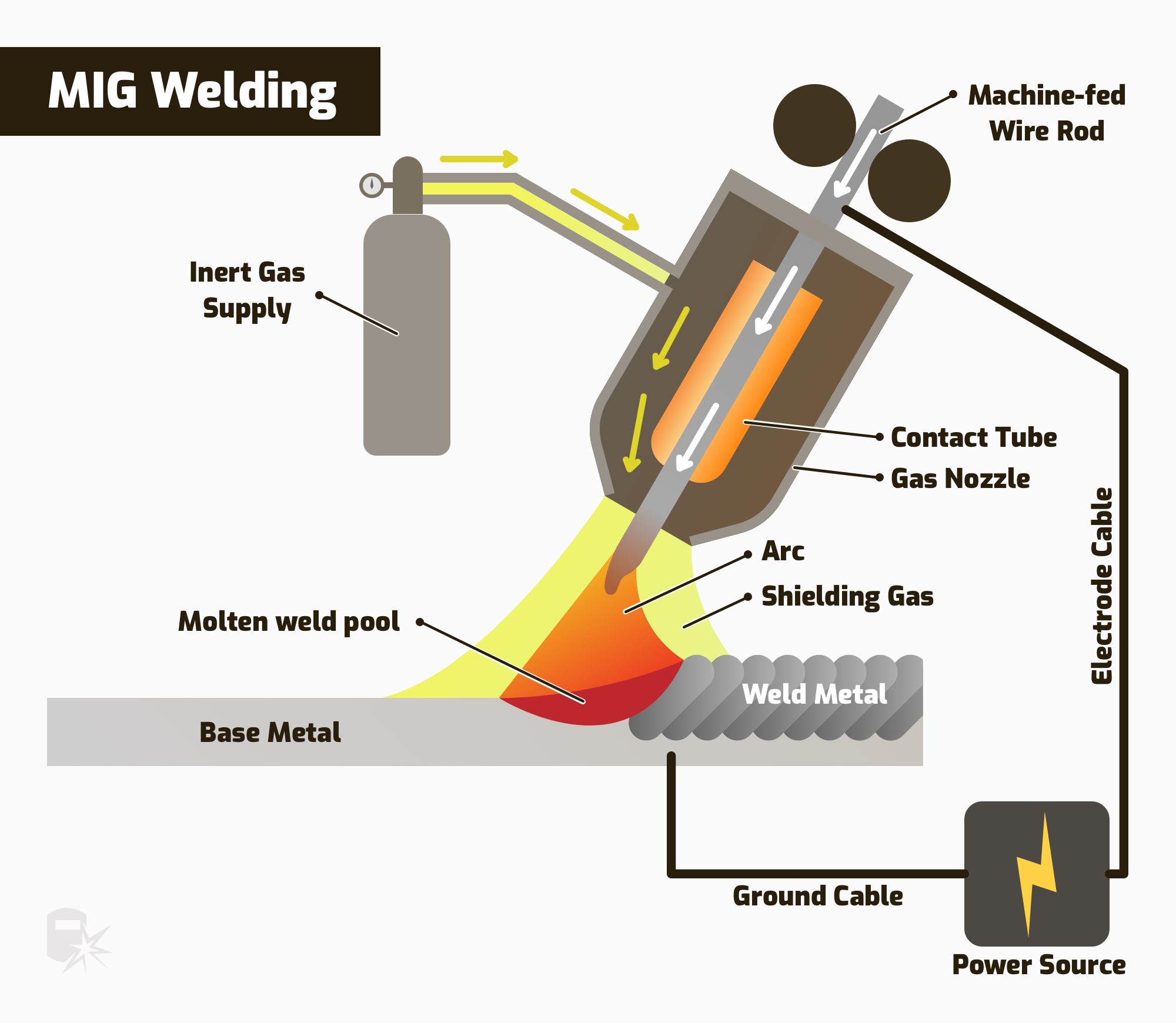
Arc welding often uses a shielding gas or a flux coating to protect the weld from air contamination, which could cause weak spots or rust.
Types Of Arc Welding Processes
Several arc welding processes suit different needs. Here’s an overview of the most common types:
| Process | Key Feature | Typical Use |
|---|---|---|
| Shielded Metal Arc Welding (SMAW) | Manual stick electrode | Construction, repair, farm work |
| Gas Metal Arc Welding (GMAW/MIG) | Wire feed, shielding gas | Automotive, manufacturing, home projects |
| Gas Tungsten Arc Welding (GTAW/TIG) | Tungsten electrode, separate filler rod | Aerospace, art, thin metals |
| Flux-Cored Arc Welding (FCAW) | Flux-filled wire, no external gas needed | Outdoor welding, construction |
| Submerged Arc Welding (SAW) | Arc under powder, automatic | Pipelines, shipbuilding, large structures |
Stick Welding (smaw)
Stick welding uses a coated metal rod (the “stick”) as both the electrode and filler material. It’s portable and handles dirty or rusty metals well. Most common for repairs, construction, and outdoor jobs.
Mig Welding (gmaw)
MIG welding feeds a wire electrode automatically and uses shielding gas to keep the weld clean. It’s fast and easy to learn. Great for car work, production lines, and home projects.
Tig Welding (gtaw)
TIG welding uses a non-consumable tungsten electrode and a separate filler rod. It makes precise, clean welds on thin or specialty metals like stainless steel or aluminum. Ideal for aerospace and artistic work.
Flux-cored Welding (fcaw)
Flux-cored welding is similar to MIG but uses a wire filled with flux, so it doesn’t always need an external gas tank. It’s popular for outdoor construction where wind could blow away shielding gas.
Submerged Arc Welding (saw)
Submerged arc welding is an automated process where the arc operates under a mound of granular flux. It’s used for thick steel plates and very large projects, such as pipelines and ship hulls.

Credit: www.thefabricator.com
Key Advantages Of Arc Welders
Arc welders offer several benefits that make them industry favorites:
- Strong welds: Arc welding creates joints as strong as the surrounding metal.
- Versatility: Weld steel, stainless, aluminum, cast iron, and more.
- Portable options: Stick welders can run on small generators, perfect for remote repairs.
- Cost-effective: Equipment ranges from affordable home units to high-end industrial machines.
- Speed: Fast welds mean shorter project times and lower labor costs.
Arc welding’s flexibility and value keep it central to metalworking.
Real-world Examples Of Arc Welder Applications
Here are some practical scenarios where arc welders shine:
- Bridge repair: Crews use stick welders to fix cracked support beams on-site, restoring safety quickly.
- Custom car builds: Hot rod builders use MIG welders to fabricate unique chassis and roll cages.
- Farm emergencies: A farmer repairs a snapped tractor hitch with a portable stick welder, saving downtime.
- Shipyard assembly: Submerged arc welding joins massive steel plates on container ships, ensuring watertight seams.
- Art installations: A sculptor uses TIG welding to join delicate stainless steel rods for a museum piece.
These examples show why arc welders are trusted for critical tasks where failure isn’t an option.
Choosing The Right Arc Welder
Selecting the right arc welder depends on your needs. Here’s what to consider:
- Material type and thickness: Heavier steel needs more power; thin aluminum needs precise control.
- Project size: Small home repairs may only need a basic stick welder. Industrial jobs require advanced machines.
- Portability: Choose a lightweight unit for field repairs, or a heavy-duty model for shop use.
- Skill level: Beginners often start with MIG; TIG needs more practice but gives fine control.
- Budget: Entry-level welders start under $200, while industrial setups can cost thousands.
A common mistake is buying too much welder “just in case. ” Choose a machine that fits 90% of your real projects.
Safety Precautions For Arc Welding
Arc welding is powerful, but it comes with risks. Safety is non-negotiable.
- Eye protection: The arc is brighter than the sun. Always wear a certified welding helmet.
- Skin protection: UV rays cause severe burns. Cover all skin with flame-resistant clothing.
- Fume control: Welding produces toxic fumes. Work in well-ventilated spaces or use exhaust systems.
- Fire safety: Sparks can ignite clothing, hair, or nearby materials. Keep a fire extinguisher close.
- Electrical safety: Arc welders use high voltage. Inspect cables and never weld in wet conditions.
These steps prevent injuries and keep your workspace safe.
Comparing Arc Welders To Other Welding Methods
To understand why arc welders are so popular, compare them with other common welding methods:
| Welding Method | Strength | Portability | Cost | Skill Required |
|---|---|---|---|---|
| Arc Welding (SMAW/MIG/TIG) | High | Good-Excellent | Low-Medium | Low-High |
| Oxy-Acetylene Welding | Medium | Good | Medium | Medium |
| Spot Welding | High (for sheets) | Poor | High | Low |
| Brazing/Soldering | Low-Medium | Excellent | Low | Low |
Arc welders stand out for their strength, portability, and value.
Common Mistakes When Using Arc Welders
Even experienced welders make avoidable errors. Here are some to watch for:
- Poor preparation: Failing to clean metal surfaces leads to weak, contaminated welds.
- Wrong settings: Using the wrong current or voltage causes poor penetration or excessive spatter.
- Incorrect electrode choice: Using the wrong rod for the metal type results in brittle welds.
- Inadequate shielding: Letting air contaminate the weld creates porosity and weak spots.
- Ignoring safety: Not wearing proper gear risks burns, eye injuries, or worse.
New welders often overlook the importance of practice. Consistent technique and setup make all the difference.
Non-obvious Insights For Beginner Welders
Many beginners miss these key points:
- Metal preparation is more important than machine power. Even the best arc welder can’t overcome dirty or oily metal. Spend extra time cleaning and grinding before welding.
- Weld position affects joint strength. Overhead or vertical welds are harder and require different settings. Practice on flat joints first, then progress to more challenging positions.
- Electrode storage matters. Moisture can ruin stick electrodes and flux-cored wire, causing weld defects. Store rods in a dry, sealed container.
- Short arc length is critical. Holding the electrode too far away weakens the arc and leads to spatter. Keep a steady, short distance for best results.
These details separate average welds from professional-quality work.
New Developments In Arc Welding Technology
Arc welders are getting smarter and more efficient every year:
- Inverter technology: Modern welders use electronic circuits, making units lighter and more energy-efficient.
- Digital controls: Automated settings reduce guesswork and help beginners get better results.
- Pulse welding: Advanced machines offer pulsed current, improving weld quality on thin metals.
- Remote monitoring: Industrial welders can now track machine performance and weld quality in real time.
Manufacturers keep improving arc welders to meet higher industry standards and make the process safer and easier.
Environmental Impact Of Arc Welding
Arc welding uses electricity and creates fumes, but it’s often greener than other methods:
- Low waste: Most filler material is used in the weld; little scrap or excess is created.
- Efficient energy use: Modern inverters reduce power consumption compared to older machines.
- Recyclable fumes: Many shops use fume extractors that recycle or safely dispose of welding byproducts.
Proper ventilation and handling are essential to minimize health and environmental risks. For more on welding safety and environmental standards, see the OSHA Welding Guide.
Essential Accessories And Consumables
Arc welders don’t work alone. You’ll need the right accessories for safe, high-quality welds:
- Welding helmet: Auto-darkening lenses protect your eyes and speed up work.
- Gloves and jackets: Leather or flame-resistant gear shields you from sparks.
- Chipping hammer and wire brush: Remove slag and clean joints for strong bonds.
- Clamps and magnets: Hold metal pieces steady while welding.
- Electrodes and wire: Match these to your metal type and welding process.
- Ground clamp: Essential for a safe, complete electrical circuit.
Investing in quality accessories improves results and safety.
Troubleshooting Common Arc Welding Problems
If your welds don’t look right, check these issues:
- Porosity: Often caused by contaminated metal or bad shielding gas. Clean thoroughly and check for gas leaks.
- Cracking: Usually from welding too fast or using the wrong rod. Slow down and match electrode to base metal.
- Excessive spatter: Lower your voltage or current, and keep a short arc length.
- Undercut: Move the electrode slower and use the right angle to avoid thinning the edges of the weld.
Most problems trace back to setup or technique, not the welder itself.
Training And Certification For Arc Welders
While anyone can buy an arc welder, training makes a huge difference:
- Basic courses: Community colleges and trade schools offer hands-on classes.
- Certifications: AWS (American Welding Society) certification opens doors for higher-paying jobs.
- On-the-job training: Many employers provide in-house instruction for specific tasks.
Certified welders earn more and are trusted with critical projects. Learning proper techniques reduces mistakes and workplace accidents.
Frequently Asked Questions
What Metals Can You Weld With An Arc Welder?
You can weld steel, stainless steel, cast iron, and some aluminum alloys with an arc welder. The exact metals depend on the electrode or wire used and the specific arc welding process.
Is Arc Welding Hard To Learn For Beginners?
Arc welding has a learning curve, but MIG welding is easiest for most beginners. Stick welding is a bit harder but very practical. Good results come from practice, proper setup, and following safety rules closely.
What Is The Difference Between Mig And Tig Arc Welding?
MIG uses a wire feed and is faster, making it great for quick jobs and thick metals. TIG uses a tungsten electrode and separate filler rod, offering more control and cleaner welds on thin or delicate metals.
How Dangerous Is Arc Welding?
Arc welding can be dangerous if you ignore safety precautions. Risks include severe burns, eye damage, and inhaling fumes. With proper gear, ventilation, and safe habits, welding is safe for hobbyists and professionals.
Can You Use An Arc Welder Outdoors?
Yes, stick and flux-cored arc welders work well outdoors because wind does not easily disturb the shielding. MIG and TIG are harder to use outside due to the need for stable shielding gas.
Final Thoughts
Arc welders power the world’s strongest, most reliable metalwork. They build skyscrapers, fix cars, create art, and keep industries moving. Whether you’re a seasoned pro or a hobbyist, understanding what an arc welder is used for unlocks new possibilities in fabrication, repair, and creative work.
Choose the right machine, develop your skills, and always respect safety — the results will speak for themselves.
Credit: weldguru.com