Disclosure: This post contains affiliate links and I will be compensated if you make a purchase after clicking through my links. Learn More
Welding creates strong joints in metal structures. But sometimes, welds do not look or perform as expected. One common defect is excessive convexity. This happens when the weld bead forms a high, rounded shape instead of a flatter surface. Many welders see this issue, but few understand why it happens or how to prevent it.
Excessive convexity is more than a cosmetic problem. It can reduce strength, cause stress points, and even lead to cracks. If ignored, it may cause a welded part to fail. For industries like construction, oil and gas, or manufacturing, this can mean costly repairs or dangerous situations.
This article explains what causes excessive convexity in welding. You will learn about process variables, equipment settings, materials, and technique mistakes. We will look at real examples, common misunderstandings, and ways to avoid this defect. Whether you are new to welding or have years of experience, you will find practical advice that improves weld quality and safety.
What Is Excessive Convexity In Welding?
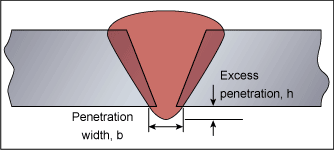
A weld bead has three main shapes: concave, flat, or convex. Convexity describes how much the bead curves above the base metal. Excessive convexity means the weld is too rounded or raised. Usually, welding codes specify a maximum convexity, such as 2 mm (about 1/16 inch) for many structural welds. If the bead is higher than this, inspectors may reject the weld.
Excessive convexity can lead to:
- Poor fusion with the base metal
- Increased stress at the weld toe (edge)
- Low fatigue strength, making the weld prone to cracks
- Difficulties with grinding or finishing
Understanding why this happens is the first step to preventing it.
Process-related Causes Of Excessive Convexity
Low Welding Current
A common reason for excessive convexity is using low welding current. Current controls how much heat goes into the weld pool. If the current is too low:
- The molten metal does not spread well
- The bead piles up, creating a high, rounded shape
- Penetration is shallow, leading to weak fusion
For example, in Shielded Metal Arc Welding (SMAW), dropping below the recommended amperage can quickly cause a convex bead.
Incorrect Travel Speed
The travel speed is how fast you move the electrode or torch along the weld. If you move too slowly:
- You deposit more metal in one area
- The weld pool becomes large and hard to control
- The bead builds up vertically, increasing convexity
On the other hand, moving too fast can cause undercut or incomplete fusion. Striking a balance is key.
Wrong Electrode Angle
The angle of the electrode or torch affects how the molten pool spreads. If the angle is too steep or shallow:
- Molten metal does not flow out and level
- The bead forms a high ridge instead of flattening
- This is common with new welders or in tight positions
For fillet welds, a work angle of 45 degrees is usually best. Deviations can quickly change bead shape.
Improper Welding Technique
Technique includes how you move the electrode, how long you pause, and how you weave (if at all). Poor technique leads to:
- Excessive metal buildup in the center of the bead
- Insufficient time for the pool to flatten before solidifying
- Irregular welds with changing convexity
An experienced welder learns to adjust technique for each position and joint.
Inappropriate Filler Metal Size
If the filler rod or electrode is too thick for the joint:
- Too much metal enters the weld pool
- The bead forms a thick, convex shape
- It becomes hard to control heat and bead size
Choosing the right size of filler for the base metal thickness is essential.
Equipment And Parameter Issues
Incorrect Voltage Setting
Voltage controls arc length and heat distribution. Low voltage can cause a narrow, unstable arc, while high voltage can flatten the bead too much. For excessive convexity:
- Too low voltage = arc is tight, bead does not spread
- The result is a tall, narrow weld with high convexity
Check the manufacturer’s recommendations for each process.
Wrong Polarity
Some welding processes let you choose the polarity. For example, in SMAW or GTAW:
- Using the wrong polarity can change penetration and bead shape
- Direct Current Electrode Positive (DCEP) often gives deeper penetration and flatter beads
- Direct Current Electrode Negative (DCEN) can cause a higher, convex bead in some cases
Matching polarity to the process and metal is important.
Faulty Equipment
Worn cables, damaged torches, or unstable power supplies can:
- Cause fluctuations in current and voltage
- Make it hard to maintain a stable arc
- Lead to inconsistent beads, including excessive convexity
Regular equipment checks help prevent these problems.
Inaccurate Wire Feed Speed (gmaw/fcaw)
For Gas Metal Arc Welding (GMAW) or Flux-Cored Arc Welding (FCAW), wire feed speed controls how much filler enters the pool. High feed speed can:
- Overwhelm the weld pool
- Cause the bead to mound up
- Increase the chance of excessive convexity
Proper calibration is essential for quality welds.
Example: Wire Feed Speed Vs. Convexity
Here is a simple comparison of how wire feed speed affects bead shape in GMAW:
| Wire Feed Speed (in/min) | Bead Shape | Convexity |
|---|---|---|
| 200 | Flat | Low |
| 350 | Slightly Convex | Moderate |
| 500 | Very Convex | High |
Material And Joint Preparation Factors
Dirty Or Contaminated Base Metal
Dirt, oil, rust, or paint on the base metal can:
- Prevent proper fusion
- Make the weld bead sit on top instead of melting in
- Lead to a convex bead with poor bonding
Clean the metal with a wire brush, grinder, or solvent before welding.
Incorrect Joint Design
If the joint gap is too small or the angle is too tight:
- There is no space for the weld pool to spread
- The bead builds up, causing convexity
Proper joint preparation, such as making a correct V-groove or fillet, helps control bead shape.
Base Metal Thickness
Welding thin metal using settings for thick metal can:
- Cause the weld pool to freeze quickly
- Prevent the bead from flattening
- Lead to convexity due to low heat input
Adjust current and filler size to match the base metal.
Preheat And Interpass Temperature
For thick or high-alloy metals, preheating helps:
- Slow down cooling
- Allow the bead to flatten before solidifying
Skipping preheat or letting the metal get too cold between passes can increase convexity.
Example: Preheat Temperature And Weld Bead Shape
| Preheat Temperature (°C) | Weld Bead Appearance | Risk of Convexity |
|---|---|---|
| Room Temp (25) | High Bead | High |
| 120 | Flatter Bead | Low |
| 180 | Optimal, Flat | Very Low |
Human Errors And Inexperience
Lack Of Training
Many new welders do not recognize convexity as a problem. They may focus only on making the bead look smooth, not flat. Without proper training, welders may:
- Use the wrong technique for joint type
- Ignore recommended settings
- Fail to check for excessive convexity
Learning from experienced welders and attending formal courses helps avoid this.
Rushing The Job
Trying to weld too fast or skipping steps leads to:
- Poor preparation
- Incorrect travel speed or technique
- More defects, including convexity
Taking time for setup and following each step is vital.
Misreading Welding Codes
Welding codes set limits for bead shape, size, and convexity. In industries like pipeline or structural welding, codes like ASME, AWS, or ISO set specific rules. Misreading or ignoring these codes can result in:
- Welds that are out of tolerance
- Increased risk of rejection or failure
Always confirm the exact requirements for each job.
Environmental Factors
Ambient Temperature
Welding in cold environments affects heat flow. The metal cools quickly, which can:
- Freeze the weld pool before it spreads
- Cause a high, convex bead
Preheating or using windbreaks in outdoor welding can help.
Wind And Drafts
Welding outdoors or near fans can blow shielding gas away. This results in:
- Contaminated welds
- Irregular bead shape
- Increased risk of convexity
Set up barriers or weld indoors when possible.
Humidity And Moisture
Moisture on the base metal or in the electrode covering can:
- Cause porosity and poor fusion
- Lead to a bead that sits on top, increasing convexity
Store electrodes in dry containers and keep surfaces dry.
Credit: www.twi-global.com
Welding Process Differences
Not all welding processes have the same risk for excessive convexity. Some are more prone due to the way they deposit metal.
Smaw (stick Welding)
- Moderate risk of convexity with low current or large electrodes
- Bead shape depends strongly on technique
Gmaw (mig Welding)
- High wire feed speeds can quickly cause convexity
- Easier to control with proper settings
Gtaw (tig Welding)
- Convexity less common due to precise control
- Can occur with too much filler or low heat
Fcaw (flux-cored Arc Welding)
- Similar to MIG; high filler rates can cause bead buildup
- Watch settings closely
Submerged Arc Welding (saw)
- Can deposit large amounts of metal fast
- High risk of convexity if speed or voltage is not correct
Comparison Of Welding Processes And Convexity Risk
| Welding Process | Convexity Risk | Primary Cause |
|---|---|---|
| SMAW | Medium | Low Current |
| GMAW | High | High Wire Feed |
| GTAW | Low | Excess Filler |
| FCAW | High | High Filler Rate |
| SAW | High | Fast Metal Deposition |
Effects Of Excessive Convexity
Some may think a high bead just looks unattractive, but the impact is deeper.
- Stress Concentration: A high weld toe focuses stress, increasing crack risk.
- Poor Fatigue Strength: Rounded welds do not spread load well, leading to early failure.
- Difficult Inspection: High beads hide defects inside the weld.
- Extra Work: Excessive convexity often means more grinding or rework.
In critical structures, these problems lower safety and reliability.

Credit: www.youtube.com
How To Prevent Excessive Convexity
Set Correct Parameters
Check the recommended current, voltage, and wire feed speed for the process and material. Adjust as needed for joint size and position.
Select Proper Filler And Electrodes
Match the size and type of electrode or wire to the base metal. For thin metals, use smaller diameter rods.
Clean And Prepare Joints
Remove all dirt, oil, rust, and paint from the welding area. Cut or grind the joint to the correct angle or gap.
Practice Good Technique
- Use the right travel speed: Not too slow
- Hold the correct angle: Usually around 45 degrees for fillet welds
- Use weaving only when needed
- Allow the pool to flatten before moving forward
Control The Environment
- Weld indoors if possible
- Use preheat for thick or cold metals
- Shield the welding area from wind and drafts
Inspect And Measure Beads
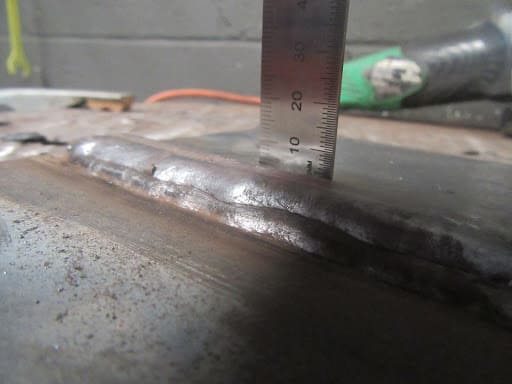
Use a weld gauge to check bead height and width. Compare with code limits. Fix problems early to avoid large repairs later.
Non-obvious Insights For Beginners
- Convexity is not always bad: Some codes allow a small amount of convexity. It can even help prevent undercut in certain positions. The key is to stay within limits.
- Heat input affects everything: Small changes in current or travel speed have a big effect. Many new welders do not realize that a 10% increase in current can flatten a bead and improve fusion.
- Joint fit-up matters more than you think: Even small gaps or misalignments can force the weld pool to build up rather than spread out. Always check fit-up before welding.
- Electrode storage affects convexity: Damp electrodes can change arc behavior, making the bead more convex. Always dry or bake electrodes as needed.
Credit: technoweld.com.au
Common Mistakes That Cause Excessive Convexity
- Using the same settings for all joints
- Ignoring changes in metal thickness
- Forgetting to clean the base metal
- Not adjusting for outdoor conditions
- Focusing on speed rather than quality
Real-world Examples
A pipeline welder in Canada used the same settings for both summer and winter. In cold weather, his welds became highly convex and failed inspection. Adding preheat and slowing travel speed fixed the issue.
In a factory, a new operator set the wire feed on a MIG welder too high for thin sheet metal. The welds built up, creating tall, rounded beads. After training, the operator learned to balance wire feed and travel speed, improving bead shape.
Standards And Welding Codes
Organizations like the American Welding Society (AWS) and American Society of Mechanical Engineers (ASME) set strict limits for convexity. For example, AWS D1.1 limits the maximum convexity of a fillet weld to the lesser of 2 mm or 0.7 times the leg size. Inspectors use these rules to accept or reject welds.
If you want more technical details, the Wikipedia page on welding defects offers a helpful overview.
Frequently Asked Questions
What Is Excessive Convexity In Welding?
Excessive convexity is when the weld bead is too high and rounded above the base metal. It usually means the weld does not meet code requirements and may have weak points.
How Do I Measure Convexity In A Weld?
Use a weld gauge to check bead height. Compare the result with the maximum allowed by the welding code for your project.
Can Excessive Convexity Cause Weld Failure?
Yes, it can. High beads create stress points that can crack under load. They also hide defects and make inspection harder.
What Welding Processes Are Most Likely To Cause Excessive Convexity?
Processes that deposit a lot of metal quickly, like GMAW, FCAW, or SAW, have higher risk. Stick welding can also cause it if settings are too low or technique is poor.
How Can I Prevent Excessive Convexity?
Set the right welding parameters, prepare the joint well, use good technique, and check your work with a weld gauge. Adjust as needed to keep the bead shape within limits.
Well-controlled convexity is a sign of skilled welding. By understanding the causes and solutions, you can produce stronger, safer, and more attractive welds every time.