Disclosure: This post contains affiliate links and I will be compensated if you make a purchase after clicking through my links. Learn More
Arc welding is a strong method to join metals. It uses heat from an electric arc to melt and fuse metals together. This process is common in factories, construction, shipbuilding, and repair work. Over the years, many types of arc welding have developed, each with its own tools, materials, and best uses.
If you want to learn welding or choose the right technique for your project, it helps to understand the main types of arc welding and how they work.
Arc welding has shaped modern industry. It helps build bridges, cars, pipelines, and even art pieces. Each type of arc welding has a unique way of making an electric arc, controlling the weld, and protecting the hot metal from air.
Some methods are easy for beginners, while others need skill and practice. In this article, you will find clear explanations of each main type, their strengths, limits, and the situations where they work best. You will also find examples, tips, and answers to common questions.
What Is Arc Welding?
Arc welding joins metals by creating an electric arc between an electrode and the workpiece. This arc produces intense heat, often over 6,500°F (3,600°C). The heat melts the metal edges and sometimes the electrode, forming a strong joint as the metal cools and solidifies. Most arc welding methods use a power source (AC or DC), an electrode, and a way to protect the weld from air. Air can cause weak welds by adding oxygen or nitrogen to the hot metal.
Arc welding is different from other methods like gas welding or resistance welding. It is faster, works on many metals, and creates strong, lasting connections. Some arc welding types use a filler metal from the electrode, while others melt only the base metal. There are many types, but all use the basic idea of an electric arc.
Main Types Of Arc Welding
Arc welding includes many techniques, but some are much more common and practical than others. The main types are:
- Shielded Metal Arc Welding (SMAW)
- Gas Metal Arc Welding (GMAW or MIG)
- Gas Tungsten Arc Welding (GTAW or TIG)
- Flux-Cored Arc Welding (FCAW)
- Submerged Arc Welding (SAW)
- Plasma Arc Welding (PAW)
- Electroslag Welding (ESW)
- Electrogas Welding (EGW)
- Carbon Arc Welding (CAW)
- Stud Arc Welding
Below, you will find a detailed look at each type. You will also see their differences, strengths, and best applications.
1. Shielded Metal Arc Welding (smaw)
Shielded Metal Arc Welding, often called stick welding, is one of the oldest and most widely used methods. The welder uses a metal rod (electrode) coated with flux. The arc forms between the tip of the electrode and the workpiece. The intense heat melts both the electrode and the base metal. The flux coating on the rod turns into gas and slag, which shields the weld from air and helps create a clean joint.
Key features:
- Simple and portable equipment
- Works on dirty or rusty metals
- Suitable for outdoor use, even in wind or rain
Common uses:
- Construction
- Shipbuilding
- Repairs on heavy equipment
Limits:
- Slag must be cleaned after welding
- Not as fast as some other methods
- Hard to automate
Non-obvious insight: Many beginners think stick welding cannot make fine welds, but with the right rods and skill, it can make strong, neat joints on thin or thick metals.
2. Gas Metal Arc Welding (gmaw Or Mig)
Gas Metal Arc Welding, often called MIG welding (Metal Inert Gas), uses a thin wire as an electrode. The wire feeds through a gun, where an electric arc forms between the wire tip and the base metal. A shielding gas (often argon, CO2, or a mix) flows out of the gun to protect the weld from the air.
Key features:
- Fast and easy to learn
- Clean process, little slag
- Good for long, continuous welds
Common uses:
- Car body repair
- Factory production
- Thin metal sheets
Limits:
- Not good in windy or outdoor conditions (gas blows away)
- Needs clean metal for best results
Non-obvious insight: Many people use the term “MIG” for all wire welding, but real MIG uses only inert gas like argon. Some use active gases (MAG welding), which changes weld properties.
3. Gas Tungsten Arc Welding (gtaw Or Tig)
Gas Tungsten Arc Welding, or TIG welding, uses a non-consumable tungsten electrode. The welder creates an arc between this electrode and the base metal. A separate filler rod can be added by hand. A shielding gas, usually pure argon, protects the hot metal.
Key features:
- Very precise control of the weld
- Excellent for thin metals and fine work
- No slag, clean process
Common uses:
- Aerospace
- Bicycles and motorcycles
- Art and decorative pieces
Limits:
- Slower than other methods
- Needs more skill and practice
- Equipment is more expensive
Non-obvious insight: TIG welding can join almost any metal, even tricky materials like titanium or magnesium, if you choose the right gas and filler rod.
4. Flux-cored Arc Welding (fcaw)
Flux-Cored Arc Welding is similar to MIG welding, but uses a special wire with flux in the center. When the arc melts the wire, the flux creates a shielding gas and forms slag over the weld. Some FCAW wires also use extra gas from the gun, while others do not.
Key features:
- High deposition rate (lays down more metal faster)
- Works well on dirty or rusty metals
- Good for outdoor work
Common uses:
- Construction
- Shipyards
- Heavy equipment repair
Limits:
- Slag must be cleaned
- Not as neat as TIG or MIG for thin sheet metal
Non-obvious insight: Many factories use FCAW for thick steel because it can weld faster and deeper than MIG, even though the equipment looks similar.
5. Submerged Arc Welding (saw)
Submerged Arc Welding uses a bare wire electrode under a pile of granular flux. The arc forms under this flux layer, which melts to shield the weld from air and traps sparks and fumes. The process is almost fully automatic.
Key features:
- Very high deposition rates
- Deep, strong welds
- Little smoke or visible arc
Common uses:
- Large steel pipes
- Shipbuilding
- Pressure vessels
Limits:
- Only works in flat or horizontal positions
- Not for thin metal or small parts
- Equipment is large and expensive
Non-obvious insight: Because the arc is hidden under flux, workers do not need dark welding helmets for SAW, which makes long welds easier.
6. Plasma Arc Welding (paw)
Plasma Arc Welding is similar to TIG but uses a special torch to create a focused, high-temperature plasma arc. This arc is much hotter and more concentrated than TIG. It allows the welder to make very fine, deep welds, sometimes without adding filler metal.
Key features:
- Very precise and stable arc
- Can weld thin or thick materials
- Can be automated for production
Common uses:
- Aerospace
- Medical devices
- Tool and die making
Limits:
- Equipment is costly and complex
- Needs special training
- Not common outside factories
Non-obvious insight: PAW can cut as well as weld, making it useful for both joining and shaping metal parts with a single machine.
7. Electroslag Welding (esw)
Electroslag Welding is a special process for joining thick, vertical steel plates. The parts are set upright with a narrow gap. A wire feeds into the gap, and an electric arc starts a pool of molten metal. The pool is covered by flux, and the arc stops after a few seconds. The heat from the electric current keeps the pool melted as the wire adds more metal. The weld forms from the bottom up.
Key features:
- Joins thick plates (over 25 mm) in one pass
- Very fast for heavy steel work
- Good for vertical joints
Common uses:
- Bridges
- Large building frames
- Ship sections
Limits:
- Only for vertical, thick joints
- Needs skilled setup
- Not for thin or small parts
Non-obvious insight: ESW is so fast that it can weld plates up to 300 mm thick in a single pass, which saves time but needs careful control to avoid defects.
8. Electrogas Welding (egw)
Electrogas Welding is like ESW but keeps the arc going during the whole weld. It also joins thick, vertical steel parts. Two copper shoes cool and shape the sides of the weld as a wire feeds into the gap. A gas or flux shields the weld pool.
Key features:
- High speed for vertical seams
- Works with thick plates
- Usually automated
Common uses:
- Ship hulls
- Storage tanks
- Building columns
Limits:
- Only for vertical joints
- Not suitable for thin metals
- Needs special equipment
Non-obvious insight: EGW can use both flux-cored and solid wire electrodes, giving flexibility for different steel types and weld properties.
9. Carbon Arc Welding (caw)
Carbon Arc Welding is one of the earliest arc welding methods. It uses a carbon rod as the electrode to make the arc. The carbon does not melt into the weld, so the process can use a separate filler rod or melt just the base metal. Shielding gas is not always used.
Key features:
- Simple equipment
- Can weld, cut, or heat metal
- Good for repair and light fabrication
Common uses:
- Sheet metal repair
- Ovens and tanks
- Art metalwork
Limits:
- Low weld quality compared to newer methods
- Not for critical structures
- Few people use it today
Non-obvious insight: CAW is still used in small workshops for metal heating and bending, not just welding, because it gives controlled heat without melting the electrode.
10. Stud Arc Welding
Stud Arc Welding joins a metal stud (bolt or pin) to a flat metal surface. The stud acts as the electrode. A short arc melts both the stud and the base metal, then the stud is pushed into place. The metals fuse and harden in seconds.
Key features:
- Fast, repeatable process
- Strong joints
- Works on coated or painted surfaces
Common uses:
- Car bodies
- Electrical panels
- Building fasteners
Limits:
- Only joins studs to flat surfaces
- Needs special studs and a gun
- Not for thick, structural welds
Non-obvious insight: Stud welding is so fast (less than a second per weld) that it is widely used in mass production lines for cars and appliances.
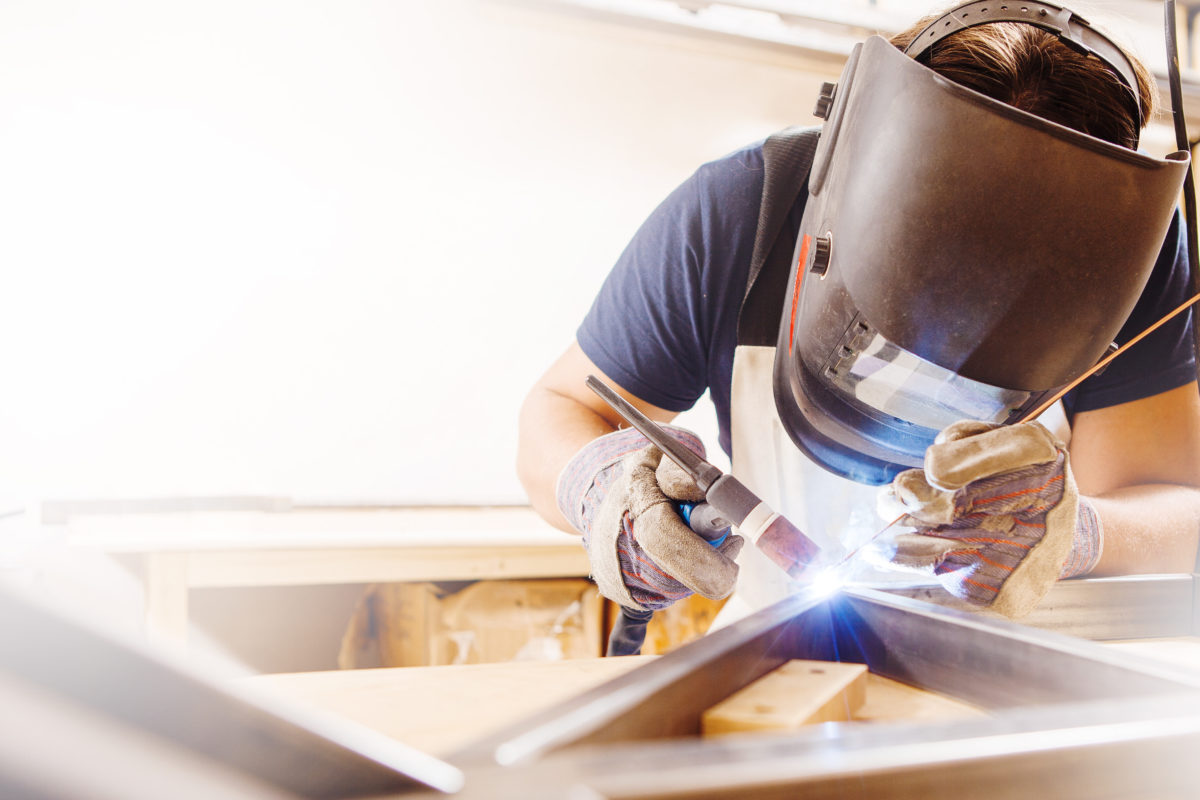
Credit: www.taylor-studwelding.com
Comparing Arc Welding Methods
Different arc welding methods offer unique features. Below is a comparison of some popular types:
| Welding Type | Shielding Method | Common Materials | Skill Level | Speed |
|---|---|---|---|---|
| SMAW (Stick) | Flux coating | Steel, iron, some alloys | Medium | Medium |
| MIG (GMAW) | Shielding gas | Steel, aluminum, stainless | Easy | Fast |
| TIG (GTAW) | Argon/Helium gas | All metals | High | Slow |
| FCAW | Flux core (+/- gas) | Steel, alloys | Medium | Fast |
| SAW | Granular flux | Thick steel | Medium | Very fast |
Choosing The Right Arc Welding Method
Selecting the best arc welding method depends on your project’s needs. Consider these main points:
- Type and thickness of metal: TIG works well on thin, tricky metals. SAW and ESW handle thick steel plates.
- Weld quality needed: TIG gives the neatest joints. Stick and MIG are strong but faster.
- Work location: Stick and FCAW work outside. MIG and TIG need calm, clean spaces.
- Speed and productivity: SAW and FCAW are fast for big jobs. TIG is slow but precise.
- Cost and skill level: Stick and MIG are cheaper and easier for beginners. TIG and PAW need more skill and costly tools.
Here is a simple summary to help you pick:
| Situation | Best Method | Reason |
|---|---|---|
| Outdoor repair on dirty steel | SMAW (Stick) | Works in wind, handles rust |
| Thin aluminum sheet | TIG (GTAW) | Precise, clean welds |
| Factory production, thick steel | FCAW or SAW | Fast, deep welds |
| Car body panel | MIG (GMAW) | Easy and neat |
| Decorative stainless steel | TIG (GTAW) | Clean, strong joint |
Safety In Arc Welding
Welding uses high heat and bright light. Safety is essential. Here are the main safety risks and how to prevent them:
- Eye damage: The arc gives off UV light, which can burn eyes (arc eye). Always use a welding helmet with a proper filter lens.
- Burns: Hot metal and sparks can burn skin. Wear gloves, long sleeves, and leather shoes.
- Fumes and gases: Some welding makes harmful fumes. Work in a well-ventilated area or use a fume extractor.
- Electric shock: Arc welding uses high voltage. Keep tools dry and wear rubber-soled shoes.
Practical tip: Many beginners forget that even small welds can damage eyesight. Always protect your eyes, even for quick or small jobs.
Arc Welding Power Sources
Different arc welding types use different power sources. The two main types are:
- Direct Current (DC): Most arc welding uses DC. It gives a steady arc and is easier to control.
- Alternating Current (AC): Some stick welding uses AC, especially for large or thick parts.
Some machines can switch between AC and DC. The choice depends on the method and the metal type.
Electrodes And Filler Materials
The electrode is the part that carries the current to the arc and sometimes adds metal to the weld. There are two kinds:
- Consumable: Melts into the weld (stick, MIG, FCAW, SAW)
- Non-consumable: Does not melt; a separate filler rod is used (TIG, PAW, CAW)
Electrode choice affects weld quality, speed, and cost. For example, some stick rods make the weld easier to clean, while others give better strength.
Practical insight: New welders often pick the wrong rod for the metal type. Always check the rod’s code and match it to your base metal.
Common Mistakes In Arc Welding
Many problems in arc welding come from simple errors. Here are some mistakes to avoid:
- Wrong settings: Too much or too little current makes weak welds or burns holes.
- Bad joint prep: Dirty, oily, or rusty surfaces cause weak welds.
- Poor shielding: Wind can blow away gas or flux, causing holes and cracks.
- Bad electrode angle: Holding the gun or rod at the wrong angle gives uneven welds.
- Moving too fast or slow: Speed affects weld size and strength.
Extra tip: Always practice on scrap metal first when trying a new process or setting.
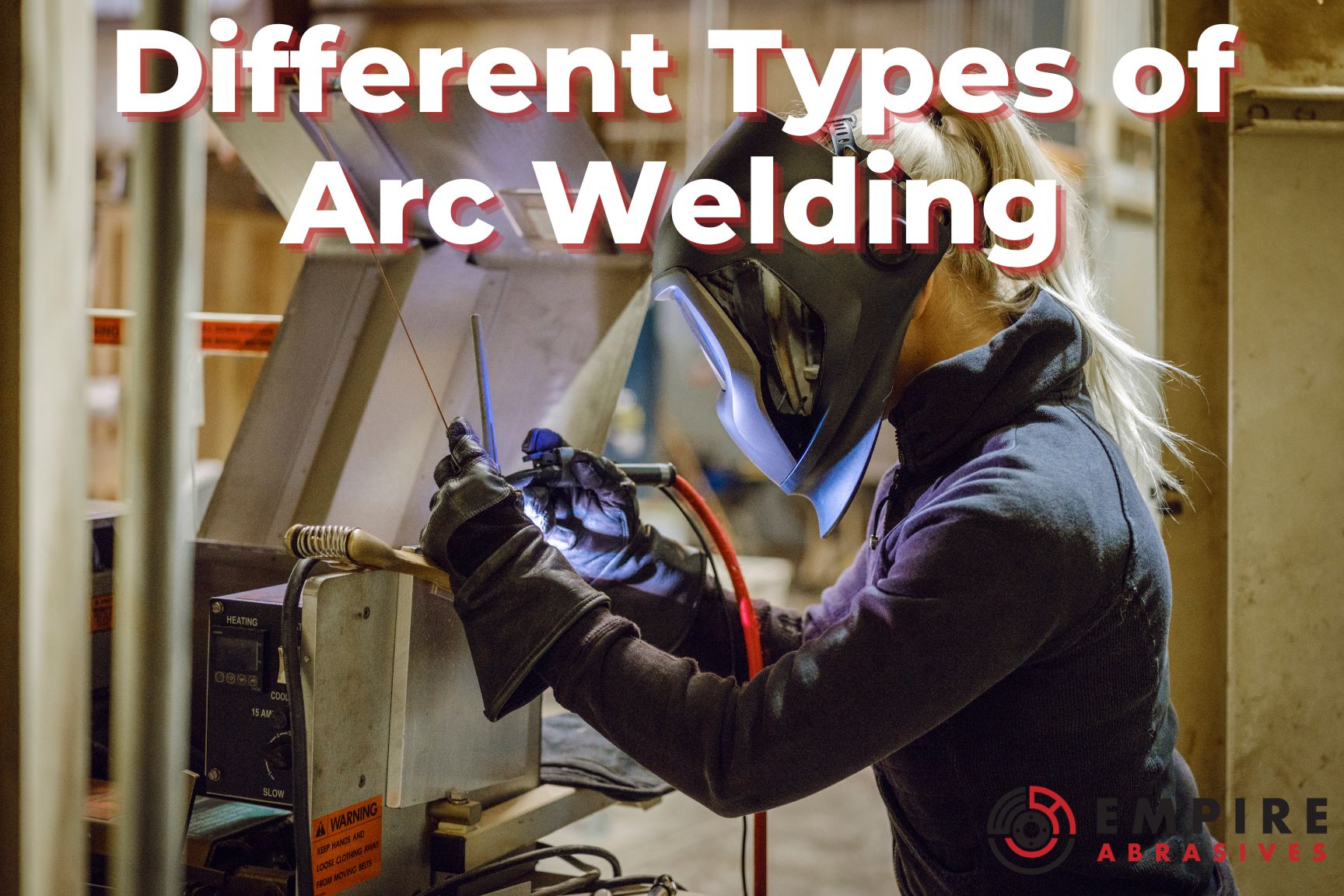
Credit: www.empireabrasives.com
Advanced Arc Welding Techniques
Some arc welding methods have advanced features:
- Pulse welding: TIG and MIG machines can pulse current for more control on thin metals.
- Robotic welding: Many car factories use robots for MIG and spot welding. This gives speed and repeatability.
- Multi-process machines: Some welders can switch between stick, TIG, and MIG. This saves space and money.
These advanced features help with complex or high-volume jobs but are not always needed for simple repair work.
Practical Applications Of Arc Welding
Arc welding is everywhere. Some examples:
- Bridges and buildings: Large steel beams and plates use SAW, ESW, or stick welding.
- Automotive repair: MIG and stud welding join panels and bolts.
- Pipework: Stick and TIG welding make gas- and water-tight joints on pipes.
- Art: TIG is used to join thin stainless steel for sculptures.
Each method matches the job’s needs for speed, strength, and cost.

Credit: www.researchgate.net
Real-world Data: Arc Welding Use By Industry
Arc welding is used in many industries. Here is a simple estimate of which methods are most popular:
| Industry | Main Arc Welding Method | Estimated Usage (%) |
|---|---|---|
| Construction | SMAW, FCAW | 40 |
| Automotive | MIG, Stud | 30 |
| Shipbuilding | SMAW, FCAW, SAW | 15 |
| Aerospace | TIG, PAW | 10 |
| Other | All types | 5 |
Note: Data based on industry reports and expert estimates.
Innovations In Arc Welding
Technology keeps changing arc welding. Some recent trends include:
- Inverter power sources: Smaller, lighter welders with better control
- Digital controls: Machines with screens and memory for settings
- New electrode coatings: Less smoke, better welds, and more choices for special metals
More companies use robots and computer control to make welds faster and more repeatable. This helps reduce mistakes and save money in large factories.
For more on arc welding history and technology, see the Wikipedia page on arc welding.
Frequently Asked Questions
What Is The Easiest Type Of Arc Welding To Learn?
MIG welding (GMAW) is the easiest for most beginners. The wire feeds automatically, and the arc is stable. It is easy to start and stop, and you do not need to brush off slag after each weld.
Can Arc Welding Be Used On Aluminum?
Yes, but not all types. TIG and MIG work well for aluminum if you use the right settings and shielding gas. Stick and flux-cored welding are not usually good for aluminum.
What Metals Cannot Be Arc Welded?
Most metals can be arc welded, but cast iron, magnesium, and some high-carbon steels need special rods and skill. Some metals, like copper or titanium, are harder to weld and need special processes.
Why Is Shielding Important In Arc Welding?
Shielding (gas or flux) keeps air away from the hot weld metal. Air can cause cracks, holes, or weak joints. Good shielding is needed for a strong, clean weld.
How Long Does It Take To Learn Basic Arc Welding?
Most people can learn the basics in a few days to a week with practice. Making perfect welds takes months or years. Start with simple methods like stick or MIG, then move to TIG or advanced processes.
Arc welding offers many ways to join metal. Each method has its own strengths, limits, and best uses. By learning the main types and their features, you can choose the right process for your work, stay safe, and make strong, lasting joints.