Disclosure: This post contains affiliate links and I will be compensated if you make a purchase after clicking through my links. Learn More
Welding is one of the most important processes in structural fabrication shops. It joins pieces of metal to create strong, reliable frameworks for buildings, bridges, towers, and other large structures. Without welding, many modern construction projects would not be possible. Understanding how welding fits into the workflow of a structural fabrication shop helps anyone interested in construction, engineering, or metalwork see why this skill matters so much.
Fabrication shops use many techniques, but welding stands out because it creates permanent connections that hold up under weight, wind, and other forces. These shops handle huge beams, columns, and plates of steel, turning raw materials into finished pieces for job sites.
Every weld must be precise and strong, or the final structure could be unsafe.
Most people see welders with masks, sparks, and heavy gloves, but there is much more going on behind the scenes. Fabrication shops use different welding methods, quality checks, and planning steps to ensure every piece meets strict standards. Shops also need to follow safety rules, manage costs, and finish work on tight schedules.
This article explains the role of welding in structural fabrication shops, the main methods, the workflow, the challenges, and the future of welding in this industry.
The Role Of Welding In Structural Fabrication
Structural fabrication shops build parts for bridges, commercial buildings, factories, warehouses, and towers. These parts include beams, columns, trusses, braces, and connection plates. Shops cut, shape, punch, and weld steel to make custom pieces for each project. Welding brings together all the parts to form a rigid, load-bearing frame.
Why Welding Is Essential
Welding creates joints that are usually as strong as the base metal. Bolting or riveting can work, but welding gives more flexibility and strength in many cases. Welds can handle forces from all directions, which is critical in buildings and bridges exposed to wind, earthquakes, and heavy loads.
Most large steel structures depend on welded connections to resist bending, twisting, or breaking. The ability to shape and join steel in complex ways lets engineers design safer, taller, and more creative structures. Welding also reduces the need for extra plates and bolts, making the final product lighter and sometimes less expensive.
Common Structures Made With Welding
- High-rise buildings: Frames for tall buildings rely on welded beams and columns.
- Bridges: Welded steel parts form the main spans and supports.
- Industrial facilities: Factories and warehouses need strong welded frameworks.
- Towers and masts: Communications towers use welded trusses for height and strength.
- Stadiums: Large roofs and seating areas depend on welded supports.
Each of these structures needs precise welding to ensure safety and performance.
Main Welding Processes Used In Fabrication Shops
Fabrication shops use several welding processes, each with its own advantages. The choice depends on the type of steel, the thickness of the metal, project requirements, and speed.
Shielded Metal Arc Welding (smaw)
SMAW is also called stick welding. It uses a metal rod coated with flux to create a weld. The rod melts, forming a joint, while the flux creates a gas shield to protect the weld from the air. SMAW is simple and works well outside, but it is slower than some other methods.
Key benefits:
- Works on many types of steel
- Portable and reliable for repair work
- Can be used in tight spaces
Gas Metal Arc Welding (gmaw/mig)
GMAW or MIG welding uses a wire fed through a gun. Shielding gas protects the weld. MIG welding is fast and produces clean joints, which is great for large projects with many repeated welds.
Key benefits:
- High speed and efficiency
- Produces less smoke and slag
- Ideal for long, straight welds on beams and columns
Flux-cored Arc Welding (fcaw)
FCAW is similar to MIG but uses a special wire filled with flux. It works well outdoors or in windy areas because the flux gives extra protection against contamination.
Key benefits:
- Good for thick steel
- Handles dirty or rusty surfaces
- Often used for heavy structural work
Submerged Arc Welding (saw)
SAW uses a wire and a layer of powdered flux. The arc forms under the flux, which keeps the weld clean and cool. This method is very fast for long, straight joints.
Key benefits:
- Very high deposition rate (lots of weld metal laid quickly)
- Deep weld penetration for thick parts
- Low fumes and spatter
Tungsten Inert Gas Welding (gtaw/tig)
TIG welding uses a tungsten electrode and a shielding gas. It creates the highest quality welds but is slower and needs more skill.
Key benefits:
- Very precise and clean welds
- Good for thin steel or special alloys
- Used for critical joints where appearance matters
Comparison Of Common Welding Processes
Here is a quick comparison of the main welding methods in fabrication shops:
| Process | Speed | Best for | Main Limitation |
|---|---|---|---|
| SMAW (Stick) | Medium | Repairs, outdoors | Slower, more slag |
| MIG (GMAW) | High | Production runs | Needs clean steel |
| FCAW | High | Heavy sections, outdoors | Some smoke and spatter |
| SAW | Very High | Long, straight welds | Not for small or curved parts |
| TIG (GTAW) | Low | Thin/special metals | Slow, needs skill |
Credit: myspecfab.com
The Structural Fabrication Workflow And Welding
Welding is only one step in the full workflow of a fabrication shop. Each project moves through several stages, and each step affects the final weld quality.
1. Design And Engineering
Projects start with detailed drawings and engineering plans. Engineers decide where to place welds, what size they should be, and what method to use. They check loads, stresses, and building codes. The shop gets clear instructions about weld types, angles, and lengths.
2. Material Preparation
Shops order steel beams, plates, and bars to match the drawings. Workers cut and shape each piece using saws, shears, or plasma cutters. They clean the edges and make sure surfaces are smooth. Good preparation is essential because dirty or uneven edges can weaken welds.
3. Fitting And Assembly
Fitters line up the parts, check angles, and clamp them in place. They use measuring tools and jigs to get everything exact. Tack welds hold the pieces together before the final welding.
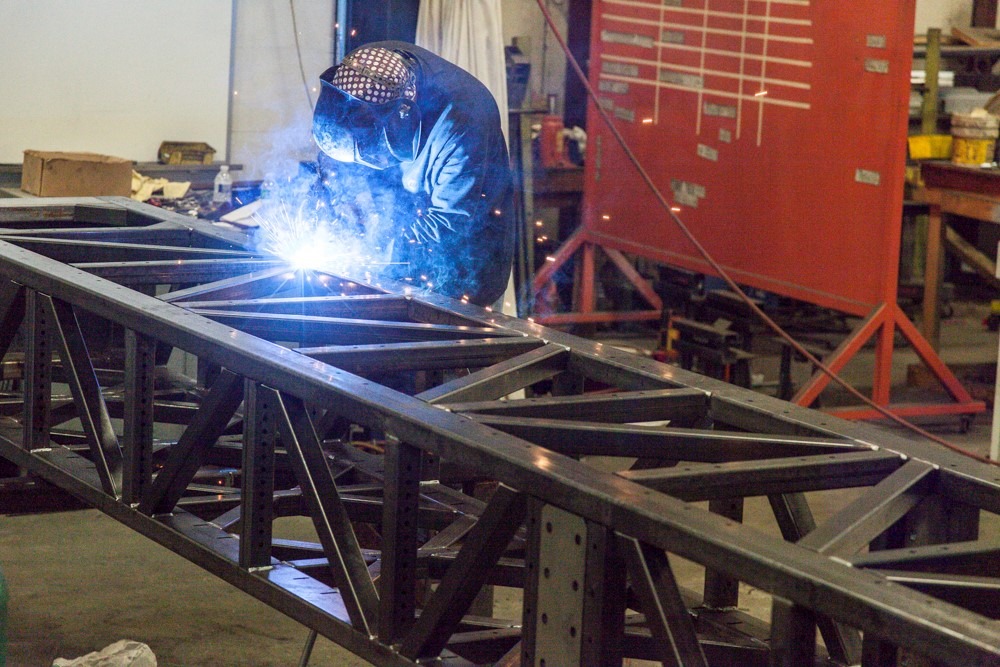
4. Welding
Skilled welders use the selected process to join the parts. They follow the weld procedure specification (WPS), which gives details on temperature, speed, and technique. Shops track each weld for quality control.
5. Inspection And Testing
Quality inspectors check every weld using visual checks, gauges, and sometimes X-rays or ultrasound. They look for cracks, holes, or weak spots. If a weld fails, it must be ground out and redone.
6. Finishing And Coating
After welding, workers grind or polish the welds and remove any slag or spatter. They may add coatings to protect against rust. The finished parts are marked, packed, and shipped to the job site.
Workflow Example: Building A Steel Beam
- Engineers design a beam and specify welds.
- Shop cuts the steel to length.
- Workers drill holes for bolts or plates.
- Fitters align stiffeners and end plates.
- Welders tack and then fully weld the parts.
- Inspectors check the welds.
- Workers grind and paint the beam.
- The beam is shipped for installation.
Each step depends on the welds being strong and accurate.
Welding Joints And Their Importance
In structural fabrication, the type of weld joint affects the strength and performance of the connection. Some joints are better for certain loads or shapes.
Common Weld Joints
- Butt Joint: Two pieces are placed end to end. Common in beams and columns.
- Fillet Joint: One piece joins at an angle, often in T, lap, or corner shapes.
- Groove Joint: Edges are shaped (grooved) before welding for deeper penetration.
- Plug and Slot Welds: Used to join overlapping plates through holes.
Why Joint Type Matters
A poor joint design can cause weak spots or cracks. Engineers choose the joint type based on load direction, thickness, and how the structure will be used. Welders must follow the drawing exactly—changing the joint can make the whole structure unsafe.

Credit: baysidemachine.com
Quality Control And Inspection In Welding
Welding mistakes can lead to failures, so strict quality control is required. Fabrication shops use several methods to check welds.
Visual Inspection
Inspectors look for cracks, undercut, overlap, or incomplete fusion. Good lighting and magnifiers help find small defects.
Non-destructive Testing (ndt)
These methods check inside the weld without cutting it open:
- Ultrasonic Testing: Sound waves find hidden cracks or voids.
- Radiographic Testing: X-rays show defects inside thick welds.
- Magnetic Particle Testing: Finds surface cracks using magnetic fields.
Destructive Testing
Shops sometimes cut and bend test pieces to check weld strength. These tests are done on sample welds, not the final structure.
Welding Procedure Specifications (wps)
Every project must follow a WPS—a written document that details the materials, methods, and inspection steps. Shops keep records of every weld and test for traceability.
Example: Bridge Weld Inspection
On a large bridge project, every main weld is inspected by both the shop’s quality team and an outside agency. If a weld fails, it must be repaired and retested before the bridge part leaves the shop.
Safety In Welding Operations
Welding can be dangerous. It involves high heat, electricity, fumes, and bright light. Fabrication shops use many safety practices to protect workers.
Main Hazards
- Burns: Molten metal and sparks can cause serious burns.
- Electric Shock: Welders handle live wires and equipment.
- Fumes and Gases: Some metals and coatings produce toxic fumes when welded.
- Eye Damage: Bright arcs can cause “arc eye” or blindness.
- Fire Risk: Sparks can start fires in the shop.
Safety Practices
- Personal protective equipment (PPE): Welders wear helmets, gloves, jackets, and boots.
- Ventilation: Shops use fans and filters to remove fumes.
- Training: Workers learn safe welding practices and emergency steps.
- Fire prevention: Flammable materials are kept away, and fire extinguishers are nearby.
- Equipment checks: Tools are inspected before use.
Common Mistakes To Avoid
- Using damaged cables or machines.
- Not cleaning surfaces before welding.
- Ignoring safety gear.
- Rushing the job, leading to weak welds.
Automation And Technology In Welding
Modern fabrication shops use more automation and advanced technology to improve speed, quality, and safety.
Automated Welding Machines
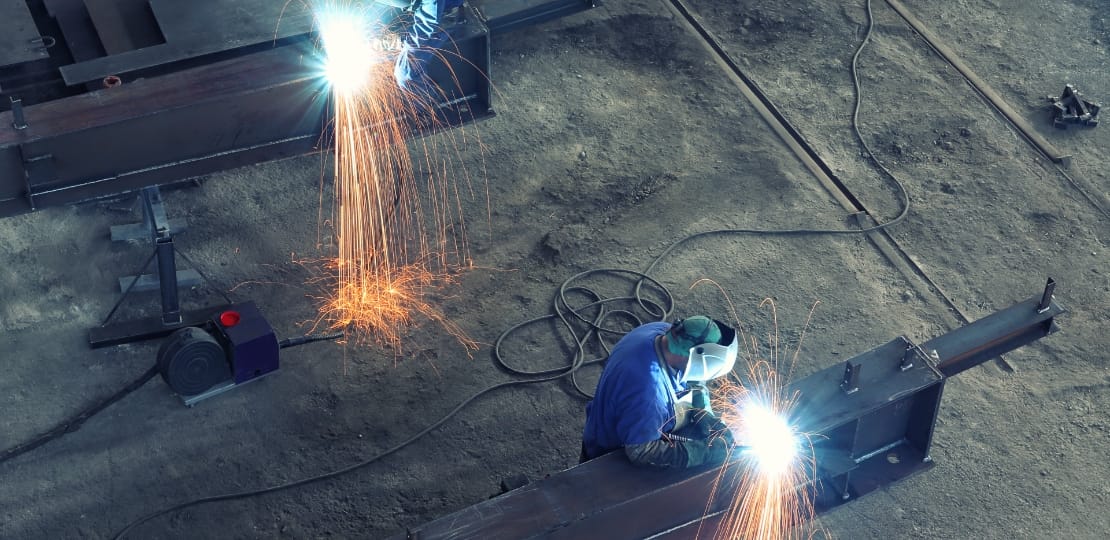
Robotic arms can weld long, straight seams much faster than people. They reduce errors and work non-stop. Shops use robots for repetitive tasks, such as welding hundreds of similar beams.
Computer-aided Design (cad) And Manufacturing (cam)
Engineers create detailed 3D models of every part. The shop feeds this data into machines that cut and weld steel automatically. This reduces mistakes and speeds up production.
Monitoring And Sensors
Shops use sensors to track temperature, speed, and weld quality in real time. If something goes wrong, the system alerts workers.
Comparison: Manual Vs. Automated Welding
| Factor | Manual Welding | Automated Welding |
|---|---|---|
| Speed | Medium | High |
| Consistency | Varies by operator | Very consistent |
| Cost | Lower setup, higher labor | Higher setup, lower labor |
| Flexibility | High (custom work) | Best for repeat jobs |
Insights On Automation
Many shops mix manual and automated welding. Robots handle standard tasks, while skilled welders tackle complex or custom joints. Shops investing in automation see fewer errors and faster project completion, but they need workers who can program and maintain machines.
Cost Factors In Welding For Structural Fabrication
Welding adds to the total cost of a structural project. Shops must manage these costs to stay profitable and competitive.
Main Cost Drivers
- Labor: Skilled welders are in high demand, and wages make up a big part of the cost.
- Materials: Electrodes, wires, gases, and electricity all add up.
- Equipment: Modern machines and robots are expensive but increase output.
- Inspection and Testing: Quality checks cost money but are required by law.
- Rework and Repairs: Mistakes or failed welds mean extra time and material.
Strategies To Control Costs
- Use the fastest welding method that meets quality needs.
- Train workers to reduce errors and waste.
- Plan jobs to minimize setup and movement.
- Invest in equipment that fits the shop’s main type of work.
Example: Reducing Costs With Fcaw
A shop making heavy columns switched from stick welding to FCAW. This cut welding time by 30% and reduced the need for cleaning, saving thousands of dollars over a year.
Training And Skills For Welders In Fabrication Shops
Welders need more than technical skill—they must read drawings, follow procedures, and work safely.
Essential Skills
- Blueprint reading: Understanding plans and weld symbols.
- Metal preparation: Cleaning and shaping for quality welds.
- Weld technique: Controlling speed, angle, and heat.
- Equipment setup: Adjusting machines for each job.
- Problem-solving: Fixing issues on the fly.
Certification
Many countries require welders to pass tests for specific methods and materials. Certification proves a welder can make safe, strong joints.
Ongoing Training
Shops provide ongoing education as technology changes. Welders must keep up with new machines, materials, and safety rules.
Non-obvious Insights
- Welders who understand the full fabrication process make fewer errors because they know how their work fits into the big picture.
- Shops value welders who can troubleshoot equipment and help maintain machines, not just weld.
Environmental Concerns In Welding
Welding can affect the environment through fumes, energy use, and waste. Shops must follow rules to limit their impact.
Fume Control
Welding produces fumes that can contain metals and chemicals. Shops use local exhaust systems, filters, and clean processes to protect both workers and the environment.
Energy Use
Welding machines use a lot of electricity. Efficient machines and careful planning help reduce waste.
Waste Management
Shops recycle steel scrap and safely dispose of used electrodes and flux. Some even capture and reuse welding gases.
Example: Reducing Fume Emissions
A shop switched to a low-fume wire for MIG welding, cutting hazardous fume output by 40%. Workers’ health improved, and inspections were easier to pass.
Challenges In Structural Welding
Fabrication shops face real challenges with welding, especially as projects get bigger and more complex.
Tight Tolerances
Engineers demand high precision. Even a small error in weld size or position can cause problems during installation.
Project Schedules
Shops often work under pressure to meet delivery dates. Rushing can lead to mistakes, but delays cost money.
Material Issues
Some steels are harder to weld or need special preparation. New alloys may require new techniques.
Regulatory Demands
Building codes and client standards keep changing. Shops must update their procedures and training to stay compliant.
Non-obvious Insight
- Shops that involve welders early in project planning avoid costly mistakes. Welders often spot issues in drawings that engineers might miss.
The Future Of Welding In Structural Fabrication
Welding will keep evolving as shops adopt new technology and materials. Some trends are already shaping the future:
More Automation
Robots and smart machines will handle more repetitive welding. Human welders will focus on complex or repair work.
Advanced Materials
New steels and alloys will need updated welding methods. Shops must stay ready to learn and adapt.
Digital Tracking
Shops will use software to track every weld, from start to finish, making quality checks easier and faster.
Better Training
Virtual reality (VR) and simulators will help train new welders faster and more safely.
Focus On Sustainability
Shops will use greener methods and recycle more materials to meet environmental goals.
For more on welding technology, see the article by the American Welding Society.
Credit: www.hobartbrothers.com
Frequently Asked Questions
What Is The Most Common Welding Process In Structural Fabrication Shops?
FCAW (Flux-Cored Arc Welding) and MIG (GMAW) are the most common because they are fast, work well on thick steel, and are suitable for production lines. Shops may still use stick welding for repairs or outdoor work.
How Do Fabrication Shops Ensure Weld Quality?
Shops use a mix of visual inspection, non-destructive testing (like ultrasound or X-ray), and strict procedures. Every project follows a Welding Procedure Specification (WPS) and keeps records for every weld.
Is Welding In Fabrication Shops Dangerous?
Welding can be risky, but proper training, protective gear, and good ventilation make it much safer. Shops focus on safety to protect workers from burns, fumes, and electric shock.
Can Robots Replace Human Welders In Structural Fabrication?
Robots now handle many repetitive welds, but skilled human welders are still needed for custom, complex, or repair work. Automation increases, but humans remain key for many tasks.
Why Is Joint Design So Important In Structural Welding?
The joint type affects how well the structure handles loads and forces. Poor joint design can cause weak spots or failures. Engineers and welders must follow plans closely for safety.
Welding is the backbone of structural fabrication shops. It combines skill, technology, and strict quality control to create safe, strong buildings and bridges. As shops grow and change, welders who learn new methods and keep high standards will always be in demand.