Disclosure: This post contains affiliate links and I will be compensated if you make a purchase after clicking through my links. Learn More
Choosing the right welding clamps can make your metalwork faster, safer, and more accurate. Many beginners buy the wrong clamps or too few types, which leads to frustration and weak welds. It’s easy to think all clamps do the same job, but each clamp type has a special purpose.
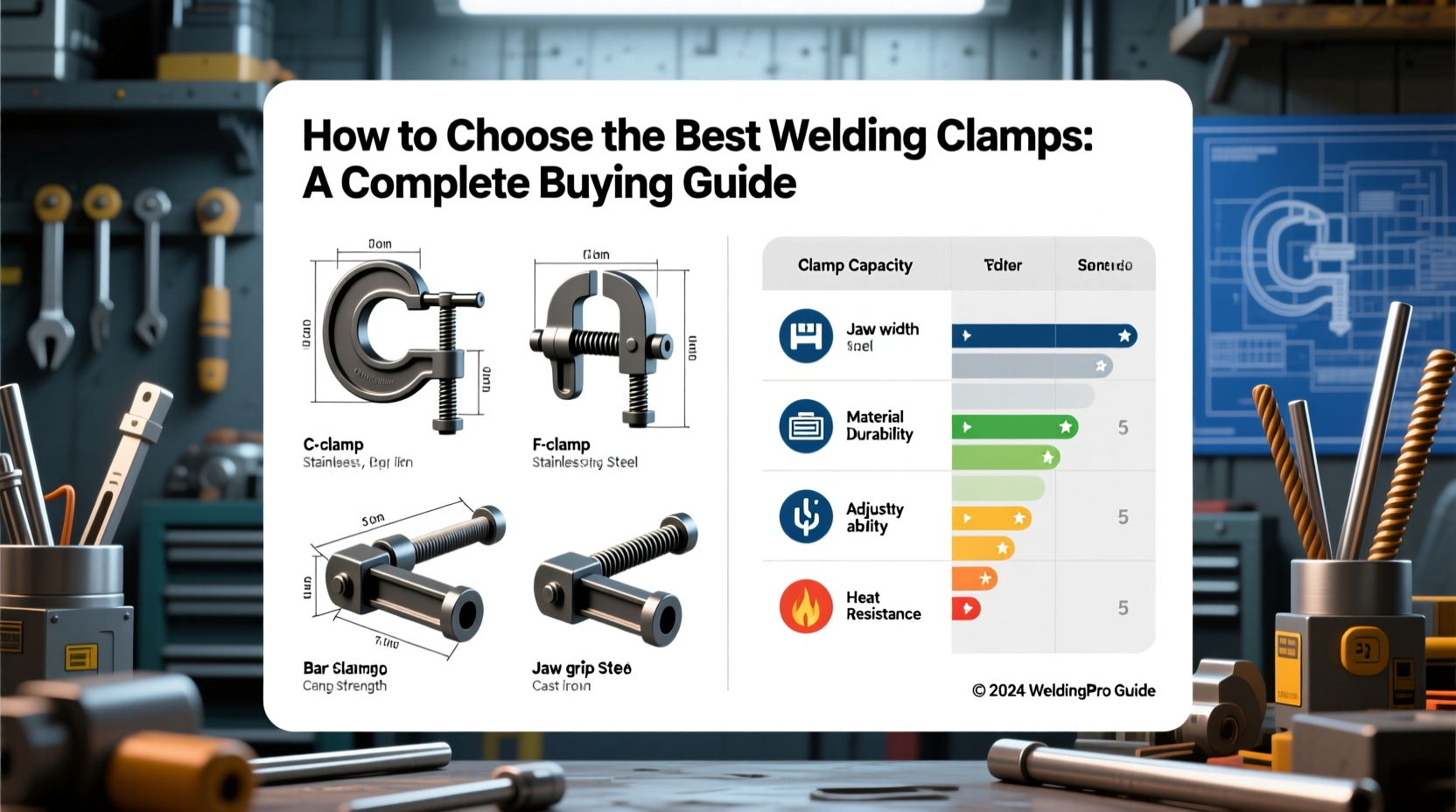
If you want solid welds and less hassle, it’s important to match your clamps to your project’s needs.
This guide will help you understand the main kinds of welding clamps, how they work, and what to check before buying. You’ll learn the factors that matter, common mistakes to avoid, and get practical tips based on real workshop experience.
Whether you work with sheet metal, thick steel, or pipe, you’ll find clear advice for both small and large projects. By the end, you’ll know which clamps to use, why they matter, and how to choose with confidence.
Why Welding Clamps Matter
Welding clamps hold workpieces together so you can focus on the weld, not the parts moving. Good clamps improve safety and accuracy. Poor clamps waste time and can create weak joints. Most welding projects need more than one type of clamp.
A solid clamp does these things:
- Holds metal tightly
- Resists heat and sparks
- Releases quickly when finished
If you skip clamps or use the wrong kind, your metal may warp, move, or misalign. This leads to ugly welds, wasted material, and sometimes injury. Clamps are not just for professionals. Anyone who welds—even for small repairs—benefits from using the right clamp.
Types Of Welding Clamps
Each clamp works best in certain situations. Let’s look at the main types and what they do.
1. C-clamps
C-clamps are strong and simple. They use a screw to press two jaws together. You can use them on thick or thin pieces. Most shops have several sizes.
Best for: General metalwork, holding thick steel, or when you need a strong grip.
Tip: Choose C-clamps with copper-plated screws if you weld often. They resist weld spatter and last longer.
2. Locking Pliers (vise-grip Clamps)
These clamps use a lever to lock tightly in place. Locking pliers can hold flat or round objects. They work fast and release with a trigger.
Best for: Fast setup, holding sheet metal, or gripping odd shapes.
Tip: Look for wide-jaw models if you weld car panels or big surfaces.
3. F-clamps
F-clamps have a bar with one fixed and one sliding jaw. They adjust to different widths quickly.
Best for: Large frames, doors, or when you need to hold parts far from the edge.
Tip: Some F-clamps have pads to prevent marks on softer metals.
4. Pipe Clamps
Pipe clamps use a standard pipe as the main bar. You can buy different lengths for big or small projects.
Best for: Long welds, frames, or jobs where you need a lot of reach.
Tip: Keep a few pipes of different lengths for flexibility.
5. Magnetic Clamps
Magnetic clamps hold metal in place using strong magnets. They are fast and don’t require a hand to tighten.
Best for: Quick setup, sheet metal, or holding metal at angles.
Tip: Not all magnets are strong enough for thick steel. Check the pull force rating before you buy.
6. Spring Clamps
Spring clamps use a strong spring to squeeze two jaws together. They are quick, but less strong than other types.
Best for: Light work, holding small pieces, or temporary positioning.
Tip: Don’t use spring clamps for heavy or critical joints—they can slip.
7. Sheet Metal Clamps
These have wide, flat jaws to spread pressure evenly. Sheet metal clamps prevent bending or marks on thin metal.
Best for: Car bodywork, HVAC ducts, or any thin metal sheets.
Tip: The wider the jaw, the less likely you’ll dent or mark the metal.
8. Corner Clamps
Corner clamps hold pieces at a precise 90-degree angle. This keeps frames and boxes square while you weld.
Best for: Picture frames, boxes, or any project with corners.
Tip: Some corner clamps also work for 45-degree joints.
9. Toggle Clamps
Toggle clamps attach to a workbench or jig. They use a lever to lock parts in place fast.
Best for: Repetitive work, jigs, or assembly lines.
Tip: Use these when you need to weld many identical parts.
10. Pipe-fit Clamps
Designed for round objects, pipe-fit clamps hold pipes or tubing steady. They keep pieces from rolling.
Best for: Pipe welding, railings, or exhaust systems.
Tip: Make sure the clamp fits the pipe diameter you use most.
11. Chain Clamps
Chain clamps use a chain to wrap around large or awkward shapes. They adjust to fit many sizes.
Best for: Holding pipes, cylinders, or irregular objects.
Tip: These are great for automotive and industrial work.
12. Quick-release Clamps
These clamps use a trigger for fast opening and closing. Quick-release clamps save time on jobs with many setups.
Best for: Production work, repairs, or when you change positions often.
Tip: Check that the clamp locks tight before welding.
13. Ground Clamps
Ground clamps do not hold parts together, but they are critical for welding. They connect the workpiece to the welder’s ground cable.
Best for: All welding jobs.
Tip: A poor ground clamp causes weak arc starts and unstable welds.
Key Factors To Consider When Choosing Welding Clamps
Now that you know the main types, let’s see what to check before you spend money.
Clamp Size And Opening
Clamp size affects what you can hold. The jaw opening must fit the thickness of your metal plus any shims. If the clamp is too small, it won’t reach. If it’s too big, you lose grip strength.
Example: For a 2-inch pipe and a 0.5-inch bracket, you need at least a 2.5-inch jaw opening.
Holding Power
A clamp must hold the workpiece without slipping. Check the holding force rating, usually in pounds or kilograms. More force is better for heavy or long welds, but for thin metal, too much force can bend the material.
Practical tip: Use light clamps for thin sheet metal and strong clamps for thick steel.
Material And Durability
Clamps come in steel, cast iron, or aluminum. Steel clamps last longest and resist heat. Cast iron is strong but can crack if dropped. Aluminum is light but not as tough.
Non-obvious insight: Cheap clamps use low-grade steel that can bend or break under stress. Always check the quality before buying a full set.
Jaw Design
Jaws can be flat, curved, or padded. Flat jaws are best for general use. Curved jaws grip round shapes. Padded jaws protect soft metals from marks.
Common mistake: Using flat jaws on pipes—they slip and damage the pipe.
Clamp Weight
Heavy clamps can be hard to position, especially on vertical or overhead welds. Lighter clamps are easier to handle but may not grip as strong.
Tip: For projects above shoulder height, choose light clamps or magnetic types.
Quick-release Vs. Screw-type
Quick-release clamps save time but may loosen during welding if not well made. Screw-type clamps take longer but hold more reliably.
Advice: Use quick-release for positioning and screw-type for final locking.
Resistance To Heat And Spatter
Welding creates heat and metal spatter. Some clamps have copper plating or insulation to resist damage.
Important: If you weld often, invest in clamps made for welding, not woodworking. Wood clamps can melt or catch spatter.
Price And Value
Clamps range from a few dollars to over $50 each. Price often reflects strength, material, and brand. Cheap clamps may fail or slip, causing more cost in ruined workpieces.
Non-obvious insight: It’s better to have a few good clamps than many weak ones.
Matching Clamp Types To Project Needs
Not all clamps fit all jobs. Here’s how to match the right clamp to your project.
| Project Type | Best Clamp Type(s) | Why |
|---|---|---|
| Sheet Metal | Sheet metal, locking pliers, magnetic | Wide jaws prevent marks, magnets work fast |
| Pipe Welding | Pipe-fit, chain, C-clamps | Fit round shapes, prevent rolling |
| Frames and Boxes | Corner, F-clamps | Keep angles precise, adjust to different sizes |
| Heavy Steel | C-clamps, F-clamps | High force, strong grip |
| Quick Repairs | Quick-release, spring, magnetic | Fast setup, easy to move |
If you work on cars, sheet metal clamps and locking pliers are essential. For gates or fences, you’ll need pipe-fit and chain clamps. For furniture frames, corner clamps and F-clamps keep things square.

Credit: www.hozakovainteriery.cz
How Many Clamps Do You Need?
Most projects need more than one clamp. Clamps hold joints in place while you tack weld (make small starter welds). For a small frame, two clamps may be enough. For a large gate or table, you may need six or more.
Practical tip: Always have more clamps than you think you need. It saves time and frustration.
Common mistake: Trying to finish a project with just one or two clamps. Parts move, and welds go out of alignment.
Comparing Popular Welding Clamp Brands
Brand matters because quality affects safety and results. Below is a quick comparison of trusted brands.
| Brand | Strength | Durability | Price Range | Popular for |
|---|---|---|---|---|
| Irwin | High | Very Good | $$ | Locking pliers, C-clamps |
| Bessey | Very High | Excellent | $$$ | F-clamps, specialty clamps |
| Strong Hand Tools | High | Very Good | $$$ | Magnetic, corner clamps |
| Harbor Freight | Medium | Good | $ | Budget sets, light work |
| Jorgensen | High | Good | $$ | Pipe clamps, woodworking clamps |
Tip: Start with a few clamps from a good brand. Test them in your shop before buying in bulk.
Common Mistakes To Avoid
Many beginners make the same errors. Here’s how to avoid them.
- Using too few clamps: This causes parts to shift during welding.
- Choosing the wrong clamp type: Flat jaws on pipes or small clamps on heavy steel lead to poor results.
- Ignoring clamp material: Woodworking clamps can melt or bend from welding heat.
- Over-tightening clamps: This bends thin metal and causes stress cracks.
- Not cleaning clamp jaws: Dirt or oil reduces grip and can contaminate welds.
- Failing to check clamp fit: Always check that the clamp fits your workpiece before welding.
- Skipping ground clamps: A weak ground connection can ruin your weld.
Practical Tips For Using Welding Clamps
To get the best results, follow these tips:
- Position clamps close to the weld: This reduces movement and warping.
- Tighten clamps evenly: Uneven force can twist or bend the workpiece.
- Protect finished surfaces: Use pads or cardboard under jaws if you don’t want marks.
- Use enough clamps: One at each joint and a few along long seams prevent gaps.
- Remove clamps slowly: Check that the weld is cool and solid first.
- Check clamp alignment: Misaligned clamps cause crooked welds.
- Clean clamps after use: Remove spatter, dust, and oil.
- Store clamps dry: Rust weakens grip and shortens clamp life.
Special Clamp Features Worth Considering
Some welding clamps have extra features that make work faster or safer.
- Swivel pads: Adjust to uneven surfaces.
- Copper-plated screws: Resist welding spatter.
- Quick-change jaws: Switch between flat and curved grips.
- Heat shields: Protect hands from hot metal.
- Built-in magnets: Hold small parts in place.
Non-obvious insight: Swivel pads are very helpful if you often weld on rusty or uneven steel. They maintain grip where flat jaws would slip.
How To Maintain And Store Welding Clamps
Good clamps last years if you care for them.
- Wipe down after each use to remove dust and spatter.
- Oil screw threads lightly to prevent rust.
- Store in a dry place, hung on a wall or rack.
- Check for bent jaws or worn threads before each project.
- Replace pads or springs when worn out.
Practical tip: Keep a small brush handy to clean clamp jaws after each job.
When To Replace Your Clamps
Clamps wear out over time. Replace if you see:
- Cracked frames or jaws
- Bent screw threads
- Weak springs (in spring or quick-release clamps)
- Slipping or worn-out locking mechanisms
Using broken clamps is unsafe and leads to poor welds.
Real-world Example: Choosing Clamps For A Steel Table
Suppose you want to weld a steel table with 2-inch square tubing. You need to keep corners at 90 degrees and prevent the frame from warping.
Best clamps for this job:
- 2-4 corner clamps for precise angles
- 2-3 F-clamps for long sides
- 2 C-clamps for extra holding power
Why? Corner clamps hold the frame square. F-clamps span the long sides. C-clamps add grip where needed. Avoid spring clamps—they are too weak for heavy tubing.
Common mistake: Using only two clamps. This lets corners move and creates a twisted frame.
How To Test A Welding Clamp Before Buying
Many shops let you test clamps. Here’s what to do:
- Open and close the clamp fully. It should move smoothly.
- Lock the clamp on a sample piece. Check for slipping or flex.
- Check the jaws for sharp edges or rough spots.
- Try the release mechanism. It should work easily and not stick.
- Inspect the welds on the clamp frame. Poor welds mean weak clamps.
Tip: Good clamps feel solid and tight, not wobbly.
Comparing Clamp Types For Common Welding Tasks
This table shows which clamp types fit each task.
| Task | Best Clamp(s) | Why | Tip |
|---|---|---|---|
| Welding a car panel | Sheet metal, locking pliers | Wide grip, fast setup | Use pads to prevent marks |
| Building a fence gate | Pipe-fit, chain, F-clamps | Holds pipes, adjusts to length | Check pipe diameter |
| Repairing a pipe | Chain clamp, C-clamp | Wraps around, strong grip | Use two for long pipes |
| Assembling a box frame | Corner clamp, F-clamp | Keeps 90-degree angles | Clamp before tacking |
| Tacking small parts | Magnetic, spring | Quick, one hand | Don’t use for heavy pieces |
Credit: smartbuy.alibaba.com
Where To Buy Quality Welding Clamps
You can find welding clamps at hardware stores, online suppliers, or welding shops. Look for stores that let you handle the clamps before buying. For reliable information, check guides and reviews on trusted sites like Wikipedia.
Frequently Asked Questions
What’s The Difference Between Welding Clamps And Regular Clamps?
Welding clamps use heat-resistant materials and strong jaws to hold metal during welding. Regular clamps, often for woodworking, may melt or slip under welding heat and force. Always use clamps rated for welding to ensure safety and good results.
How Many Clamps Should I Have For A Basic Welding Setup?
Start with at least four clamps: two C-clamps and two F-clamps. Add specialty clamps (corner, magnetic, sheet metal) as your projects become more complex. Having extra clamps saves time and improves accuracy.
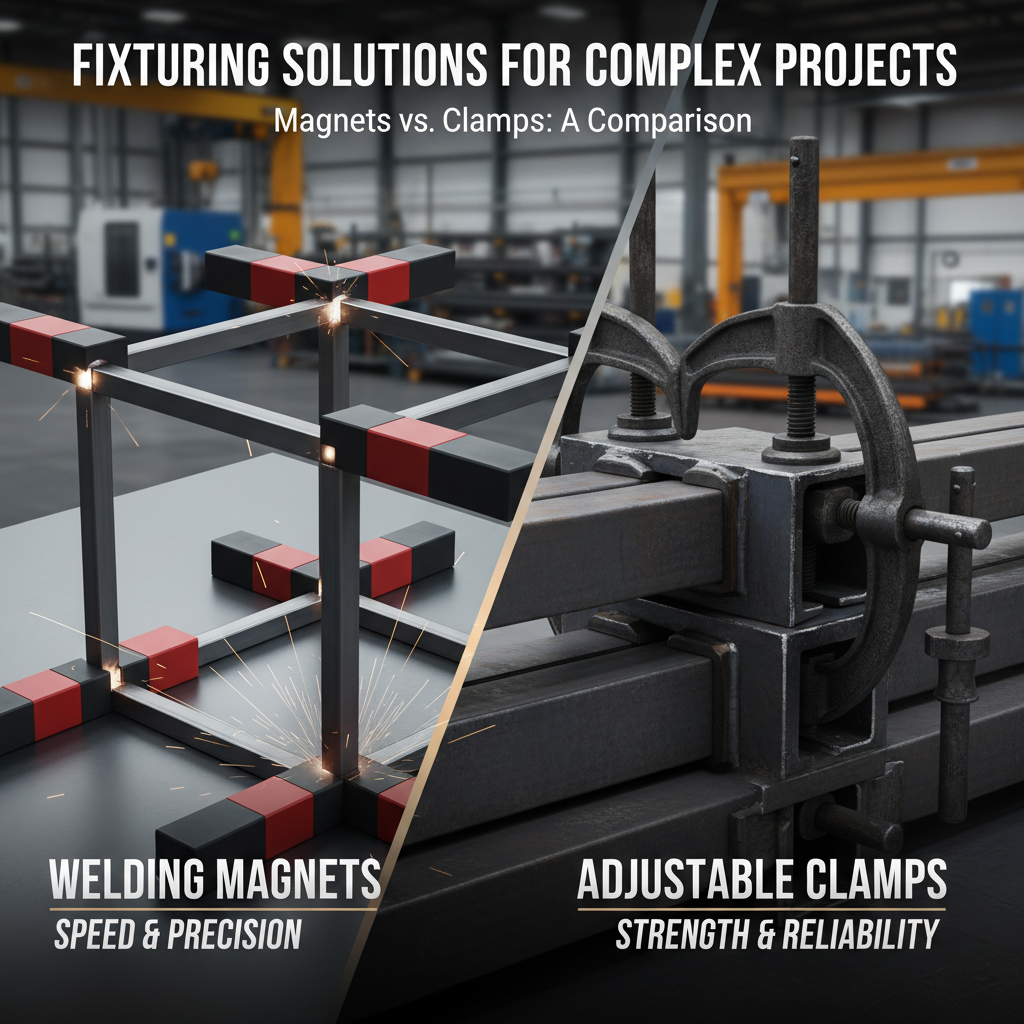
Can I Use Magnets Instead Of Clamps For Welding?
Magnetic clamps are fast and useful for positioning, but they can lose strength with heavy parts or thick steel. For critical or heavy welds, combine magnets with mechanical clamps for safety and best alignment.
How Do I Stop Clamps From Sticking To Weld Spatter?
Choose clamps with copper-plated screws or jaws, which resist spatter. After each use, clean the jaws with a wire brush. For high-spatter jobs, apply a light anti-spatter spray on clamp surfaces, but avoid spraying near the weld joint.
What Is The Most Common Mistake When Choosing Welding Clamps?
The main mistake is using too few or the wrong type of clamp. This causes parts to shift, leading to crooked welds and wasted material. Always match the clamp to the project’s material, shape, and size for best results.
Credit: www.tentacletools.com
Final Thoughts
The right welding clamps make your work safer, faster, and more accurate. Do not rush your choice—think about the metal, the joint, and the force you need. Start with a few good clamps, and build your collection as you try new projects.
Learn the strengths and limits of each clamp type, and take care of your tools. With the right clamps, you’ll get solid welds and enjoy your work more.