Disclosure: This post contains affiliate links and I will be compensated if you make a purchase after clicking through my links. Learn More
Many people see oil rig welding as a good job for those who want adventure, high pay, and steady work. This job is not for everyone. It demands skill, toughness, and a strong work ethic. If you want to become an oil rig welder, you need to learn specific steps, gain real skills, and prepare for a unique work environment.
This guide explains the full process, from basic requirements to advanced tips, so you can decide if this career fits you.
What Does An Oil Rig Welder Do?
Oil rig welders work on offshore or land-based oil platforms. They repair, build, and maintain metal parts, pipes, and structures. Their main tool is the welding torch. They use it to join metal parts, fix broken equipment, and make sure the oil rig stays safe and strong.
Sometimes, they weld under water, which requires special training. Most jobs involve working at heights and in tight spaces.
Oil rig welders often work long shifts—sometimes two weeks on, two weeks off. The work can be dangerous, but safety rules are strict. The pay is higher than many other welding jobs because of the risks and long hours.
Key Skills And Qualities Needed
Oil rig welding is not just about technical skill. Employers look for certain personal qualities and strengths. Here are the most important:
- Physical strength and stamina – Oil rig welders lift heavy objects, stand for long periods, and work in awkward positions.
- Good eyesight and hand-eye coordination – Welders must see details and control their hands with precision.
- Attention to safety – Mistakes can cause injuries or even disasters.
- Problem-solving skills – Welders often need to fix unexpected problems quickly.
- Ability to work in teams – Oil rigs have many workers. Good communication and teamwork are essential.
- Adaptability – Weather, equipment, and schedules can change fast.
- Calm under pressure – Emergencies sometimes happen, and welders must stay focused.
Many people miss that oil rig welders also need good math skills. They measure, calculate angles, and understand blueprints. Employers often test these skills before hiring.
Education Requirements
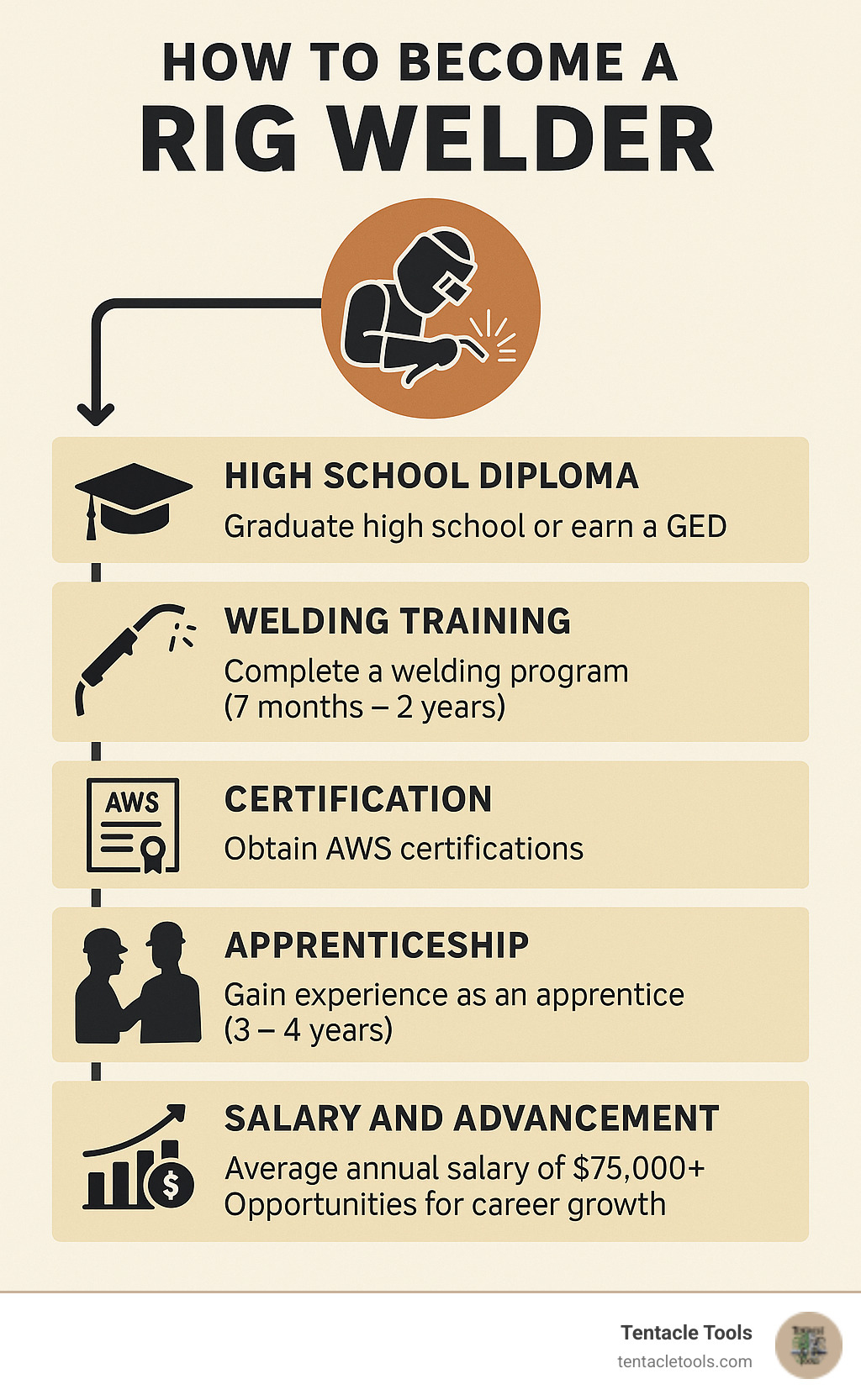
There is no single path to become an oil rig welder, but some education is required. Most employers want at least a high school diploma or equivalent (such as a GED). Some high schools offer basic welding classes, which can give you a head start.
After high school, you need to complete welding training. Technical schools, community colleges, and trade schools offer welding programs. These programs usually take 6 months to 2 years. You learn about:
- Welding safety
- Types of welding (MIG, TIG, Stick, Flux-cored)
- Reading blueprints
- Metal types and properties
- Cutting and shaping metal
Some schools also offer basic offshore safety training. This can help you get hired faster.
Comparing Education Options
Here is a table showing the main differences between welding education programs:
| Program Type | Length | Average Cost | Main Focus | Job Placement Help |
|---|---|---|---|---|
| Technical School | 6-12 months | $5,000 – $15,000 | Hands-on skills | Usually yes |
| Community College | 1-2 years | $3,000 – $10,000 | Skills + theory | Sometimes |
| Apprenticeship | 2-3 years | Low or Free (Paid work) | Work experience | Usually yes |
Shorter programs let you start working sooner, but longer ones often give you more skills and job contacts.
Welding Certifications
Oil rig welders need special certificates to prove their skills. These certificates show you can weld safely and meet industry standards. The most common ones are:
- AWS Certified Welder (from the American Welding Society)
- ASME Certification (for pressure vessels and pipes)
- Offshore safety certificates (such as BOSIET or HUET)
What Is The Aws Certified Welder Certificate?
The AWS Certified Welder test checks your ability to do different types of welds. You must perform test welds that pass inspection. The test is done at approved test centers. You do not need to finish a class first, but training helps.
Offshore Safety Certificates
Most oil companies require special safety training. The main one is BOSIET (Basic Offshore Safety Induction and Emergency Training). This course teaches:
- How to use life jackets and escape suits
- Firefighting
- First aid
- Helicopter escape drills
BOSIET usually takes 3 days and costs $600-$1,000. Some rigs also want the HUET (Helicopter Underwater Escape Training).
Certification Comparison
See the main certificates side by side:
| Certificate | Purpose | Who Needs It | Validity |
|---|---|---|---|
| AWS Certified Welder | Welding skill proof | All welders | Renew every 6 months |
| BOSIET | Offshore safety | Offshore workers | Renew every 4 years |
| HUET | Helicopter escape | Some offshore workers | Renew every 4 years |
Many beginners overlook the need to renew these certificates regularly. If your certificate expires, you cannot work until you renew it.
Gaining Work Experience
After you get trained and certified, you need experience. Most oil companies do not hire new welders straight to oil rigs. You should first work as a welder in easier environments. Start at a repair shop, factory, or construction site. Here, you will:
- Practice welding different metals
- Learn to work with pressure pipes
- Get used to following strict safety rules
- Build a strong work record
Aim for at least 2-3 years of welding experience before applying for oil rig jobs. Some companies accept less if you have excellent training and recommendations.
Working As A Helper Or Welder’s Assistant
Many oil rig welders start as helpers. In this role, you support skilled welders by preparing tools, cleaning work areas, and moving materials. This helps you learn rig procedures and safety rules. It also shows employers that you are serious about the job.
How To Apply For Oil Rig Welding Jobs
When you are ready, start looking for job openings. Oil companies hire welders through job boards, company websites, and staffing agencies. Here is how to improve your chances:
- Create a clear, detailed resume. List your training, certificates, and experience.
- Write a short cover letter. Explain why you want to work offshore and what skills you bring.
- Keep certificates up to date. Attach copies with your application.
- Apply to many companies. The oil industry is competitive. More applications mean more chances.
- Network. Talk to current oil rig workers, attend industry events, and join welding forums online.
Some companies also test your welding skills before hiring. Be ready to show your ability with hands-on tests.
What To Expect: The Work Environment
Oil rigs are unique places. Most are far from land, either in the sea or in remote areas. Workers fly in by helicopter or travel by boat. You live on the rig for weeks at a time, then get weeks off.
Common work schedules:
- 14 days on / 14 days off
- 21 days on / 21 days off
You work 10-12 hours per day, often in all weather. Food and lodging are free. You share small rooms and must follow strict safety and cleanliness rules.
Working conditions can be tough:
- High noise and vibration from machines
- Heat, cold, wind, and rain
- Strict safety checks every day
- Little privacy
- No alcohol or drugs allowed
Many people do not realize that boredom can be a problem between shifts. There is limited internet and few entertainment options on most rigs.
Types Of Oil Rig Welding Jobs
Oil rig welding includes several job types. Each has different tasks and skill levels:
- Rig Welder – Does general welding, repairs, and maintenance on the platform.
- Pipeline Welder – Welds pipes that carry oil and gas from the well.
- Structural Welder – Builds and fixes the main parts of the rig.
- Underwater Welder – Welds under water, often on the rig’s legs or pipes.
- Welding Inspector – Checks other welders’ work for safety and quality.
Most people start as rig welders and can move up with more training and experience.
Job Type Comparison
Here is a table showing job types and their main features:
| Job Title | Main Tasks | Special Training? | Average Salary |
|---|---|---|---|
| Rig Welder | General welding/repairs | No | $55,000 – $75,000 |
| Pipeline Welder | Pipe welding | Yes | $60,000 – $80,000 |
| Structural Welder | Large structure welding | No | $57,000 – $77,000 |
| Underwater Welder | Welding underwater | Yes (diving) | $70,000 – $150,000 |
| Welding Inspector | Inspection/quality checks | Yes (inspection certificate) | $65,000 – $90,000 |
Salaries depend on location, company, and your experience.
Credit: www.tentacletools.com
How To Become An Underwater Oil Rig Welder
Underwater welding is one of the most specialized and best-paid jobs on oil rigs. To become one, you need:
- All standard welding certificates
- Commercial diving certificate (from a diving school)
- Good health (pass medical exams)
- Strong swimming skills
Underwater welding schools often last 6-12 months and cost $15,000–$30,000. Only a few people are accepted, and the training is physically tough.
Important insight: Not all oil rigs need underwater welders. Jobs are rare, and the work is risky. Most underwater welders also do topside (above water) welding.
Health And Safety On Oil Rigs
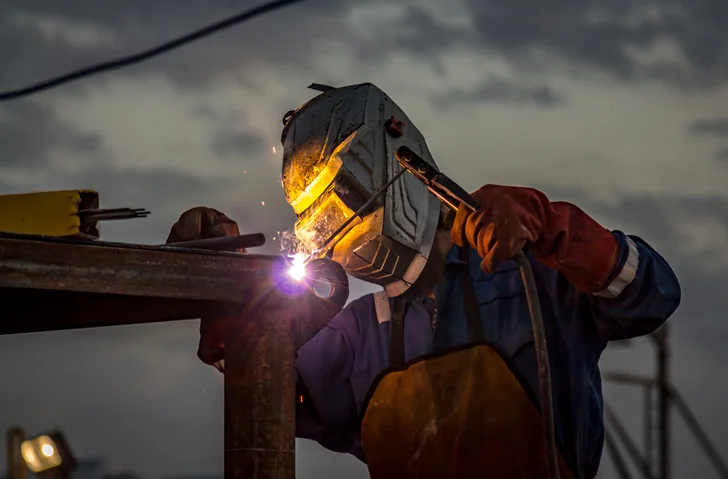
Oil rig welding is dangerous. Safety is the top priority. Workers must wear special gear:
- Fire-resistant clothing
- Safety glasses and face shields
- Hard hats
- Gloves and steel-toe boots
- Harnesses for working at heights
Rigs have strict safety drills. Everyone trains for fire, leaks, and other emergencies. Welders must check equipment before every job. Many accidents happen because of small mistakes or ignoring safety steps.
Two things beginners often miss:
- Mental health matters too. Long work shifts and being away from family can cause stress.
- Noise and vibration can damage hearing and hands. Use earplugs and take breaks.
Credit: www.ziprecruiter.com
Career Growth And Advancement
Welding on oil rigs can lead to better positions and higher pay. Here are some ways to move up:
- Gain more certificates. Learn advanced welding methods or get inspection certificates.
- Take on leadership roles. Become a lead welder or supervisor.
- Move into inspection or safety jobs. These usually pay more and are less physical.
- Specialize in underwater or pipeline welding. These skills are in high demand.
Some experienced welders become trainers or safety officers. Others move to office jobs, helping plan rig construction or repairs.
Realistic Pros And Cons Of Oil Rig Welding
Before you decide, consider the good and bad sides.
Pros
- High pay compared to most welding jobs
- Long periods off work (2-3 weeks off at a time)
- Free food and lodging on the rig
- Chance to travel and see new places
- Strong job security with good performance
Cons
- Dangerous and physically hard work
- Long shifts (10-12 hours per day)
- Time away from family and friends
- Strict safety and behavior rules
- Hard to get started without experience
Many people are attracted by the pay, but underestimate the mental and physical stress. The job is not easy, but those who succeed often find it rewarding.

Credit: ptt.edu
How To Stand Out As A Candidate
Competition for oil rig welding jobs can be tough. Here are strong ways to improve your chances:
- Attend a recognized welding school with offshore safety courses.
- Get experience on land-based oil projects first.
- Learn more than one welding method (MIG, TIG, Stick).
- Keep a clean work and safety record.
- Show you are willing to work hard and learn.
- Ask for references from past employers or instructors.
- Stay up to date with new welding technology.
Employers look for reliable, flexible workers who follow safety rules and work well in teams.
Common Mistakes To Avoid
Many people fail to get hired or lose jobs for simple reasons:
- Ignoring certificate renewals – Expired certificates can stop you from working.
- Not preparing for hands-on welding tests – Book practice time before interviews.
- Poor teamwork – Oil rigs require cooperation.
- Not following safety steps – Even small mistakes matter.
- Underestimating the mental side – Be honest about how you handle stress and long shifts.
Where To Find More Information
You can find more details about welding certifications and offshore safety at the American Welding Society.
Frequently Asked Questions
What Is The Average Salary For An Oil Rig Welder?
Most oil rig welders earn between $55,000 and $80,000 per year. Underwater welders can earn up to $150,000, but jobs are rare and require special training.
How Long Does It Take To Become An Oil Rig Welder?
It usually takes 2 to 4 years. You need time for welding school, getting certified, and gaining work experience before you can apply for oil rig jobs.
Do I Need To Know How To Swim?
You do not need to be a strong swimmer for basic oil rig welding jobs, but you must pass offshore safety training. Underwater welders must swim well and pass diving school tests.
Is There An Age Limit To Become An Oil Rig Welder?
Most employers hire welders who are 18 years or older. There is no strict upper age limit, but you must be healthy and able to pass physical exams.
What Is The Biggest Challenge For New Oil Rig Welders?
The hardest part for most new welders is being away from home for long periods and working long shifts in tough conditions. The job is rewarding, but not easy.
Working as an oil rig welder offers real rewards for those who prepare well and respect the risks. If you are determined, ready to learn, and can handle physical and mental challenges, this career can be both profitable and exciting.
Make sure you meet every requirement, keep your skills sharp, and always put safety first.