Disclosure: This post contains affiliate links and I will be compensated if you make a purchase after clicking through my links. Learn More
Welding stainless steel can be challenging. One of the biggest problems welders face is warping. Warping happens when the metal bends or twists because of uneven heat. This can ruin your project, cause weak joints, and waste materials. Many professionals and hobbyists struggle with this. But you can prevent warping if you understand why it happens and use the right methods.
This article gives clear, practical advice on how to avoid warping when welding stainless steel. You will learn why stainless steel warps, how to set up your work, and which welding techniques reduce distortion. You will also see some real examples, tables comparing different methods, and answers to common questions.
Whether you are new to welding or want better results, you will find direct and useful guidance here.
Why Stainless Steel Warps During Welding
Stainless steel is strong and resists corrosion, but it reacts to heat in special ways. When you weld, you put a lot of heat into a small area. The metal expands where it gets hot and contracts when it cools. If different parts heat and cool at different speeds, the metal can bend, buckle, or twist. This is thermal expansion and contraction.
Stainless steel is more likely to warp than mild steel because it has a lower thermal conductivity. This means heat does not spread out as quickly. The hot spot stays hot, which makes the metal change shape more in that area.
Stainless steel also has a higher expansion rate, so it gets bigger with heat more than some other metals.
If you want straight and flat welds, you must control the heat, the sequence, and how you hold the metal.
Key Factors That Cause Warping
Several things make stainless steel warp during welding. Understanding these will help you avoid them.
- High heat input: Too much heat causes bigger changes in the metal. Large welds or slow travel speed can add too much heat.
- Poor joint design: Gaps that are too big or the wrong angles can make the problem worse.
- Wrong welding technique: Continuous welding on one side or not controlling your sequence can increase distortion.
- Lack of support: If you do not hold the parts in place, they can move and warp as they cool.
- Base metal thickness: Thin stainless steel warps more easily than thick pieces.
Preparation Before Welding
Good results start before you even strike an arc. Careful preparation helps you control warping.
Clean The Metal
Stainless steel needs to be very clean before welding. Dirt, oil, or rust can cause uneven heating and weak welds. Use a stainless steel wire brush or a clean cloth and solvent to remove all dirt from the area to be welded.
Fit-up And Clamping
Make sure the pieces fit together tightly. Large gaps need more filler material, which means more heat. Use clamps, magnets, or fixtures to hold the parts in place. Double-check alignment before you start.
Use Backing Bars Or Chill Blocks
You can place a copper or aluminum bar under the joint. These metals absorb heat quickly and help spread it out. This reduces the chance of warping.
Planning The Weld Sequence
Think about the order in which you will weld. If you weld one end completely before starting the other, the first side will shrink and pull the metal out of shape. Use a sequence that balances the heat, such as welding small sections on opposite sides.
Choosing The Right Welding Process
Not all welding methods are equal for stainless steel. Some processes put more heat into the metal, which can cause more warping. Here is a comparison of common methods:
| Welding Process | Heat Input | Control | Best Use |
|---|---|---|---|
| TIG (GTAW) | Low | High | Thin stainless, precision work |
| MIG (GMAW) | Medium | Medium | General fabrication |
| Stick (SMAW) | High | Low | Thicker sections, repairs |
TIG welding is usually best for thin stainless steel because it gives you precise control and uses less heat. MIG welding works well for thicker pieces but can add more heat. Stick welding is usually not the first choice for stainless unless you need to weld outside or on thick material.
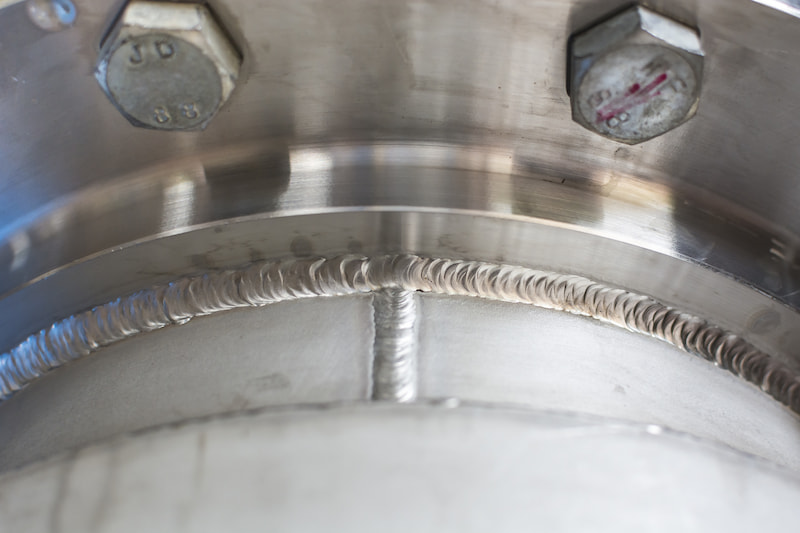
Credit: fractory.com
Controlling Heat Input
Keeping heat input low is one of the most effective ways to prevent warping.
- Use the lowest amperage that still gives a good weld.
- Move quickly but do not rush. A steady, moderate speed keeps heat from building up.
- Use pulse welding if your machine allows. This gives short bursts of heat and lets the metal cool between pulses.
- Short weld beads: Weld a few centimeters at a time, then let the metal cool before continuing.
If you see the metal changing color far from the weld, you may be using too much heat.
Tack Welding
Tack welds are small spots that hold the parts together before the final weld. They reduce movement and keep the fit tight.
- Place tacks every 50-100 mm for thin sheet.
- For thicker material, you can place tacks farther apart.
- Make sure the tacks are strong enough to resist pulling as the main weld cools.
Some welders skip tacking, hoping to save time, but this often leads to more work fixing warped parts.
Balanced Weld Sequences
Welding in a balanced sequence helps spread heat evenly. Here are some common methods:
- Backstep welding: Weld short sections in the opposite direction of the main weld.
- Staggered welding: Weld a short section, then move to a section far from the first, and repeat.
- Symmetrical welding: Weld in the same pattern on both sides of the joint.
These methods help the metal shrink evenly as it cools.
Using Jigs And Fixtures
A jig or fixture holds your work in place during welding. This stops the metal from moving as it heats and cools.
- Use steel jigs for big projects.
- Magnets work well for small pieces.
- Make sure your jig is flat and strong.
Jigs cost money and time to set up but save you from fixing warped parts later.
Peening And Mechanical Stress Relief
Peening is tapping the weld with a small hammer while it is still hot. This spreads out the weld metal and can reduce shrinkage.
- Use light taps, not heavy blows.
- Only peen on the weld bead, not on the base metal.
Some welders use clamps and weights to keep the metal flat as it cools. This is mechanical stress relief.
Allowing For Shrinkage
Experienced welders leave a small gap or even a slight bend in the opposite direction. As the metal shrinks, it pulls the joint straight. This takes practice but works well for long seams.
Choosing The Right Filler Material
Using the correct filler rod or wire is important. If the filler melts at a lower temperature, it can reduce the heat needed. Check the manufacturer’s recommendations for your specific stainless steel.
Controlling Welding Environment
Ambient temperature and air movement matter. Cold metal or drafts can cause parts of the metal to cool too quickly, leading to more warping. Try to weld in a stable environment. Preheating thick pieces a little can help, but do not overheat.
Post-weld Cooling And Stress Relief
How you cool the weld is as important as how you heat it. Do not cool the metal too quickly by pouring water or using compressed air. Fast cooling can cause cracking and more distortion.
- Let the metal cool slowly in air.
- For some critical work, use a controlled oven for post-weld heat treatment.
Real-world Examples
Thin Stainless Steel Sheet
A fabricator welding 1. 2 mm stainless steel for kitchen equipment noticed strong warping using MIG welding. By switching to TIG, using chill blocks, and welding in small sections, the warping reduced by over 70%.
Heavy Stainless Steel Frames
A shop making thick stainless frames (8 mm) used heavy steel jigs and symmetrical welding. Tack welds every 75 mm kept the frame square. The result was less than 1 mm distortion over a 2-meter length.
Pipe Welding
Welders joining stainless steel pipes use backstep welding and alternate sides. They also use copper backing rings inside the pipe to spread the heat.

Credit: www.youtube.com
Common Mistakes That Lead To Warping
- Welding too fast or too slow: Both can cause uneven heating.
- Ignoring fit-up: Large gaps need more filler and heat.
- No tacks or too few tacks: Parts move during welding.
- Welding all on one side: This pulls the metal in one direction.
- Not using clamps or fixtures: The metal moves as it shrinks.
- Cooling with water: Fast cooling can twist or crack the metal.
- Not cleaning the metal: Dirt and rust change how heat flows.
Avoiding these mistakes makes a big difference in your final results.
Comparison Of Warping Control Methods
Here is a quick look at some common methods and how effective they are:
| Method | Effectiveness | Best For | Extra Tools Needed |
|---|---|---|---|
| TIG Welding | High | Thin stainless | Yes (TIG machine) |
| Chill Blocks | Medium | Sheet and plate | Yes (Copper/Aluminum blocks) |
| Clamping | High | All thicknesses | Yes (Clamps/Jigs) |
| Backstep Welding | Medium | Long seams | No |
| Slow Cooling | High | All types | No |
Practical Tips For Beginners
- Start with small, simple projects to learn how stainless steel reacts.
- Keep a notebook of what works and what causes problems.
- Watch the color of the metal; blue or purple means too much heat.
- Ask experienced welders for feedback on your technique.
- Do not skip cleaning or fitting, even for practice pieces.
- If you are unsure, make a test weld on a scrap piece first.
Two often-missed insights:
- Ambient temperature matters: Many beginners do not consider how cold or warm their shop is. Cold metal warps more because it cools the edges faster than the weld area.
- Order of assembly: If you weld all joints on one side before flipping the part, you build up stress that warps the whole piece. Alternate sides and joints as you assemble.
How To Fix Warped Stainless Steel
Sometimes, even with care, parts may warp. You can fix minor warping using the following methods:
- Mechanical straightening: Clamp the part and apply pressure in the opposite direction of the bend.
- Heat straightening: Heat the high spot gently and let it cool. The metal will shrink as it cools and pull the part back into shape.
- Cut and re-weld: For severe warping, you may need to cut the weld, realign the pieces, and weld again.
These fixes take time and skill. It is always better to prevent warping than to fix it later.
How Welding Parameters Affect Warping
Several welding parameters have a direct effect on distortion:
- Voltage: Higher voltage increases arc length and heat input.
- Amperage: More amps mean more heat.
- Travel speed: Slow speed increases heat in one spot.
- Wire feed speed (for MIG): Too high adds filler and heat.
Try to use the lowest settings that still give a sound weld. Adjust your parameters for each project. If you weld thin and thick pieces together, focus on not overheating the thin section.
Advanced Techniques For Professional Welders
Some advanced methods can further reduce warping:
Pulse Welding
This technique uses pulses of current instead of a steady flow. It gives the metal time to cool between pulses and reduces heat input.
Staggered Tack Welding
Instead of tacking in a straight line, place tacks in a zigzag or random pattern. This helps spread out stress.
Use Of Special Alloys
Some stainless steels are more resistant to warping. If you can choose the grade, look for types with lower expansion rates.
Monitoring With Digital Tools
Thermal cameras or infrared thermometers can help you watch the heat spread. This lets you adjust your technique in real-time.
Case Study: Food Processing Equipment
A company making food processing machines used to lose 20% of their stainless parts to warping. After training welders to use chill blocks, balanced tack welds, and slower cooling, scrap rates dropped below 3%. Quality and speed both improved, and the company saved money on rework.
Comparing Stainless Steel To Other Metals
Stainless steel is more likely to warp than some other metals. Here is a simple comparison:
| Metal Type | Warping Risk | Thermal Conductivity | Expansion Rate |
|---|---|---|---|
| Stainless Steel | High | Low | High |
| Mild Steel | Medium | Medium | Medium |
| Aluminum | Medium | High | High |
This shows why stainless needs special care compared to mild steel or aluminum.
Key Takeaways
- Cleanliness, fit-up, and clamping are the foundation of a good weld.
- Use the right welding process and keep heat input as low as possible.
- Weld in a balanced sequence, not all on one side.
- Use chill blocks, jigs, and tacks to control movement.
- Let the weld cool slowly in air.
- Plan each step before starting and adjust based on results.
Avoiding warping takes planning and care, but the results are worth it. Your welds will look better, be stronger, and need less repair.
For more in-depth technical resources, you may find the TWI Global FAQ on stainless steel welding distortion helpful.
Frequently Asked Questions
What Causes Stainless Steel To Warp More Than Other Metals?
Stainless steel has a low thermal conductivity and a high expansion rate. This means it heats up and expands more in the weld area but does not spread the heat out quickly. As it cools, it contracts and pulls the metal, causing warping.
Is Tig Or Mig Welding Better For Stainless Steel To Avoid Warping?
TIG welding is usually better for avoiding warping, especially on thin stainless. It gives you more control over heat input. MIG can work well but may cause more heat and more warping if not managed carefully.
How Do I Prevent Warping On Thin Stainless Steel Sheets?
Use TIG welding with low amperage, chill blocks, and short weld beads. Clamp the sheet tightly and use many tack welds. Let each section cool before moving to the next.
Can You Fix Warped Stainless Steel After Welding?
You can fix minor warping by mechanical or heat straightening. Clamp and bend the part back, or gently heat the high spot and let it cool. For large warps, you may need to cut and re-weld.
Do I Need Special Tools To Prevent Warping?
Basic tools like clamps, chill blocks, and jigs are enough for most jobs. Advanced tools like pulse welders or thermal cameras can help but are not required for beginners.
Welding stainless steel without warping is possible with careful planning and the right technique. Take your time, pay attention to each step, and keep learning from your results. Your skills will improve, and your projects will turn out straighter, stronger, and more professional.

Credit: primeweld.com