Disclosure: This post contains affiliate links and I will be compensated if you make a purchase after clicking through my links. Learn More
A MIG welder is a tool that many people use for joining metal. It’s common in factories, car shops, and even home garages. But many beginners don’t really know how a MIG welder works or why it is popular. If you want to learn welding or understand how this machine works, you are in the right place. This article explains the full process in simple words, with practical examples and tips that help you avoid common mistakes.
What Is Mig Welding?
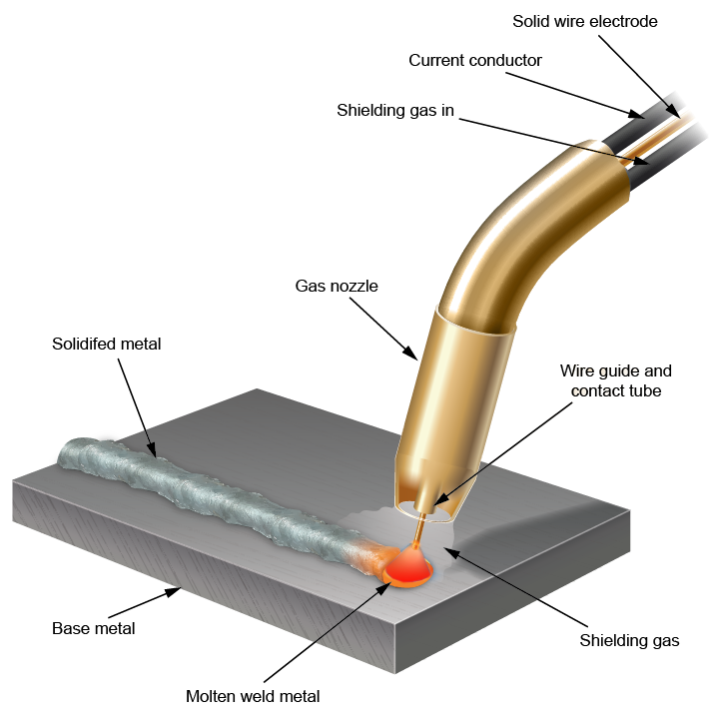
MIG welding stands for Metal Inert Gas welding. People also call it GMAW (Gas Metal Arc Welding). In this method, the welder creates an electric arc between a wire electrode and the metal. The arc melts both the wire and the base metal, making a strong joint.
The inert gas covers the weld area and protects it from air. This keeps the weld clean and strong. MIG welding is fast and easy to learn, which is why many beginners start with it.
Main Parts Of A Mig Welder
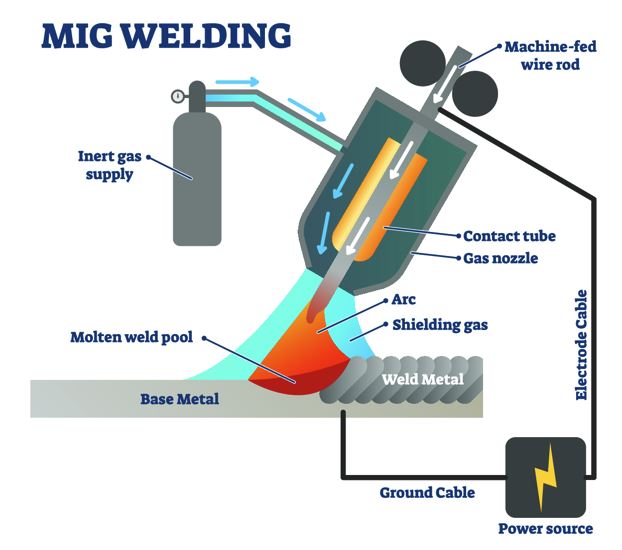
To understand how a MIG welder works, you need to know its parts. Each part has a special job.
1. Power Supply
This gives electricity to create the arc. MIG welders usually use DC (direct current), and you can set the voltage and amperage.
2. Wire Feed System
This system pushes the welding wire through the cable and out of the gun. You can control the speed of the wire.
3. Welding Gun (torch)
The gun delivers the wire, electric current, and gas to the weld. You hold this in your hand and move it along the joint.
4. Ground Clamp
The clamp completes the electrical circuit. You attach it to the metal piece you are welding.
5. Shielding Gas Supply
A gas cylinder holds the shielding gas. Common gases are argon, carbon dioxide, or a mix of both.
6. Control Panel
This has buttons or dials to control wire speed, voltage, and sometimes other settings.
Each part must work together for the welder to make a good weld.
How Does A Mig Welder Work?
The MIG welder works by following a clear process. Here are the steps:
1. Setting Up The Machine
First, you select the right wire and gas for your metal. For example, use mild steel wire with a mix of argon and CO₂ for car repairs. Check that the wire is loaded, the gas is connected, and the ground clamp is tight on clean metal.
2. Starting The Arc
When you press the trigger on the welding gun, three things happen at once:
- The wire starts feeding out of the gun.
- Electricity flows to the tip of the wire.
- Shielding gas flows out of the nozzle.
The wire touches the metal and makes a short circuit. This creates a hot arc that melts both the wire and the surface of your workpiece.
3. Creating The Weld Pool
The electric arc melts the tip of the wire and the metal surface. This forms a small pool of molten metal called the weld pool. The wire keeps feeding and melts into this pool. The molten pool is where the metal pieces join together.
4. Shielding The Weld
The shielding gas flows out of the gun and covers the weld pool. This gas stops oxygen and water vapor in the air from touching the hot metal. If air gets in, the weld can get porosity (tiny holes), rust, or become weak.
5. Moving The Gun
You move the gun slowly along the joint. The wire keeps melting and filling the joint. The weld pool cools down and hardens, making a strong connection.
6. Stopping The Weld
When you release the trigger, the wire feed, electric current, and gas all stop. The weld cools and becomes solid.
This whole process happens in seconds and repeats as long as you hold the trigger and move the gun.
Why Mig Welding Is Popular
MIG welding is popular because it is:
- Easy to learn: Many beginners can make good welds after a few hours of practice.
- Fast: The wire feeds automatically, so you can weld quicker than with other methods.
- Clean: The shielding gas keeps the weld free from slag and reduces cleaning time.
- Versatile: You can weld thin or thick metal, steel, stainless steel, or aluminum (with the right setup).
Many industries use MIG welding, from car repair to building bridges.
How The Mig Welder Controls Work
Modern MIG welders give you control over several settings. Each setting affects how the weld looks and how strong it is.
Voltage
Voltage controls the arc length. More voltage makes the arc longer and flatter, while less voltage makes a shorter, higher arc. The right setting depends on your wire size and metal thickness.
Wire Feed Speed
This controls how fast the wire moves out of the gun. Faster speed gives more filler metal, while slower speed gives less. If the speed is too high, the wire can push into the metal and make a mess. If too low, the arc can keep breaking.
Amperage
The amperage is mostly decided by the wire feed speed. More wire means more current. You can fine-tune this with the machine’s controls.
Gas Flow Rate
You set the gas flow rate using a regulator on the gas cylinder. Too little gas lets air in and weakens the weld. Too much gas can cause turbulence and waste. For most jobs, 15–20 cubic feet per hour (CFH) works well.
Inductance (in Some Machines)
Some advanced machines let you control inductance. This affects how the arc starts and how smooth the weld bead looks.
Types Of Shielding Gas For Mig Welding
The choice of shielding gas affects the weld’s appearance and quality. Here are common options:
| Gas Type | Main Use | Weld Quality | Notes |
|---|---|---|---|
| 100% CO₂ | Mild Steel | Deep penetration, more spatter | Cheapest gas option |
| 75% Argon / 25% CO₂ | Mild Steel | Smooth bead, less spatter | Most popular mix |
| 100% Argon | Aluminum, Stainless Steel | Clean, smooth weld | Needs special wire for aluminum |
| Argon/Helium Mix | Non-ferrous metals | Hotter arc, faster welding | Used for thick aluminum |
Choosing the right gas depends on your metal and budget. Beginners often start with the 75/25 mix for mild steel.
Credit: fractory.com
Types Of Welding Wire
The wire is both the electrode and the filler. Here are common types:
- ER70S-6: Most popular for mild steel. It has extra deoxidizers for welding rusty or dirty steel.
- ER308L: Used for stainless steel.
- ER4043 or ER5356: Used for aluminum.
Wire comes in different diameters. For thin metal, use 0. 023″ or 0. 030″. For thicker metal, use 0. 035″ or 0. 045″.
The wire must match the metal you are welding for the best results.
How The Wire Feed System Works
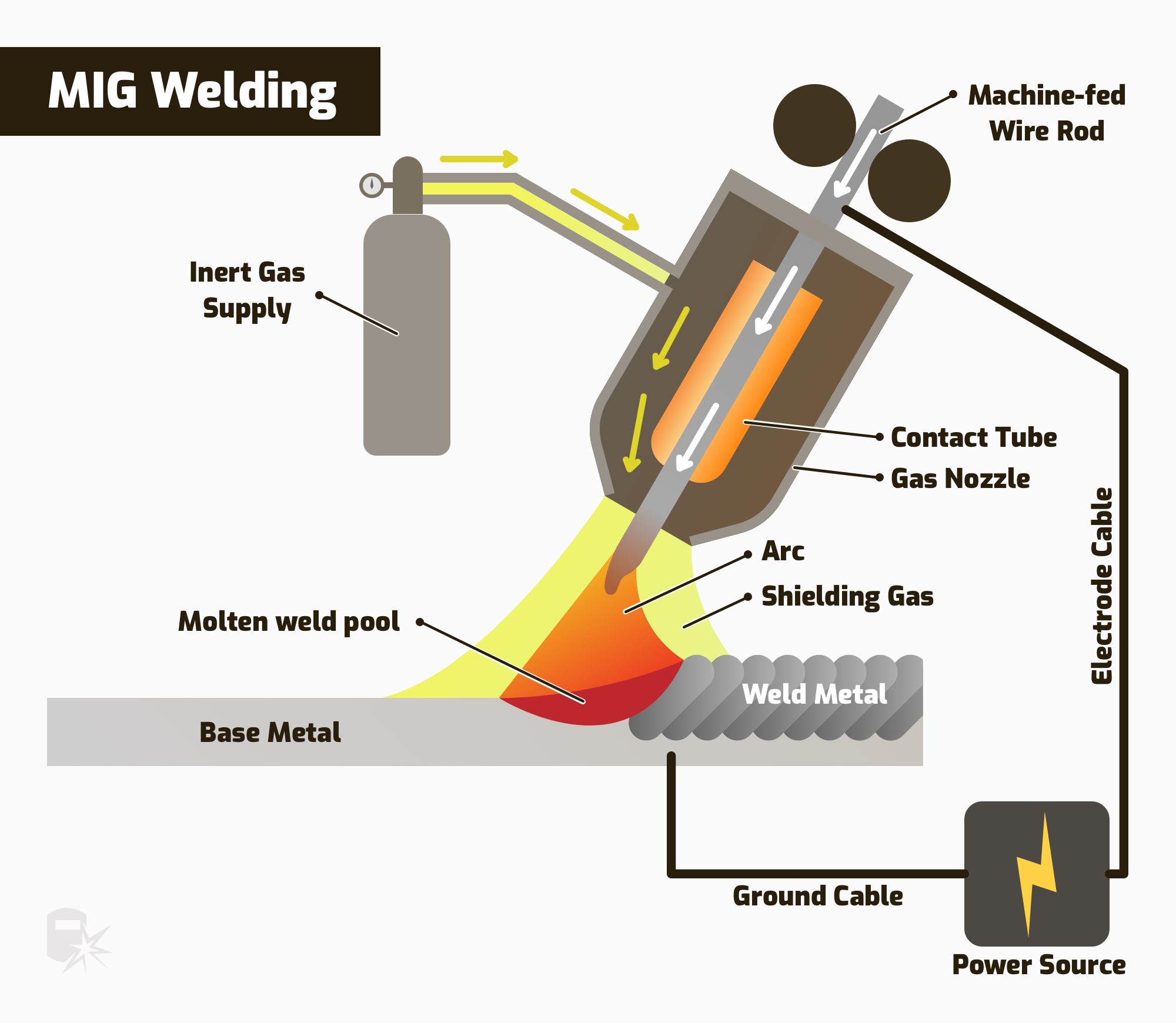
The wire feed system has a motor, rollers, and a spool. The motor pushes the wire through a flexible liner in the cable, up to the gun tip.
If the rollers slip, the wire may not feed smoothly, which causes uneven welds. If the liner is dirty or bent, the wire can jam.
Non-obvious tip: Always check the rollers and liner for dust, rust, or damage. Many beginners forget this, but a clean system makes welding much easier.
Credit: weldguru.com
How The Arc Is Created
The arc is the bright, hot light between the wire and the metal. When you pull the trigger, the wire touches the metal and completes the circuit. The electric current jumps through the tiny gap, making an arc.
This arc is very hot — over 6,000°F (3,300°C). It melts both the wire and the metal, creating the weld pool.
Insight: The arc also produces ultraviolet (UV) light. Always wear a proper welding helmet and gloves, even for short welds.
The Role Of Shielding Gas
Shielding gas is vital for MIG welding. It forms a cloud over the weld pool, blocking out air. If air touches the molten metal, the weld may have:
- Porosity (small holes)
- Oxidation (rust)
- Weak joints
Common mistake: New welders sometimes forget to turn on the gas or set the flow too low. Always check for a steady flow before starting.
Advantages Of Mig Welding
MIG welding has several clear benefits:
- Speed: You can weld faster than with stick or TIG welding.
- Ease: The process is semi-automatic. You only need to guide the gun.
- No slag: Unlike stick welding, there is no need to chip away slag after each weld.
- Continuous welds: The wire feeds as long as you hold the trigger, allowing for long welds without stopping.
These advantages make MIG welding suitable for production lines and home workshops.
Limitations And Challenges
MIG welding also has some limits:
- Wind sensitivity: Outdoors, wind can blow away the shielding gas. This makes the weld weak. Use windshields or weld indoors if possible.
- Not ideal for thick rust or paint: The process works best on clean metal. Heavy rust or paint can cause problems.
- Equipment cost: A MIG welder costs more than a simple stick welder, and you need to buy gas.
Practical Example: Welding A Car Panel
Suppose you want to fix a car panel. First, you clean the area with a wire brush. You attach the ground clamp close to the weld. You set the machine to use a 0. 023″ wire and a 75/25 argon-CO₂ mix.
You hold the gun at a slight angle (about 15°), start the arc, and move along the seam in small circles or straight lines. The gas keeps the weld clean. After finishing, the weld cools and you grind it smooth.
Tip: For thin metal, use short bursts to avoid burning through.
Mig Welding Vs. Other Welding Methods
How Does Mig Welding Compare To Other Methods?
| Welding Type | Skill Level | Speed | Best For | Drawbacks |
|---|---|---|---|---|
| MIG | Beginner to Pro | Fast | Sheet metal, cars, home projects | Needs clean metal, gas supply |
| TIG | Advanced | Slow | Thin metal, aluminum, art | Harder to learn, slower |
| Stick | Intermediate | Medium | Outdoors, thick metal | More spatter, slag removal |
| Flux-Cored | Beginner | Fast | Outdoor, dirty metal | More smoke, less clean weld |
MIG welding is the best choice for many home and light industrial jobs.
How To Set Up A Mig Welder For The First Time
If you are new, setting up the machine can feel confusing. Here is a simple step-by-step guide:
- Connect the welder to power. Use the right outlet for your machine.
- Install the wire spool. Feed the wire through the rollers and into the gun liner.
- Attach the ground clamp. Clean the metal first for a better connection.
- Connect the gas cylinder. Open the valve and set the flow to 15–20 CFH.
- Set voltage and wire speed. Many machines have charts for starting values.
- Test on scrap metal. Check if the arc is stable and the weld looks good.
- Adjust as needed. Fine-tune voltage and wire speed for your project.
Insight: Always check the polarity. For solid wire, use DCEP (Direct Current Electrode Positive). Mixing this up is a common beginner mistake.
Safety Tips For Mig Welding
Welding is dangerous if you do not follow safety rules. Here are important tips:
- Wear a welding helmet with the right shade (usually #10–#13).
- Use gloves and a long-sleeve shirt to prevent burns from sparks and UV.
- Work in a well-ventilated area to avoid breathing fumes.
- Keep a fire extinguisher nearby in case sparks start a fire.
- Never weld near flammable liquids or gases.
Even a small arc can cause serious injury or fire. Always double-check your safety gear.
Credit: www.cwbgroup.org
How To Troubleshoot Common Mig Welding Problems
Sometimes the weld does not look right. Here are common problems and solutions:
Porosity (holes In Weld)
- Cause: Not enough gas, wind, or dirty metal.
- Solution: Check gas flow, clean the metal, and block drafts.
Wire Feed Problems
- Cause: Dirty rollers, kinked liner, or wrong tension.
- Solution: Clean and adjust the feed system.
Excess Spatter
- Cause: Voltage too high, wrong gas, or wire speed too fast.
- Solution: Lower voltage, check gas, slow the wire.
Weak Welds
- Cause: Not enough heat or wire, poor technique.
- Solution: Increase voltage, use proper movement, and check settings.
Tip: Keep a welding notebook to track your settings for different jobs. This saves time and reduces mistakes.
How To Get Better At Mig Welding
Practice is the key to good welding. Here are ways to improve:
- Weld on scrap metal before working on your project.
- Try different gun angles (usually 10–15° from vertical).
- Listen to the sound: A steady “buzz” means good settings.
- Watch the weld pool: Move at a speed that keeps the pool even.
- Ask for feedback from experienced welders.
Non-obvious advice: Don’t rush to increase power or wire speed. Small changes make a big difference.
Maintenance Tips For A Mig Welder
A well-maintained welder works better and lasts longer.
- Clean the gun nozzle after every job.
- Check the liners and rollers for dust and wear.
- Store the wire spool in a dry place to prevent rust.
- Replace worn tips and nozzles regularly.
- Check gas hoses for leaks with soapy water.
Regular maintenance prevents most welding problems.
Advanced Features In Modern Mig Welders
Newer machines have features that help both beginners and experts:
- Synergic controls: The machine adjusts settings automatically.
- Spool gun option: For easy aluminum welding.
- Digital displays: Show exact voltage and wire speed.
- Pulse mode: Helps with thin metals and reduces spatter.
These features make welding easier but are not required for basic jobs.
When To Use Mig Welding
Choose MIG welding if you want to:
- Join thin to medium-thick metal (from 24 gauge up to 1/2 inch)
- Work on car bodies, furniture, gates, or home repairs
- Get fast, clean welds with little post-cleanup
For very thick steel or outdoor jobs in the wind, consider stick or flux-cored welding instead.
Environmental And Safety Considerations
MIG welding creates fumes and UV light. Always work in a space with fresh air, or use a fume extractor. Proper clothing and eye protection are essential.
Also, manage your gas supply carefully. Leaking cylinders can be dangerous.
Real-world Uses For Mig Welding
MIG welders are used everywhere:
- Car repair shops fix frames and panels.
- Factories build metal furniture, shelves, and tools.
- Farmers fix tractors and gates.
- Home users create art, fix trailers, and build projects.
MIG welding is the most common type of welding in many industries because it is so easy to use.
How Much Does Mig Welding Cost?
Costs depend on your machine, gas, and wire. Here is a simple comparison:
| Item | Entry-level | Professional |
|---|---|---|
| MIG Welder | $250–$600 | $1,000–$3,000 |
| Gas Cylinder (full) | $50–$100 | $100–$200 |
| Wire Spool | $10–$30 | $30–$70 |
| Helmet & Gloves | $40–$100 | $100–$300 |
A beginner can start with a small budget, but professionals spend more for features and durability.
Where To Learn More
If you want deeper technical details, you can visit the Wikipedia page on Gas Metal Arc Welding for more information.
Frequently Asked Questions
What Metals Can I Weld With A Mig Welder?
You can weld steel, stainless steel, and aluminum with a MIG welder. Use the correct wire and shielding gas for each metal.
Why Does My Mig Welder Make Popping Sounds?
Popping sounds usually mean the wire feed speed is too low or the arc is unstable. Check your settings and make sure the tip is clean.
Can I Use A Mig Welder Without Gas?
You can use flux-cored wire in some MIG welders without gas, but the welds will be less clean. For best results, always use shielding gas.
How Thick Can I Weld With A Mig Welder?
Most small MIG welders can handle up to 1/4 inch steel. Larger, industrial machines can weld 1/2 inch or more.
Is Mig Welding Safe For Beginners?
Yes, if you follow basic safety rules: wear the right gear, work in a safe place, and keep your equipment in good condition.
A MIG welder is a powerful, flexible tool that makes joining metal simple and quick. Understanding how it works will help you get better results, stay safe, and enjoy your projects. Whether you fix cars, build furniture, or just want to learn a new skill, MIG welding is a smart choice.
With practice, anyone can achieve strong, clean welds.