Disclosure: This post contains affiliate links and I will be compensated if you make a purchase after clicking through my links. Learn More
Can you use a regular generator for welding? Yes, but only if the generator matches the welder’s power needs, provides stable output, and can handle surges. Using the wrong generator can damage your welder or result in poor weld quality.
Details below explain what matters most.
Can You Use A Regular Generator For Welding?
Welding often requires high and steady power. Many people wonder if they can use a regular generator instead of a dedicated welder generator. The short answer is: sometimes, but it depends on several key factors. The right generator can power your welder safely. The wrong one can ruin your equipment, cause weak welds, or even create safety risks.
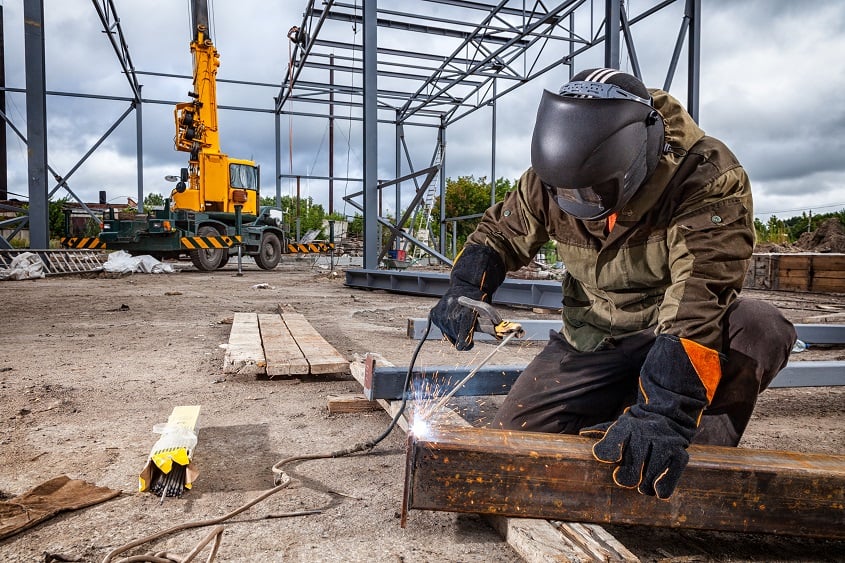
Welding is not gentle on power sources. Welders draw big startup currents, have fluctuating loads, and need clean voltage. Not every generator is built for that. Yet, many welders in remote areas or small shops use regular generators every day.
How do they make it work? This article explains everything you need to know, from power requirements to real-life setup tips.
Understanding Welding Power Needs
Welders are not like regular power tools. Their needs are unique. To use a regular generator for welding, you must understand what makes welding different.
Current Type: Ac Vs Dc
Some welders use AC (alternating current), others use DC (direct current), and some can use both. Most household generators produce AC. If your welder needs DC, you’ll need a welder with a built-in rectifier or a generator that can switch to DC.
Power Consumption
Welders need a lot of power, especially at startup. Many home-use welders draw between 2,000 and 7,000 watts. Industrial MIG or TIG welders can demand 10,000 watts or more. A generator’s wattage must match or exceed the welder’s peak needs.
Duty Cycle
Welders have a duty cycle—the time they can run before needing to cool down. A higher duty cycle means longer runs. Running a welder with a high duty cycle on a small generator can trip the breaker or overheat the generator.
Clean Power
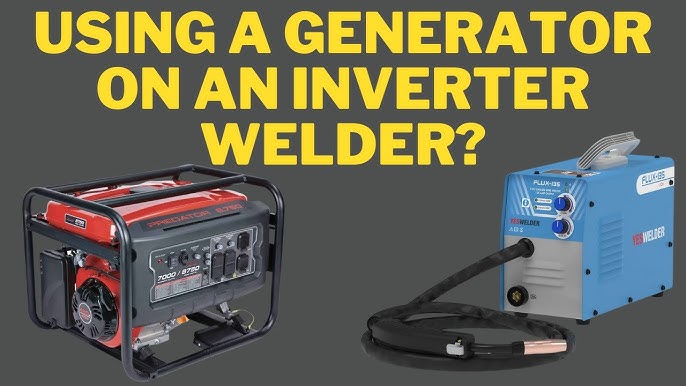
Welders are sensitive to fluctuations. Dirty or unstable power can cause erratic arcs or damage electronics in advanced welders. Inverter welders are even more sensitive than transformer-based models.
Surge And Peak Loads
Welders often need a burst of extra power to start the arc. Your generator must handle these surge loads without dropping voltage or stalling.
Types Of Generators And Their Suitability For Welding
Not all generators are the same. Understanding the types helps you decide if your generator is up for the job.
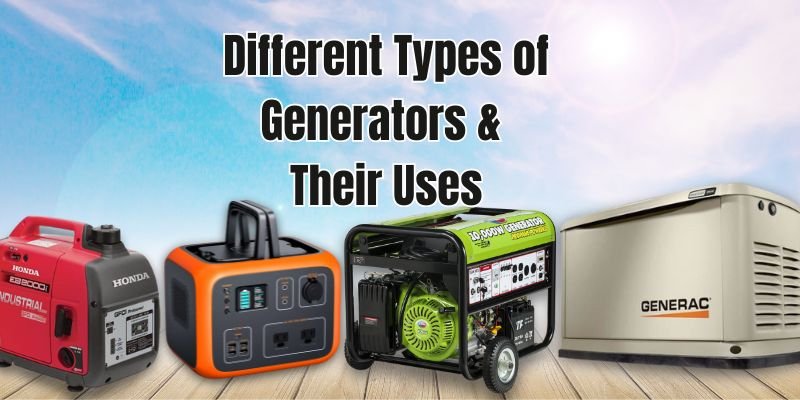
Conventional Portable Generators
These use a simple alternator to create power. Most are designed for tools, lights, or appliances. They can run basic welders if they have enough wattage. But their voltage stability is not ideal for sensitive electronic welders.
Inverter Generators
These create clean, stable power with low harmonic distortion (often under 3%). They are perfect for inverter welders and machines with digital controls. Their output is more reliable, but they cost more per watt.
Industrial Generators
Industrial models often have heavy-duty alternators, better voltage control, and larger engines. They can power almost any welder, but they are big, loud, and expensive.
Welder-generator Combos
These are designed for welding. They provide clean, steady power with the right surge capacity. They also have features like automatic idle control and high-duty cycles. If you weld often, these are the best choice.
| Generator Type | Power Quality | Suitable for Welding? | Best Use Case |
|---|---|---|---|
| Conventional Portable | Medium | Yes, with limits | Occasional stick/MIG welding |
| Inverter | High | Yes | Sensitive TIG/MIG, field repairs |
| Industrial | High | Yes | Heavy-duty/Continuous welding |
| Welder-Generator Combo | Very High | Best option | Professional welding |
Key Generator Specs For Welding
To use a regular generator for welding, three specs matter most: wattage, voltage stability, and duty cycle.
Generator Wattage
Every welder has an input wattage (amps × volts). Your generator must produce at least this much power. For example, a 140A MIG welder at 120V draws about 2,800 watts. Add 30% for start-up surge, so you need at least 3,700 watts.
For larger welders (like a 225A stick welder at 240V), you might need over 10,000 watts. Always check your welder’s manual and match the generator accordingly.
Voltage Regulation
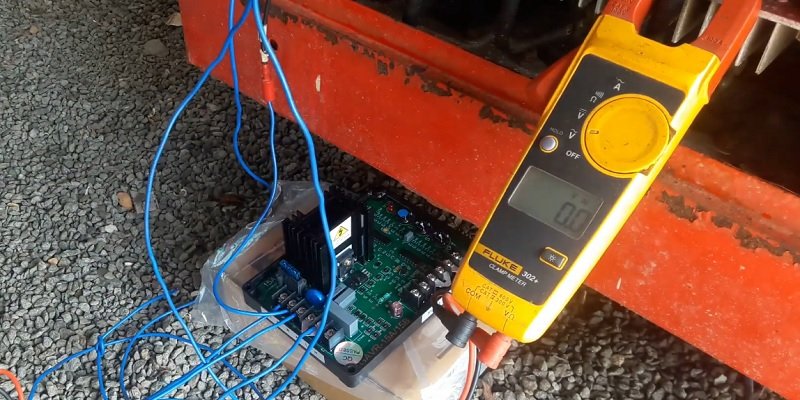
Welders need steady voltage. Cheap generators can drop voltage under load, causing weak or unstable arcs. Look for a generator with automatic voltage regulation (AVR) or inverter technology.
Total Harmonic Distortion (thd)
High THD can hurt sensitive electronics in inverter welders. Generators with THD below 5% are best for modern welders.
Duty Cycle
A generator’s duty cycle limits how long it can run at full load. If you weld continuously, pick a generator rated for at least a 50% duty cycle at your welder’s power draw.
Surge Capacity
Check the surge rating (sometimes called starting watts). Welders often need more power to start the arc than to keep it running.
Fuel Type
Gasoline generators are common, but diesel and propane models offer better fuel efficiency for long jobs.
Matching Generator Size To Welder Type
Choosing the right generator is not just about total watts. The type of welder you use changes everything.
Stick Welders (smaw)
Stick welders are rugged and less sensitive to voltage swings. Most small stick welders (up to 140A) can run on a 4,000–5,000 watt generator. Larger units need 7,000–10,000 watts.
Mig Welders (gmaw)
MIG welders draw steady current but need clean power for good arc quality. For a 120V MIG welder, 4,000–5,000 watts is enough. For 240V, look for 8,000 watts or more.
Tig Welders (gtaw)
TIG welders are the most sensitive to voltage and THD. Inverter TIG welders need an inverter or AVR-equipped generator. Even small TIGs need 5,000 watts or more.
Multi-process Welders
These can switch between stick, MIG, and TIG. Always size your generator for the most demanding process.
Plasma Cutters
If you want to use a plasma cutter, check its peak draw. Many need 6,000–8,000 watts.
| Welder Type | Typical Input (Watts) | Minimum Generator Size | Sensitivity to Power Quality |
|---|---|---|---|
| Stick (140A) | 2,800 | 4,000 W | Low |
| MIG (140A) | 2,800 | 4,500 W | Medium |
| TIG (200A) | 4,000 | 6,000 W | High |
| MIG (240V, 200A) | 6,000 | 8,000 W | High |
Common Mistakes When Using Regular Generators For Welding
Avoid these mistakes to protect your equipment and get good welds:
- Under-sizing the generator: Most problems come from using too small a generator. Always size for surge, not just running watts.
- Ignoring power quality: Using a cheap generator with high THD can ruin inverter welders or cause poor welds.
- Overloading the generator: Running a welder and other tools at once can trip the breaker or damage both machines.
- Skipping ground connections: Welding without a proper ground can cause shocks or equipment failure.
- Ignoring duty cycle: Running at full power for too long can overheat the generator or welder.
- Not checking voltage compatibility: Plugging a 240V welder into a 120V generator (or vice versa) can ruin the welder.
Credit: www.youtube.com
How To Set Up A Regular Generator For Welding
Setting up your generator right is as important as picking the correct size.
1. Check Your Connections
Always use heavy-duty, welding-rated extension cords. Thin cords cause voltage drop, weak arcs, and overheating.
2. Ground The Generator
Use a ground rod to connect the generator frame to earth. This protects you from shocks and helps the generator run safely.
3. Start The Generator Before The Welder
Let the generator reach running speed before switching on the welder. This prevents voltage dips that can harm your welder.
4. Watch The Load
Keep the generator load under 80% of its max rating. This leaves headroom for surges and protects both machines.
5. Monitor Output
Use a plug-in voltmeter to check generator voltage under load. It should stay within ±5% of rated voltage.
6. Use Only One Machine At A Time
Don’t run saws, grinders, or other big tools from the same generator when welding.
Advantages And Disadvantages Of Using Regular Generators For Welding
Advantages
- Cost savings: Regular generators are cheaper than welder-generators.
- Versatility: Can power other tools and lights.
- Portability: Many are lightweight and easy to transport.
Disadvantages
- Risk of poor weld quality: If the power is unstable or dirty.
- Generator wear and tear: Welders push generators hard.
- Not always safe for inverter welders: High THD can kill sensitive electronics.
- Limited duty cycle: Most regular generators are not designed for long, heavy loads.
Real-world Examples
Many contractors and hobbyists use regular generators for field repairs, farm work, or remote welding. For example:
- A rancher uses a 5,500-watt generator to run a 140A stick welder for quick fence repairs. It works because the generator has AVR and is never overloaded.
- A mobile welding business runs a MIG welder from a 7,500-watt inverter generator, getting clean welds even in remote locations.
- An electrician tried to run a TIG welder on a basic 4,000-watt generator and burned out the welder’s control board—because the generator’s power was too dirty.
These stories show the importance of matching generator quality and size to the welder.
Expert Tips For Safe And Reliable Welding With A Generator
- Always oversize your generator: Go at least 20-30% above your welder’s maximum draw.
- Use generators with AVR or inverter tech: This protects sensitive welders.
- Keep cables short and heavy: Long, thin extension cords cause problems.
- Monitor fuel use: Generators at high load burn fuel quickly—plan for long jobs.
- Let the generator cool: Take breaks to avoid overheating.
- Test weld quality: Do a test bead before starting important work.
When You Should Not Use A Regular Generator
Some situations are too risky:
- Running expensive, inverter-based TIG or MIG welders on low-quality power.
- Large, industrial welding jobs with high duty cycles.
- If you need guaranteed, code-quality welds for structural work.
- When you cannot ground the generator safely.
In these cases, invest in a true welder-generator or use grid power.
How To Pick The Right Generator For Your Welder
If you plan to buy a generator for welding, use this simple process:
- Check your welder’s input amps and volts.
- Multiply to get total watts, then add 30%.
- Choose a generator with AVR or inverter output.
- Pick a model with at least a 50% duty cycle at your required wattage.
- Make sure it has the right outlet type (120V or 240V).
- Read reviews from welders, not just regular users.
Credit: www.westermans.com
Generator Vs Welder-generator: Feature Comparison
Here’s a direct comparison for quick reference:
| Feature | Regular Generator | Welder-Generator |
|---|---|---|
| Power Quality | Medium to High (depends on model) | Very High |
| Welding Duty Cycle | Medium | High |
| Surge Handling | Average | Excellent |
| Cost | Lower | Higher |
| Portability | High | Medium |
| Multi-tool Use | Yes | Yes, but optimized for welding |
Read More: Difference Between Welding Generator and Normal Generator
What To Do If Your Generator Isn’t Perfect For Welding
Sometimes you already own a generator, and it’s not ideal. You can still reduce risk:
- Use a power line conditioner to clean up dirty power for inverter welders.
- Limit weld time to avoid overloading.
- Use only stick welding (less sensitive) rather than MIG or TIG.
- Always test your setup with scrap metal before important work.
Non-obvious Insights Most Beginners Miss
- Generator THD rating matters as much as wattage. Many people focus only on watts, but high THD destroys inverter welders quickly—even if the generator is big enough.
- Generator’s surge capacity is critical for starting the arc. Welders need a short burst of extra power to start, which many small generators cannot provide, even if their running wattage looks high enough.
- Some welders have ‘generator mode’. Check your welder’s manual—some models have settings to tolerate poor power.
- Altitude and temperature lower generator output. If you weld at high elevations or in hot weather, your generator will put out less power. Adjust your sizing accordingly.
- Generator maintenance is more important when welding. High loads mean you must check oil, air filters, and spark plugs more often.
Safety Precautions For Welding With A Regular Generator
- Always operate the generator outdoors to avoid carbon monoxide poisoning.
- Keep the generator dry and on a stable surface.
- Use only grounded outlets and cables.
- Wear proper PPE (welding helmet, gloves, boots).
- Never refuel a hot generator—wait until it cools.
- Store extra fuel safely, away from sparks and heat.
Where To Learn More
If you want more technical details, the American Welding Society offers free guides and standards for safe welding. You can visit the Wikipedia generator welding page for more in-depth technical info.
Frequently Asked Questions
Can I Use A Regular Generator For Welding At Home?
Yes, you can use a regular generator for welding at home if it matches your welder’s power and voltage needs. Make sure the generator has enough wattage, stable voltage, and preferably AVR or inverter technology for best results.
What Size Generator Do I Need For A 140a Mig Welder?
For a 140A MIG welder, you need a generator with at least 4,000 to 5,000 running watts and a surge rating 20-30% higher. Choose a model with AVR or inverter output for better weld quality and to protect your welder.
Is It Safe To Use An Inverter Welder With A Regular Generator?
It depends on the generator’s power quality. Inverter welders need clean, stable power. Use a generator with low THD (under 5%), and automatic voltage regulation. Avoid cheap, unstable generators to prevent damage to sensitive electronics.
What Happens If My Generator Is Too Small For My Welder?
If your generator is too small, you’ll get poor welds, tripped breakers, and possibly damage both the generator and welder. Always use a generator that’s rated at least 20-30% above your welder’s maximum input.

Credit: www.youtube.com
Can I Run Other Tools While Welding From The Same Generator?
It’s not recommended. Welding draws a lot of power and causes surges. Running other tools at the same time can overload the generator, cause voltage drops, or ruin your weld quality. Always use one machine at a time for best results.
Final Words
Using a regular generator for welding is possible if you respect power needs, buy the right equipment, and take safety seriously. With the right setup, you can weld anywhere, anytime. Choose wisely and work safely.