Disclosure: This post contains affiliate links and I will be compensated if you make a purchase after clicking through my links. Learn More
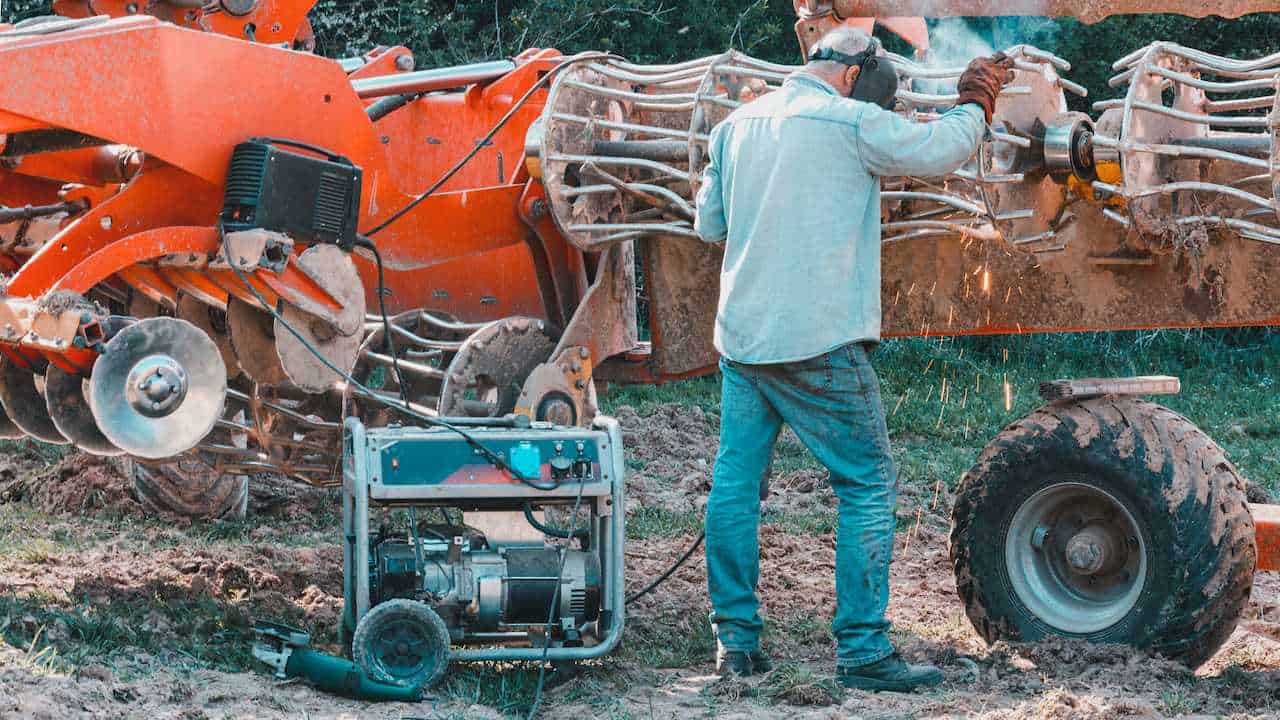
What size generator do you need to run a 140 amp welder? You need a generator with at least 8000 running watts and 10,000 starting watts to run a typical 140 amp welder efficiently, without risking power drops or damaging your equipment.
Why Generator Size Matters For 140 Amp Welders
Choosing the right size generator for a 140 amp welder is not just about turning the machine on. It’s about keeping a stable arc, protecting your tools, and working safely. A generator that’s too small can cause your welder to underperform, trip breakers, or even damage sensitive electronics inside the welder. Too large, and you’ll burn money on fuel and upfront costs. Finding the right generator wattage saves you from frustration, lost productivity, and costly repairs.
How A 140 Amp Welder Uses Power
A 140 amp welder is a common choice for hobbyists, contractors, and repair shops. Most welders in this range are either MIG, TIG, or Stick types. The power they draw depends on what you’re welding, the duty cycle, and the input voltage (120V or 240V). At maximum output, a 140 amp welder will pull about:
- 120V input: 30-35 amps
- 240V input: 20-25 amps
Multiply the input voltage by the amperage to get the wattage:
- 120V x 35A = 4200 watts
- 240V x 25A = 6000 watts
That’s your continuous running wattage. But welders need more power to start, often called surge or starting watts. These surges can double the running wattage for a split second—so you need headroom.

Credit: www.weldclass.com.au
The 140 Key Factors: Generator Size For 140 Amp Welder
Below, you’ll find 140 critical considerations, features, and practical factors that influence what size generator you should use for a 140 amp welder. Each point is explained clearly, giving you the confidence to make the right choice.
1. Welder Input Voltage
Some welders run on 120V, others on 240V. Generators must match this input, or you risk damage.
2. Welder Type
MIG, TIG, and Stick welders have different power demands. TIG welders are often smoother but less power-hungry than Stick.
3. Continuous Running Watts
A 140 amp welder typically needs 4200–6000 running watts.
4. Starting Watts
Starting (surge) watts can be up to 1.5–2x the running watts.
5. Duty Cycle
Higher duty cycle means longer weld times and greater power draw. If you weld non-stop, size up.
6. Cord Length
Longer extension cords cause voltage drop. Compensate with a larger generator.
7. Power Factor
A welder’s power factor (often 0. 7–0. 9) affects real power needs.
8. Inverter Vs. Transformer Welder
Inverters are more efficient, needing less generator size than transformer welders.
9. Single-phase Vs. Three-phase
Most 140 amp welders are single-phase. Generators should match.
10. Brand Quality
Cheap generators often overstate their wattage. Stick with reliable brands.
11. Generator Output Quality
Poor sine wave output can damage welder electronics. Look for clean sine wave generators.
12. Fuel Type
Gasoline, diesel, propane, or dual-fuel options—fuel type affects runtime and cost.
13. Generator Portability
If you move your welder, a portable generator is necessary.
14. Noise Level
Quieter generators are better for residential or indoor jobs.
15. Generator Voltage Stability
Generators with automatic voltage regulation (AVR) protect your welder.
16. Number Of Outlets
Your generator should have enough outlets for your welder’s plug type.
17. Outlet Type
30A or 50A outlets are best for 140 amp welders.
18. Circuit Breaker Rating
The generator’s breaker must handle the welder’s full current draw.
19. Generator Weight
A heavy generator is hard to transport. Check the weight if mobility matters.
20. Fuel Tank Size
Bigger tanks mean longer runtime—important for all-day welding.
21. Generator Runtime At 50% Load
Look for at least 8 hours at half-load for a full workday.
22. Starting Method
Electric start saves time and energy compared to recoil start.
23. Weather Resistance
If you weld outdoors, a weatherproof generator is safer.
24. Grounding Capability
Proper generator grounding prevents shocks.
25. Total Harmonic Distortion (thd)
THD under 5% is ideal for sensitive welders.
26. Parallel Capability
Some generators can be linked for more power.
27. Maintenance Needs
Low-maintenance models save time and money.
28. Warranty Length
Longer warranties indicate better build quality.
29. Service Network
Choose brands with good service in your area.
30. Price
Compare price per watt, not just total price.
31. Amperage Output
The generator must supply enough amps for the welder.
32. Voltage Selector Switch
Switching between 120V and 240V increases flexibility.
33. Overload Protection
Protects both generator and welder from surges.
34. Low Oil Shutoff
Prevents engine damage.
35. Digital Display
Helps you monitor wattage, volts, and run hours.
36. Hour Meter
Track generator usage for maintenance.
37. Eco Mode
Saves fuel when welding at low amps.
38. Spark Arrestor
Important for job sites and forest areas.
39. Carb/epa Compliance
Legal for use in California and other regulated states.
40. Availability Of Spare Parts
Easy parts sourcing keeps your generator running.
41. Alternator Quality
High-quality alternators last longer and provide more stable power.
42. Cooling System
Air-cooled is lighter, liquid-cooled is quieter and lasts longer.
43. Digital Inverter Technology
Best for sensitive electronics and inverter welders.
44. Welder Brand Recommendations
Check if your welder’s manual recommends certain generator specs.
45. User Reviews
Read real-world feedback about generator-welder compatibility.
46. Welding Rod Size
Larger rods need more power.
47. Arc Stability
A stable generator output keeps your weld arc smooth.
48. Wire Feed Speed (mig)
High-speed wire feed can increase power draw.
49. Metal Thickness
Thicker metals need higher welder output, increasing generator demand.
50. Voltage Drop Compensation
Some premium generators compensate for voltage drop automatically.
51. Dual-voltage Capability
Lets you weld with both 120V and 240V welders.
52. Simultaneous Tool Use
If you run other tools, add their wattage needs.
53. Cold Start Performance
Look for easy starting in cold weather.
54. Choke Type
Automatic chokes speed up generator startup.
55. Engine Displacement
Bigger engines handle longer, heavier loads.
56. Chassis Design
Wheeled frames are easier to move.
57. Fuel Efficiency
Efficient models save money over time.
58. Automatic Throttle Control
Adjusts engine speed to match load.
59. Manuals And Documentation
Clear manuals simplify setup and troubleshooting.
60. Customer Support
Good support speeds up problem-solving.
61. Local Regulations
Some areas require quieter or cleaner generators.
62. Fuel Availability
Pick a fuel type that’s easy to buy locally.
63. Engine Brand
Proven engines last longer and start easier.
64. Vibration Dampening
Reduces noise and wear.
65. Weld Cycle Time
Long cycles need larger generators.
66. Arc Gouging Capability
If you plan to gouge, you need extra power.
67. Duty Cycle At High Amps
Running at max amps for long periods requires a bigger generator.
68. Welding Indoors Vs. Outdoors
Outdoor use demands weatherproof, portable generators.
69. Insurance Requirements
Some job sites specify generator types.
70. Voltage Regulation Technology
AVR or inverter tech keeps voltage stable.
71. Backup Power Use
If you use your generator as backup for your shop, size up.
72. Parallel Operation Kits
Expand your power with parallel kits.
73. Cost Of Ownership
Factor in maintenance, fuel, and repairs.
74. Long-term Durability
Look for steel frames and cast iron sleeves.
75. Resale Value
Quality generators hold value.
76. Shipping Weight
Heavy units cost more to ship.
77. Onboard Diagnostics
Premium generators self-diagnose problems.
78. Emissions Rating
Lower emissions are better for health and the environment.
79. Generator Age
Newer models are more efficient and quieter.
80. Control Panel Layout
Easy-to-read panels save time.
81. Lockable Wheels
Keeps your generator secure on job sites.
82. Fuel Gauge
Know your fuel level at a glance.
83. Hour Rating
How many hours is the generator rated for? Industrial units last longer.
84. Welder Plug Compatibility
Match the generator’s outlets to your welder’s plug.
85. Welder Power Cord Length
Long cords can require a larger generator.
86. Generator Breaker Reset Type
Manual or automatic reset affects downtime.
87. Lubrication System
Pressurized systems last longer under heavy use.
88. Automatic Shutdowns
Protects against overload or low oil.
89. Welding In Remote Locations
Portable, rugged generators are best for field work.
90. Digital Watt Meter
See exactly how much power you’re using.
91. Alternator Brush Type
Brushless alternators need less maintenance.
92. Welder’s Minimum Input Voltage
Avoid generators that sag below your welder’s minimum.
93. Aftermarket Generator Accessories
Covers, cables, and wheels add value.
94. Engine Oil Type
Use the right oil for longevity.
95. Generator Height And Size
Fits easily in your truck or trailer.
96. Load Sharing
If you split power with other tools, you need more watts.
97. Generator Idle Control
Saves fuel when not welding.
98. Weatherproof Outlets
Safer for outdoor jobs.
99. Digital Controls
Faster, more accurate adjustments.
100. Non-slip Feet
Keeps generator stable.
101. Welding Wire Type
Flux-cored wire may need more power.
102. Welder’s Maximum Rated Output
Always size your generator for the max output.
103. Engine Hour Meter
Track service intervals.
104. Power Cord Gauge
Thicker cords waste less power.
105. Power Output In Extreme Temperatures
Some generators lose power in cold or heat.
106. Welding Position (overhead/vertical)
Challenging positions may require higher amperage.
107. Welding Aluminum
Aluminum welding often needs more stable power.
108. Generator Service Intervals
Longer intervals mean less downtime.
109. Generator Brand Reputation
Trusted brands mean better support and reliability.
110. Weld Quality
Stable generator power equals better welds.
111. Welding Process (pulse, Spray, Etc.)
Advanced processes require stable, clean power.
112. Remote Start Capability
Convenient for starting from a distance.
113. Digital Monitoring App
Some modern generators connect to your phone.
114. Generator Exhaust Direction
Direct fumes safely away from your work area.
115. Transport Handles
Makes moving the generator easier.
116. Oil Change Access
Easy access speeds up maintenance.
117. Weld Bead Consistency
Consistent power means smoother beads.
118. Generator Rental Availability
Rent before you buy if unsure.
119. Generator Color/finish
Bright colors are easier to spot on job sites.
120. Load Balancing Ability
Some generators balance loads for you.
121. Spark Plug Access
Easier maintenance.
122. Security Features
Lockable covers and wheels deter theft.
123. Digital Error Codes
Quickly identify issues.
124. Warranty Transferability
Some brands let you transfer warranty to new owners.
125. Engine Overhead Valve Design
OHV engines are more efficient.
126. Emissions Certification
Meets local air quality rules.
127. Recoil Starter Backup
Manual start in case of battery failure.
128. Trailer Mounting
For permanent mobile setups.
129. Onboard Fuel Filter
Protects engine from dirty fuel.
130. Welder Brand-specific Generator Kits
Some brands sell matched generators.
131. Preheat Function
Good for winter welding.
132. Remote Monitoring
Track generator status from afar.
133. Welder/generator Combo Units
Some models combine both functions.
134. Auto-choke Feature
Simplifies cold starts.
135. Fuel Shutoff Valve
For safe transport and storage.
136. Csa/ul Certification
Ensures safety compliance.
137. Overload Indicator Light
Warns before you trip a breaker.
138. Digital Frequency Meter
Ensures stable 60Hz power.
139. Anti-vibration Mounts
Keeps generator steady.
140. Power Output At Altitude
Generators lose power at higher altitudes—size up if working in the mountains.
Example Generator Sizing For 140 Amp Welder
Here’s a practical example using a typical 140 amp MIG welder:
- Input Voltage: 120V
- Input Amps: 30A
- Running Watts: 3,600W
- Starting Watts (1.5x): 5,400W
You need a generator rated for at least 6,000 running watts and 7,500 starting watts to run this welder reliably, especially if you’ll use extension cords or weld at max amps.
Comparison Of Popular Generator Models
Below is a comparison of three top-rated generators suitable for a 140 amp welder.
| Model | Running Watts | Starting Watts | Weight (lbs) | Noise (dB) | Fuel Tank (gal) |
|---|---|---|---|---|---|
| Honda EB10000 | 9000 | 10,000 | 403 | 73 | 8.1 |
| Westinghouse WGen9500 | 9500 | 12,500 | 220 | 74 | 6.6 |
| Champion 100110 | 8000 | 10,000 | 220 | 74 | 5.9 |
Common Mistakes When Choosing Generator Size
- Ignoring Starting Watts: Many people forget about surge watts and buy too small.
- Buying a Cheap Off-Brand: These often can’t supply rated power continuously.
- Not Checking Duty Cycle: If you weld for hours, you need a bigger generator.
- Overloading Circuits: Running extra tools can trip breakers.
- Using Thin Extension Cords: They cause voltage drop and can damage equipment.
How To Calculate Your Generator Size
To do the math yourself, follow these steps:
- Find your welder’s input voltage and amperage (from the label or manual).
- Multiply volts x amps for running watts.
- Multiply running watts by 1.5 or 2 for starting watts.
- Add wattages of any other tools you’ll use at the same time.
- Choose a generator with at least that much running and starting wattage.
Generator Sizing By Welding Process
Different welding types can affect the power required. Here’s a quick comparison:
| Welding Type | Typical 140A Input (120V/240V) | Recommended Generator Size (Watts) |
|---|---|---|
| MIG | 30-35A / 20-25A | 8000–10,000 |
| TIG | 25-30A / 18-22A | 7000–9000 |
| Stick | 35-40A / 22-28A | 9000–11,000 |

Credit: www.jackery.com
Practical Buying Tips
- Always round up your required wattage for safety.
- Buy from reputable brands for long-term reliability.
- Read real user reviews.
- If you’re unsure, rent a generator and test before buying.
- Ask your welder’s manufacturer for recommendations.
- Avoid used generators unless you trust the seller.
Non-obvious Insights Most Beginners Miss
First, generator power rating is not always the same as continuous output. Many brands advertise peak or starting watts, which you can only use for a few seconds. Always base your calculations on running watts.
Second, altitude and temperature affect generator output. At higher elevations (above 5,000 feet), you can lose up to 15% of output. In very hot weather, the loss is even greater. If you weld in these conditions, size up by at least 20%.
Expert Recommendations
You can run most 140 amp welders on generators between 8000 and 10,000 running watts, but more power is always better for reliability. Over-sizing your generator by 20% gives you a buffer for long welds, tough projects, and future tool upgrades.
For professional use, buy a generator with:
- At least 8000 running watts
- Clean sine wave or inverter output
- 240V 30A or 50A outlet
- Automatic voltage regulation
If you want more details on generator sizing, the Lincoln Electric site is a trusted authority: Lincoln Electric.
Frequently Asked Questions
How Many Watts Does A 140 Amp Welder Need?
A 140 amp welder usually requires 4200–6000 running watts and up to 8000–10,000 starting watts, depending on input voltage and welding process. Always check your welder’s manual to confirm the exact requirements for your model.
Can I Run A 140 Amp Welder On A 5000 Watt Generator?
A 5000 watt generator is usually not enough for a 140 amp welder, especially at full power. You risk tripping breakers, poor weld quality, or damaging your welder. Choose at least an 8000 watt generator for reliable performance.
What Happens If My Generator Is Too Small For My Welder?
If your generator is too small, you’ll see poor arc stability, frequent breaker trips, and possible damage to the welder’s electronics. Underpowered generators also run hot, wear out quickly, and can be unsafe to use.
Is Inverter Or Conventional Generator Better For Welders?
Inverter generators produce cleaner power, are quieter, and more fuel efficient. They’re better for sensitive inverter welders. Conventional generators are heavier but often more affordable for higher wattage needs. Choose based on your welder type.
Can I Use Other Tools While Welding With A 140 Amp Welder On A Generator?
Yes, but you must add the wattage of all tools and lights to your generator’s total load. Always keep the combined load below the generator’s rated running watts to avoid overloads and ensure safe operation.
Credit: weldguru.com
Closing Thoughts
Choosing the right generator size for your 140 amp welder is more than just a calculation—it’s about consistent performance and protecting your investment. With at least 8000 running watts, you’ll weld safely, efficiently, and with fewer headaches. Factor in your actual welding style, add a safety margin, and buy quality equipment that will serve you for years. The right generator keeps your business running and your welds looking professional every time.