Disclosure: This post contains affiliate links and I will be compensated if you make a purchase after clicking through my links. Learn More
Welding is a key skill for keeping ships in good shape. Every year, thousands of ships travel across oceans, facing strong waves, saltwater, and changing weather. These conditions cause damage and wear on a ship’s metal body. Ship repair teams use welding to fix this damage quickly and safely.
Without strong welds, ships could develop leaks, lose strength, or even sink.
This article will explain how welding is used in ship repair work. You’ll learn about the main welding methods, the types of repairs, the safety steps, and the challenges welders face. You’ll also find practical insights that can help beginners and professionals alike.
Welding is more than joining metal—it keeps ships safe for people and cargo.
Why Welding Is Important In Ship Repair
Ships are made mostly from steel and other metals. Over time, these materials can crack, rust, or break because of water and use. Welding lets workers fix these problems without replacing whole sections. This saves time and money.
A ship may need repair after:
- Collisions
- Rust damage
- Metal fatigue
- Storms or heavy seas
Welding is the fastest and strongest way to restore a ship’s structure. It helps seal leaks, attach new steel plates, and reinforce weak spots. Without welding, repairs would take much longer and cost much more.
Types Of Welding Used In Ship Repair
Ship repair yards use several welding techniques. Each method works best for certain jobs. The three main types are:
Shielded Metal Arc Welding (smaw)
Also called stick welding, SMAW uses a metal rod (electrode) covered with a special coating. Electric current melts the rod and the ship’s metal, joining them together. The coating produces gas to protect the weld from air.
SMAW is the most common method for ship repair. It works well outside and on rusty or painted metal. Welders can use it in almost any position, even overhead or in tight spaces. This flexibility is very important on ships, where access is often difficult.
Flux Cored Arc Welding (fcaw)
FCAW is similar to SMAW but uses a wire instead of a stick. The wire has flux inside, which creates gas to shield the weld. The wire feeds automatically, so the welder does not need to stop and change rods.
FCAW is faster than SMAW and gives strong welds. It is good for thick steel and large repairs, such as replacing hull plates. Shipyards often use FCAW for big projects where speed matters.
Gas Tungsten Arc Welding (gtaw)
GTAW, or TIG welding, uses a tungsten rod that does not melt. Welders add a separate metal wire by hand. GTAW makes very clean, high-quality welds. It is perfect for thin metal and delicate work, like pipes and tanks.
TIG welding is slower and needs more skill. Ship repair teams use it for jobs where appearance and precision are important.
Other Methods
Some repair shops use MIG welding (GMAW) or oxy-acetylene welding for special tasks. MIG welding is fast and easy to learn, but less common on ships. Oxy-acetylene is mostly for cutting, not joining, but sometimes used for quick fixes.
Main Ship Repair Jobs That Need Welding
Welding is part of almost every repair on a ship. Here are the main jobs where welding plays a role:
Hull Repairs
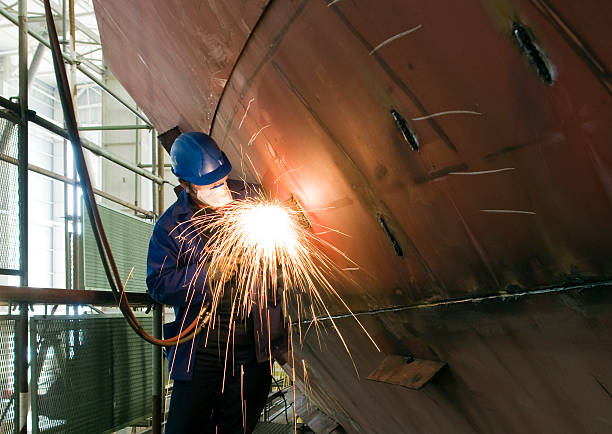
The hull is the main body of the ship. It protects the crew and cargo from water. Saltwater, waves, and impacts can cause cracks or holes. Welders cut away damaged areas and attach new steel plates. Good welds stop leaks and restore strength.
Example:
A cargo ship hits a dock and gets a hole below the waterline. Welders seal the hole with a steel patch. They use SMAW because the area is hard to reach and may be wet.
Deck Repairs
The deck is the ship’s floor. Heavy loads, dropped tools, and weather can wear down deck plates. Welders fix or replace these plates so the deck stays safe for walking and working.
Bulkhead And Frame Repairs
Bulkheads are walls inside the ship. They keep water from spreading if there is a leak. Frames are the ribs that support the hull. Damage to bulkheads or frames can weaken the ship. Welding is used to repair cracks or reinforce these parts.
Pipe Repairs
Ships have many pipes for water, fuel, and air. Corrosion or impact can break these pipes. Welders use TIG welding to fix or replace pipe sections. Good pipe welds stop leaks and prevent dangerous spills.
Engine And Machinery Repairs
The ship’s engine room has many metal parts. Welders repair cracks, attach brackets, or build supports for heavy equipment. Precision is important to avoid problems with moving parts.
Tank Repairs
Ships carry fuel, oil, or chemicals in large tanks. Welders fix leaks or add supports inside these tanks. They must follow strict safety steps because fumes can be dangerous.
Propeller And Rudder Repairs
The propeller and rudder help the ship move and steer. Damage here can stop the ship from working. Welders repair or build up worn blades and fix cracks.
How Ship Welding Repairs Are Planned And Done
Ship repair welding takes careful planning. Here’s how a typical job goes:
- Inspection: Workers check the ship for damage. They look for rust, cracks, and weak spots.
- Assessment: Engineers decide what needs welding. They plan how to reach the area and what method to use.
- Preparation: Workers clean the metal. They may cut away damaged parts and set up scaffolding or supports.
- Welding: Skilled welders do the repair. They follow safety rules and make sure the welds are strong.
- Testing: Inspectors check the welds with special tools. They look for cracks, leaks, or weak spots.
- Finishing: Workers paint or coat the welded area to stop rust.
Welding can happen in dry docks (when the ship is out of water) or afloat (while the ship is still in the water). Each case has different challenges.

Credit: www.arccaptain.com
Safety Steps For Ship Welding
Welding on ships is risky. There are fire hazards, toxic fumes, and tight spaces. Shipyards have strict safety rules to protect welders and others.
Common Dangers
- Fire and explosions: Welding sparks can set oil or paint on fire.
- Toxic fumes: Burning paint or metal makes dangerous smoke.
- Electric shock: Wet conditions on ships increase the risk.
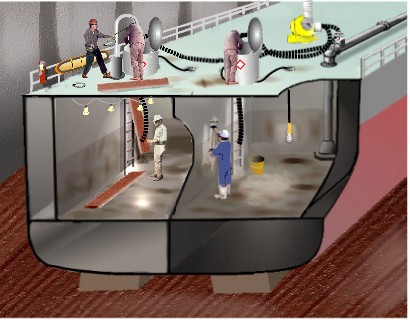
- Confined spaces: Welders may work in small tanks or rooms with little air.
Safety Measures
- Welders wear protective clothing: Helmet, gloves, and fire-resistant suits.
- Shipyards use ventilation fans to clear fumes.
- Workers test for gas leaks before welding in tanks.
- Fire watchers stand by with water or extinguishers.
- Teams plan escape routes in case of emergency.
Welders also need regular training to spot risks and use equipment safely.
Welding In Dry Dock Vs. Afloat Repairs
Ship repairs happen in two main settings: dry dock and afloat.
| Repair Setting | Main Advantages | Main Challenges |
|---|---|---|
| Dry Dock | Easy access, safer, no water around welds | Expensive, needs special facilities, ship must stop work |
| Afloat | Faster, less costly, ship can stay in service | Hard to reach areas, risk of water leaks, weather can interfere |
In dry dock, workers can reach the whole hull, and the ship is stable. This makes welding safer and easier. But dry docks are costly, and ships lose time out of service.
Afloat repairs happen while the ship is in the water. Teams can fix damage quickly, sometimes even while the ship is loaded. But water makes welding harder, and weather or waves can slow the work.
Credit: www.istockphoto.com
Underwater Welding In Ship Repair
Sometimes, repair teams must weld below the waterline. This is called underwater welding. There are two main types:
Wet Welding
Welders use special waterproof rods and work directly in the water. This is fast and cheap but gives weaker welds. Wet welding is mostly for emergency fixes or short-term repairs.
Dry Welding (habitat Welding)
Workers build a small dry space (habitat) around the area to be welded. They pump out the water so the welder can work in air. This gives stronger welds but takes longer and costs more.
Underwater welding is dangerous. Welders face electric shock, poor visibility, and water pressure. Only trained divers can do this work.
Common Materials Welded During Ship Repair
Most ships use mild steel for the hull and structure. Sometimes, they use high-strength steel for important parts. Pipes may be stainless steel or copper-nickel alloy. Propellers are often bronze.
Each material needs different welding methods and filler metals. Using the wrong method can cause cracks or weak spots. Skilled welders know how to choose the right process for each job.
| Material | Common Use | Best Welding Method |
|---|---|---|
| Mild Steel | Hull, decks, frames | SMAW, FCAW |
| High-Strength Steel | Critical structural parts | SMAW, FCAW |
| Stainless Steel | Pipes, tanks | GTAW (TIG) |
| Bronze | Propellers, fittings | Brazing, GTAW |
| Copper-Nickel Alloy | Seawater pipes | GTAW |
Quality Control And Inspection Of Welds
Good welds are crucial for ship safety. Poor welds can cause leaks or breaks at sea. Shipyards use several inspection methods:
- Visual inspection: Check for cracks, holes, or bad weld shape.
- Ultrasonic testing: Use sound waves to find hidden cracks.
- Magnetic particle testing: Find surface cracks in steel.
- X-ray testing: Look inside welds for hidden flaws.
After repair, inspectors often pressure-test pipes or tanks. Any failure means the weld must be redone. Inspection keeps ships safe and meets legal standards.
Challenges Unique To Ship Welding
Welding on ships is harder than on land. Some special challenges are:
Limited Access
Many ship parts are hard to reach. Welders may work in tight corners, inside tanks, or high above the ground. They need to use special tools and hold awkward positions.
Vibration And Movement
Ships can move or vibrate during repairs, especially afloat. This makes it hard to keep the weld steady and strong.
Weather And Moisture
Saltwater, rain, and humidity cause rust and make the work area slippery. Welders must keep the metal clean and dry for good welds.
Old Repairs
Ships may have many past repairs. Each new weld must join to old metal safely. Sometimes, old welds hide cracks or weak spots.
Time Pressure
Ships often need fast repairs to return to service. Welders must work quickly but not rush, or mistakes can happen.
Credit: www.osha.gov
Non-obvious Insights For Ship Repair Welding
Many beginners miss some key points about welding on ships:
- Preheating Thick Steel: When welding thick plates, heating the area first reduces cracking. It allows the weld to cool more slowly and evenly.
- Back Gouging: On thick hull plates, welders may grind out the back side of a weld and then weld again. This removes defects and makes the joint stronger.
- Post-Weld Heat Treatment: After some repairs, especially on high-strength steel, heating the area after welding (post-weld heat treatment) can reduce internal stresses and prevent future cracks.
- Weld Sequencing: The order of welds matters. Doing welds in the wrong sequence can cause plates to warp or pull out of shape.
- Galvanic Corrosion: Using the wrong filler metal can cause fast corrosion due to different metals touching. Skilled welders know how to match materials to avoid this hidden problem.
Training And Skills For Ship Welders
A ship welder needs strong skills and good training. Basic welding courses teach the methods, but ship work needs more.
Welders must learn:
- How to work in tight spaces and at heights
- How to read ship plans and follow repair instructions
- How to use safety gear and spot hazards
- How to check their own welds for quality
Many shipyards offer special training or require welders to pass tests. Certification from groups like the American Bureau of Shipping (ABS) or Lloyd’s Register shows a welder meets ship industry standards.
Environmental Concerns In Ship Repair Welding
Welding can harm the environment if not managed well. Fumes, noise, and metal dust can pollute the air and water. Shipyards use special steps to limit this:
- Use of fume extractors and filters
- Collecting and recycling metal dust and old paint
- Careful handling of chemicals and fuel near welding areas
- Training workers to avoid spills and pollution
Some shipyards also use newer, cleaner welding methods that make fewer fumes and sparks.
New Technology In Ship Repair Welding
Ship repair is always changing. New tools and methods help welders work faster and safer.
Automated Welding
Some shipyards use robotic arms for big, simple welds. Robots can work longer without breaks and make very steady welds. Humans still handle complex or tight jobs.
Better Welding Wires
Modern wires make less smoke and slag, helping both the welder and the environment. Some wires also give stronger welds with less risk of cracking.
Advanced Inspection Tools
Digital x-rays and ultrasound can find tiny flaws that old methods miss. This helps shipyards fix problems before they become serious.
Virtual Training
Welders can now practice with computer simulations. This lets them build skills without risk or waste.
Cost Factors In Ship Welding Repairs
The price of welding repairs depends on several things:
- Size of the repair: Bigger holes or cracks cost more to fix.
- Location: Hard-to-reach spots take more time.
- Material type: Special steels or alloys cost more to weld.
- Repair setting: Dry dock repairs cost more than afloat.
- Speed: Rush jobs or emergency repairs are more expensive.
Fast, skilled welders save money by avoiding mistakes and rework.
Case Study: Welding Repairs After Collision
A real example helps show the process. In 2022, a container ship hit a pier and tore a hole in its hull, below the waterline.
Steps taken:
- The ship moved to a dry dock.
- Inspectors found a crack 1.2 meters long.
- Welders cut out the damaged steel and cleaned the area.
- They fit a new steel plate and used FCAW for a strong, fast weld.
- Inspectors checked the weld with ultrasound and water pressure.
- The area was painted to protect from rust.
The repair took three days and cost about $40,000. The ship returned to service quickly, with no leaks.
Comparison: Ship Repair Welding Vs. New Ship Welding
Repairing ships is different from building new ones. Here’s how they compare:
| Aspect | Ship Repair Welding | New Ship Welding |
|---|---|---|
| Access | Often tight spaces, hard to reach | Open areas, easy access |
| Material Condition | Rusty, old, sometimes painted | Clean, new steel |
| Time Pressure | Very high, ship must return to service | Planned schedule, less rush |
| Risk | More hazards: fire, fumes, tight spaces | Safer, controlled environment |
| Weld Quality Needed | Often higher, due to critical repairs | High, but more predictable |
Key Points To Remember For Ship Repair Welding
- Welding keeps ships safe and strong.
- Each repair needs the right method and careful planning.
- Safety, skill, and inspection are vital.
- New technology is improving speed and quality.
- Environmental care is part of modern ship repair.
- Skilled welders are always in demand for this work.
For a deeper technical overview, the Ship Repair page on Wikipedia gives more details and links to research.
Frequently Asked Questions
What Is The Most Common Welding Method For Ship Repair?
Shielded Metal Arc Welding (SMAW) is most common because it works well on old, rusty metal and in hard-to-reach places.
How Is Welding Done Underwater?
Underwater welders use wet welding with waterproof rods or dry habitat welding by making a dry space around the repair area.
How Do Welders Stay Safe During Ship Repairs?
Welders wear protective gear, use fans for ventilation, have fire watchers, and follow strict safety rules to avoid fire, fumes, and electric shock.
Can Ships Be Repaired While Still In The Water?
Yes, many repairs happen afloat. This is faster and cheaper than dry dock, but harder and riskier, especially for underwater or below-the-waterline work.
Why Is Inspection Important After Welding Repairs?
Inspection checks for cracks, leaks, or weak welds. This prevents future problems and keeps ships safe at sea.
Ship repair welding is a demanding job that keeps maritime trade and travel moving. With skilled welders, strong safety practices, and good planning, damaged ships can return to service quickly and safely. Every weld counts—on the open sea, small mistakes can have big results.