Disclosure: This post contains affiliate links and I will be compensated if you make a purchase after clicking through my links. Learn More
TIG and MIG welding are two popular ways to join metal. Each process needs different skills, tools, and safety gear. Gloves are one of the most important pieces of equipment for both methods. The right gloves can protect your hands from heat, sparks, and cuts, but they must also let you move your fingers well.
Many new welders ask, “Which gloves are best for TIG welding, and which are best for MIG welding? ” This is not a simple choice, because the work and risks in each method are different.
TIG welding needs more finger control, while MIG welding produces more heat and sparks. Some gloves may look similar, but small details can make a big difference in comfort and safety. Choosing the right gloves can help you work longer and avoid injuries.
This article explains the key differences between TIG and MIG welding gloves, shows what features to look for, and helps you avoid common mistakes. Whether you are just starting or want to upgrade your gear, you will find clear, useful advice here.
Understanding Tig And Mig Welding
Before looking at gloves, it helps to know how TIG and MIG welding work.
TIG welding (Tungsten Inert Gas) uses a non-consumable tungsten electrode. The welder feeds filler metal by hand. This method gives high control, so it is good for thin materials and fine work. TIG welding makes a small, focused arc and low spatter. You often use both hands—one for the torch, one for the filler rod.
MIG welding (Metal Inert Gas) uses a consumable wire electrode. The wire feeds automatically from a spool. This method works faster and suits thick materials. MIG welding produces more sparks and spatter than TIG. Usually, you hold the torch in one hand.
Because TIG and MIG welding are so different, the gloves for each job must match the risks and work style.
Main Differences Between Tig And Mig Welding Gloves
Many people think all welding gloves are the same. In fact, gloves for TIG and MIG are quite different. The main differences come from the amount of heat, the work style, and the need for finger movement.
Material Thickness
- TIG welding gloves use thin, soft leather. This lets you feel the rod and torch easily. Most TIG gloves are 0.6–1.2 mm thick.
- MIG welding gloves are thicker, usually 1.2–1.5 mm, to block more heat and sparks.
Dexterity
- TIG gloves must allow high dexterity. You need to move your fingers freely.
- MIG gloves can be stiffer. They focus more on protection, less on fine finger work.
Heat And Spark Resistance
- MIG gloves resist higher heat and spatter because MIG welding is hotter and makes more sparks.
- TIG gloves focus more on comfort and sweat control.
Stitching And Lining
- TIG gloves often have fewer seams to avoid irritation during fine work.
- MIG gloves use strong threads and may have extra lining for heat.
Cuff Length
- MIG gloves usually have longer cuffs for better arm protection.
- TIG gloves may have shorter cuffs for comfort and movement.
What Makes A Good Tig Welding Glove
TIG welding needs gloves that give you control, comfort, and enough protection. Here are the features you should check:
1. Thin, Soft Leather
Look for goatskin or kidskin. These types of leather are thin, strong, and let you feel your work. Some gloves use deerskin for even more softness.
2. High Dexterity
Test if you can pick up a small object while wearing the gloves. You should be able to hold the filler rod and torch easily.
3. Low Bulk Design
TIG gloves should not have thick seams or extra padding. Extra material can make it hard to move your fingers.
4. Moisture Control
TIG welders work slowly and often sweat inside gloves. Some gloves use absorbent linings or special leather that breathes well.
5. Snug Fit
A close fit helps you work better and stay safe. Loose gloves can catch on tools or let sparks inside.
6. Good Stitching
Fine work can stress seams. Look for gloves with Kevlar stitching. This thread resists heat and lasts longer than cotton.
7. Shorter Cuffs
Most TIG welding does not need long cuffs. Short cuffs help you move your wrists and arms freely.
Example: Goatskin Tig Glove
Many top TIG gloves use goatskin. It is thin but strong. For example, a goatskin glove with Kevlar stitching and a cotton lining is a popular choice for TIG welders working with thin stainless steel or aluminum.
What Makes A Good Mig Welding Glove
MIG welding is hotter and messier, so MIG gloves must focus on safety and heat protection. Here is what matters most:
1. Thicker Leather
Cowhide and elk skin are common for MIG gloves. They are thicker and block more heat and sparks. Most MIG gloves use 1.2 mm or thicker leather.
2. Extra Padding
Many MIG gloves have padding on the back of the hand and palm. This helps absorb heat and resists sparks.
3. Long Cuff
MIG welding produces more spatter, so a long cuff (often 4–6 inches) protects your wrist and lower arm.
4. Durable Stitching
MIG gloves need strong seams. Kevlar thread is best, as it does not melt from heat or spatter.
5. Heat-resistant Lining
Many MIG gloves have cotton or foam lining. This adds comfort but also blocks more heat.
6. Less Dexterity
You do not need as much finger movement for MIG. Gloves can be stiffer, but you should still be able to grip the torch.
Example: Cowhide Mig Glove
A split cowhide glove with a long, reinforced cuff and Kevlar stitching is a standard choice for heavy MIG welding. It blocks most sparks and lets you weld for longer without burning your hands.
Comparing Tig And Mig Welding Gloves
Choosing the right glove depends on how much protection you need versus how much finger movement you want. The table below shows the main differences:
| Feature | TIG Welding Gloves | MIG Welding Gloves |
|---|---|---|
| Leather Type | Goatskin, Kidskin, Deerskin | Cowhide, Elk Skin, Pigskin |
| Thickness | 0.6–1.2 mm (Thin) | 1.2–1.5 mm (Thick) |
| Dexterity | High | Medium |
| Spark/Heat Resistance | Medium | High |
| Cuff Length | Short | Long |
| Lining | Minimal, Breathable | Thick, Heat-resistant |
How To Choose Tig Welding Gloves: Key Factors
Many gloves claim to be for TIG welding, but not all are good. Here is what to check before you buy:
1. Leather Quality
The best TIG gloves use top-grain goatskin. Top-grain means the outer part of the hide, which is smooth and strong. Avoid gloves made from split leather, as they are thicker and less flexible.
2. Size And Fit
Try gloves on before buying. Gloves that are too loose will bunch up, while tight gloves can make your hands tired.
3. Stitching
Good TIG gloves use Kevlar thread. This thread does not melt and lasts longer. Poor stitching can break after a short time.
4. Lining
Some TIG gloves have a thin lining for comfort, but too much lining makes them bulky. Look for gloves with a breathable lining.
5. Cuff Style
Choose a shorter cuff if you need more wrist movement. For high-heat TIG welding, a longer cuff may help, but it can reduce comfort.
6. Price Vs. Quality
Cheap gloves may save money but often wear out fast. Good TIG gloves cost more but last longer and protect better.
7. Brand Reputation
Look for brands known for making quality welding gloves. Reviews from other welders can help you decide.
Non-obvious Insight 1
Some welders use tight-fitting mechanic’s gloves for TIG welding on thin metals. This gives excellent control, but mechanic’s gloves are not made for heat and may not protect enough. Only use these for very low-heat TIG work.
Non-obvious Insight 2
TIG gloves with external seams are less likely to irritate your fingers during long jobs. Internal seams can rub and make your hands sore.
How To Choose Mig Welding Gloves: Key Factors
MIG gloves are all about protection. Here is what to consider:
1. Thickness
Thicker gloves give more protection, but if they are too stiff, you will tire your hands. Choose gloves that are thick but still let you grip the torch.
2. Leather Type
Cowhide is strong and cheap. Elk skin is even better for heat but costs more.
3. Cuff Length
A longer cuff protects your arm from sparks. Most MIG gloves have a 4–6 inch cuff.
4. Lining
A heat-resistant lining is a must for long welds. Cotton or foam is common.
5. Reinforcements
Extra layers on the palm and back help with hot jobs.
6. Stitching
Choose gloves with Kevlar stitching. Normal cotton thread will burn or break quickly.
7. Weight
If gloves are too heavy, your hands will get tired. Try to balance protection and weight.
Non-obvious Insight 3
Some MIG gloves use a split-finger design (the index finger is separate from the rest). This makes it easier to press the trigger while keeping the rest of your hand safe.
Non-obvious Insight 4
Many welders cut the pinky finger off old MIG gloves to get better grip for special tasks. This is risky and not recommended, but it shows how much finger movement matters.
Best Glove Materials For Tig And Mig Welding
The type of leather matters a lot. Here is a short guide:
Goatskin
- Thin, soft, and flexible
- Best for TIG welding
- Good for fine work
Kidskin
- Very soft
- Excellent for small, careful jobs
Cowhide
- Thicker and strong
- Standard for MIG welding
- Good heat resistance
Elk Skin
- Even better heat resistance than cowhide
- Very durable
Deerskin
- Soft and flexible
- Used for TIG gloves, but less common
Pigskin
- Not as common
- Resists oil and water well
| Material | Best For | Strength | Dexterity |
|---|---|---|---|
| Goatskin | TIG Welding | High | High |
| Cowhide | MIG Welding | Very High | Medium |
| Elk Skin | MIG Welding | Very High | Medium |
| Kidskin | TIG Welding | Medium | Very High |
| Deerskin | TIG Welding | Medium | High |
Common Mistakes When Choosing Welding Gloves
Many welders make simple mistakes when buying gloves. Here are some to avoid:
- Choosing too thick gloves for TIG: You lose control and tire your hands.
- Using thin TIG gloves for MIG: You risk burns and blisters.
- Ignoring fit: Loose gloves can catch on tools or let sparks in.
- Forgetting about lining: Gloves with too much lining can make your hands sweat or slip.
- Buying on price only: Cheap gloves often wear out fast or do not protect well.
- Using one glove for all jobs: TIG and MIG are different. The right glove makes a big difference.
Care And Maintenance Of Welding Gloves
Good gloves last longer if you care for them. Here is how to keep them in good shape:
1. Clean Regularly
- Brush off dust and metal bits after each use.
- Wipe with a damp cloth if needed. Do not soak leather gloves in water.
2. Dry Properly
- Let gloves dry in the air. Do not use direct heat, as this makes leather stiff.
- If gloves get very sweaty, turn them inside out to dry.
3. Store Correctly
- Keep gloves in a dry, cool place.
- Do not store heavy things on top of gloves, as this can flatten and damage them.
4. Check For Damage
- Inspect gloves often for holes, weak seams, or hard spots.
- Replace gloves if you see burns or holes.
5. Use Leather Conditioner
- Occasionally treat leather gloves with a leather conditioner. This keeps them soft and flexible.
Non-obvious Insight 5
Sweaty gloves can cause skin problems over time. If you weld for hours each day, have two pairs and switch between them to let each dry fully.
Best Practices For Using Tig And Mig Welding Gloves
Wearing gloves is not enough. You must use them the right way:
- Always wear gloves before setting up your work. Many injuries happen before welding starts.
- Avoid touching hot metal directly, even with gloves. Prolonged heat can burn through.
- Keep gloves away from oil, grease, and chemicals. These can damage leather and reduce protection.
- If you feel heat through the glove, stop and let your hand cool down.
How To Tell When To Replace Your Welding Gloves
Even the best gloves wear out. Change your gloves if:
- You see holes or thin spots.
- Seams come undone.
- The glove feels hard or stiff, which means the leather is cooked.
- You feel heat or pain during normal welding.
- The lining comes loose or bunches up.
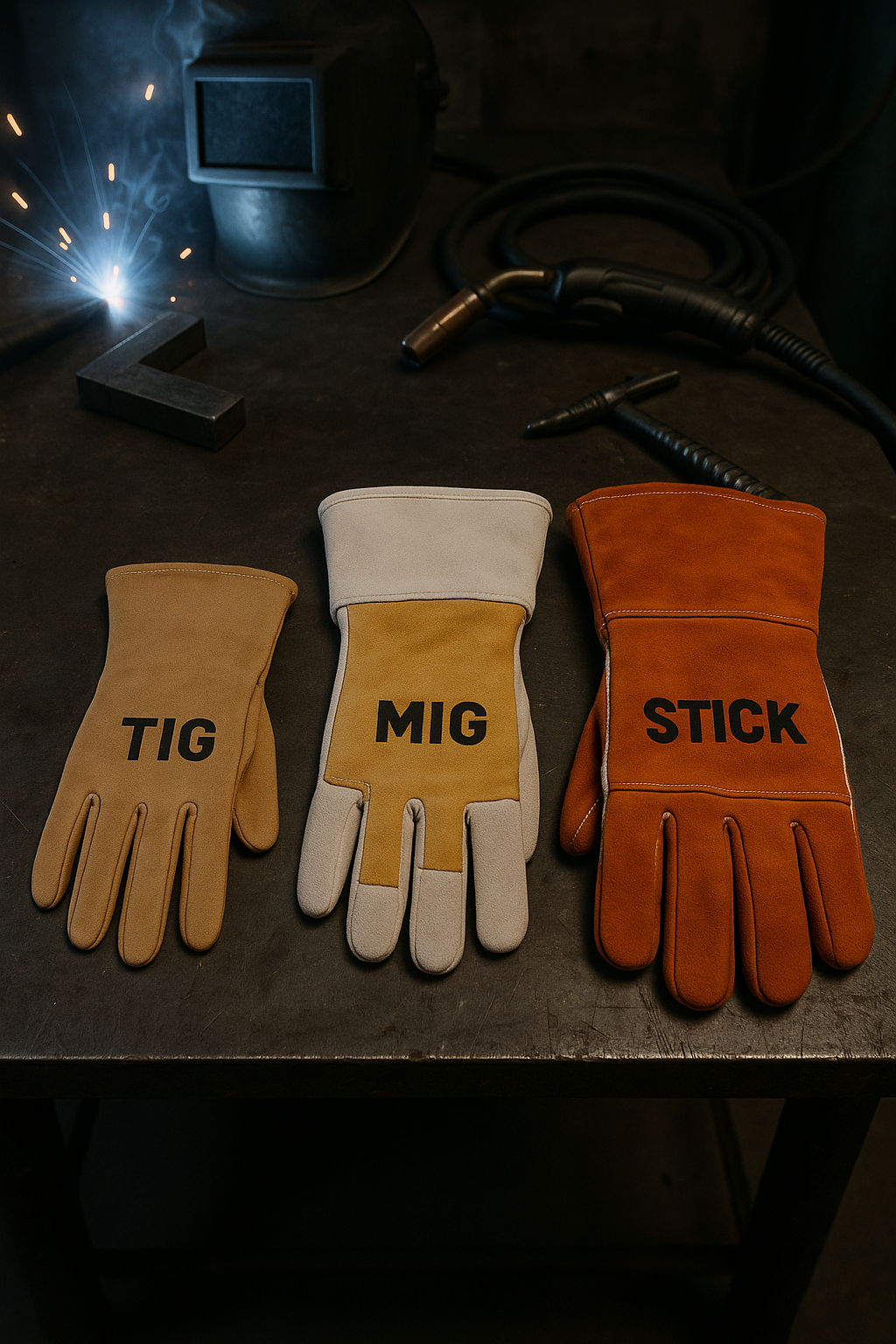
Credit: blog.weldsupportparts.com
Real-world Examples: Tig Vs. Mig Glove Choice
Many welders have learned the hard way that the wrong glove can ruin a job. For example:
- A TIG welder using thick MIG gloves found he could not hold the filler rod properly. His welds looked messy, and his hands got tired fast.
- A MIG welder wore thin goatskin TIG gloves. After a few minutes, he noticed his hand burning from spatter and had to stop.
- A fabricator working with both TIG and MIG welding kept two pairs of gloves on his workbench. He switched gloves depending on the welding type and reported fewer burns and better welds.
How To Try Welding Gloves Before Buying
Many shops let you try gloves on. Here’s what to check:
- Put on the gloves and hold a welding torch or rod.
- Make a fist and open your hand. The glove should not pinch or feel loose.
- Try picking up a small object, like a coin.
- For MIG gloves, check if you can press the trigger easily.
If you buy online, check return policies so you can swap gloves if they do not fit well.
Credit: www.reddit.com
Popular Brands For Tig And Mig Welding Gloves
Some brands are known for making quality gloves for both TIG and MIG welding:
- Tillman: Offers a wide range, including goatskin TIG gloves and thick cowhide MIG gloves.
- Lincoln Electric: Known for durable gloves with good fit.
- Miller Electric: Sells both TIG and MIG gloves with strong stitching.
- Revco/Black Stallion: Offers gloves with extra features, such as reinforced palms.
- Steiner: Makes affordable gloves that last.
When choosing a brand, read reviews and ask other welders for their experience.
How Glove Choice Affects Welding Quality
The right gloves can improve your work:
- TIG gloves help you make smooth, neat welds on thin metal.
- MIG gloves let you weld for longer without burns, especially on thick steel.
Poor glove choice leads to mistakes, fatigue, and even injury. Many welders find that upgrading to better gloves improves both safety and finished weld quality.
Safety Standards For Welding Gloves
Good gloves meet certain safety standards. Look for these markings:
- EN 388: Shows cut and puncture resistance.
- EN 407: Shows heat resistance.
- ANSI: The American standard for gloves.
- CE Mark: Required in Europe.
Gloves should have a label showing what standards they meet. This helps you know you are protected.
If you want to read more about welding glove standards, see the Personal Protective Equipment page on Wikipedia.
Frequently Asked Questions
What Is The Main Difference Between Tig And Mig Welding Gloves?
TIG welding gloves are thin, soft, and let you move your fingers easily. MIG welding gloves are thicker, with more padding and a longer cuff to protect you from heat and sparks.
Can I Use Mig Gloves For Tig Welding?
You can, but it is not a good idea. MIG gloves are too thick for the fine control needed in TIG welding. You may find it hard to hold the torch and filler rod properly.
Are There Gloves That Work For Both Tig And Mig Welding?
Some gloves are called “multi-process” gloves. They are a compromise: not as thin as true TIG gloves, not as thick as real MIG gloves. They work for light jobs but are not ideal for either process.
How Often Should I Replace My Welding Gloves?
Replace gloves when you see holes, worn spots, or broken seams. If you start to feel heat through the glove, it is time to get a new pair. Heavy users may need new gloves every few months.
What Is The Best Leather For Welding Gloves?
For TIG welding, goatskin or kidskin is best. For MIG welding, cowhide or elk skin gives the most protection. The best leather is always top-grain for smoothness and strength.
Choosing the right welding gloves is not just about comfort—it is about safety and quality. For TIG welding, pick gloves that let you move your fingers. For MIG welding, choose gloves that block heat and sparks. Check fit, leather type, and stitching.
Good gloves last longer and let you weld better. With the right pair, you will work safer and finish with cleaner, stronger welds.

Credit: weldmongerstore.com