Disclosure: This post contains affiliate links and I will be compensated if you make a purchase after clicking through my links. Learn More
Many people start stick welding and wonder about the right lens shade. Safety is a big concern because a wrong lens can damage your eyes. The bright light from welding is intense and can cause problems like eye pain or even long-term vision loss.
Choosing the best lens shade is not just about comfort; it is about protecting your health.
This article explains which shade lens is best for stick welding. You will learn why the right lens matters, how different shades work, and how to pick the best one for your needs. We will look at shade numbers, welding amperage, and other important factors.
You will also find tables that compare shade options and practical advice for beginners and experienced welders. By the end, you will know exactly what to use for safe and effective stick welding.
Why Lens Shade Matters In Stick Welding
Stick welding creates a very bright arc. The light includes ultraviolet (UV) and infrared (IR) rays. These rays can harm your eyes quickly, even if you look at them for just a few seconds. Many new welders do not realize how serious this can be until they feel pain or see afterimages.
A proper welding lens blocks the dangerous rays. It also makes it easier to see the weld pool. If your lens is too dark, you cannot see what you are doing. If it is too light, your eyes are not safe. So, picking the right shade number is critical.
How Shade Numbers Work
Shade numbers show how much light the lens blocks. A higher shade number means the lens is darker. Most welding helmets have lenses with shade numbers between 8 and 14. Lower numbers block less light, and higher numbers block more.
The shade number you need depends on the brightness of the arc. Brighter arcs require darker lenses. The brightness is mainly set by the welding amperage.
Understanding Stick Welding Amperage
Amperage is the main factor that decides how bright the arc will be. Stick welding, also called Shielded Metal Arc Welding (SMAW), usually uses amperages between 40 and 300 amps. The higher the amps, the brighter the arc. So, you need a darker lens for higher amperages.
Some examples:
- Welding thin sheet metal with 50 amps produces a dimmer arc.
- Welding thick steel with 200 amps is much brighter.
Recommended Shade Numbers For Stick Welding
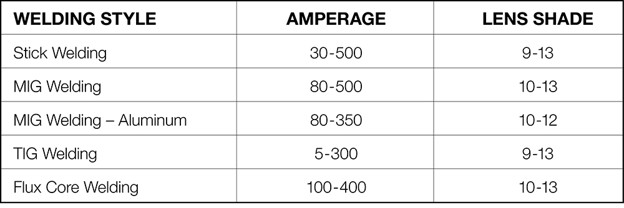
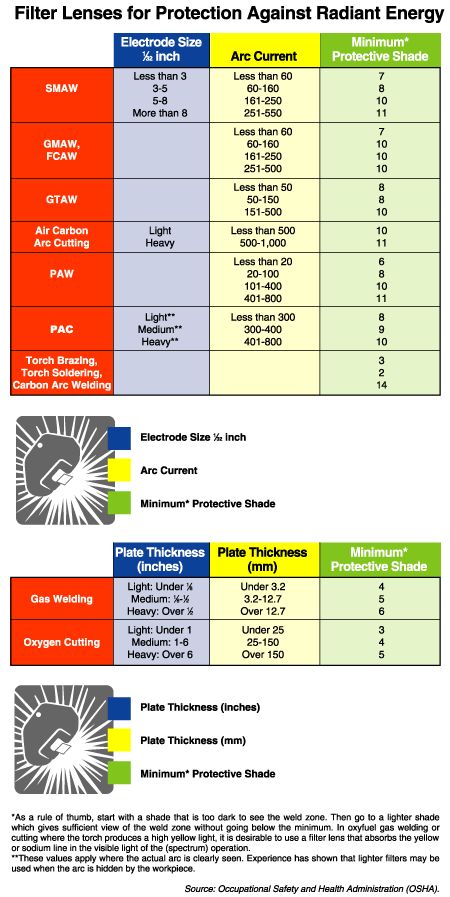
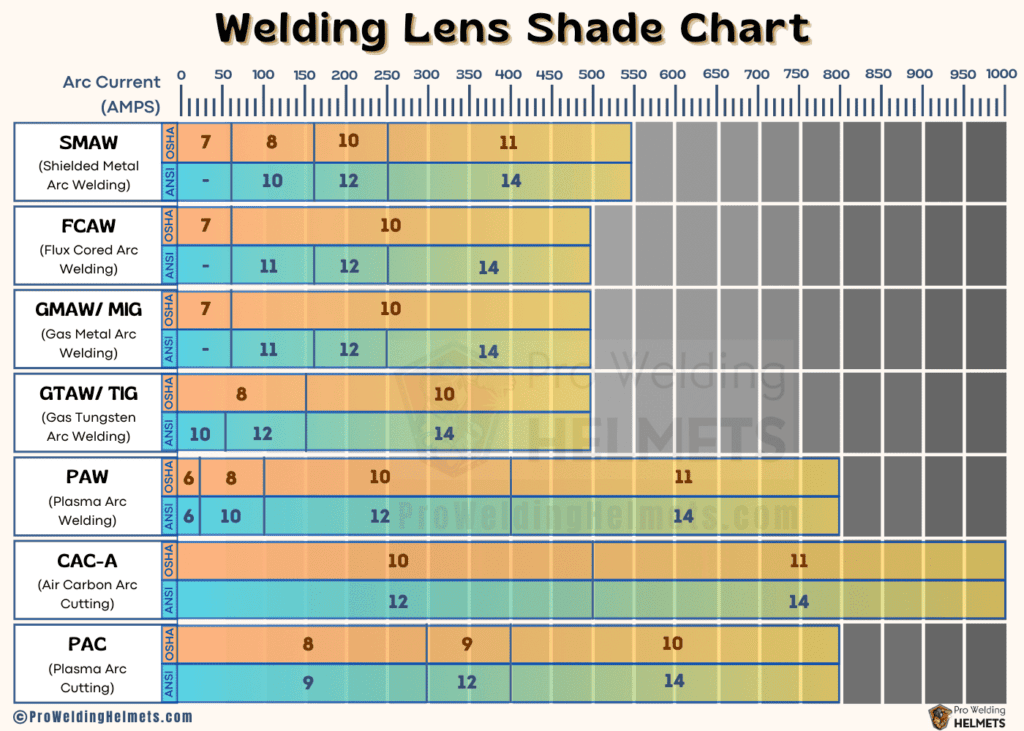
The American Welding Society (AWS) gives clear guidelines for safe lens shades. Here is a summary for stick welding:
| Amperage Range (A) | Recommended Shade Number |
|---|---|
| Less than 60 | 7-9 |
| 60 – 160 | 10 |
| 160 – 250 | 10-11 |
| 250 – 550 | 12-14 |
For most hobby stick welding, you will use 70 to 150 amps. This means a shade 10 lens is usually safe. If you weld thicker materials with higher amps, move up to shade 11 or 12.
How To Choose The Right Shade Lens
1. Check Your Welding Amperage
Find out your usual welding amperage. Most machines show this on a dial or display. Pick a lens shade that matches your common amperage range. If you change amperages often, consider an auto-darkening helmet.
2. Follow Safety Standards
Always use at least the minimum recommended shade. The AWS and Occupational Safety and Health Administration (OSHA) set these rules to protect welders’ eyes.
3. Consider Your Eyesight
Some people have more sensitive eyes. You may find a shade 10 lens too bright, even at 120 amps. In this case, try a shade 11. Your comfort is important, as long as you can see the weld.
4. Test Visibility
You need to see the weld puddle clearly. If your lens is too dark, you may weld poorly. If it is too light, your eyes will hurt. Always test your lens in a safe way before starting real work.
5. Use Auto-darkening Helmets For Flexibility
Auto-darkening helmets can change their shade automatically. You can set a range, such as shade 9 to shade 13. When you strike the arc, the lens darkens in milliseconds. This is good if you work with different amperages or types of welding.
Fixed Shade Vs. Auto-darkening Lenses
Welding helmets have either fixed shade or auto-darkening lenses.
- Fixed shade: The lens is always one shade. It is simple and reliable. Most fixed lenses are shade 10 or 11.
- Auto-darkening: The lens changes from light to dark quickly. You can adjust the darkness. This is useful for changing jobs or working in different light conditions.
| Feature | Fixed Shade Lens | Auto-Darkening Lens |
|---|---|---|
| Shade Adjustability | Single fixed shade | Adjustable (usually 9-13) |
| Weight | Lighter | Heavier (slightly) |
| Cost | Lower | Higher |
| Ease of Use | Simple | More features |
| Speed | No delay | Darkens in 0.1 ms |
Auto-darkening helmets are now more popular, but many professional welders still use fixed shade lenses for their reliability.
Credit: www.tws.edu
Common Shade Numbers And Their Uses
Each shade number is best for certain tasks:
- Shade 7–9: Low-amperage welding (less than 60A), common in small repairs or thin metals.
- Shade 10: Standard for most stick welding (60–160A). Good for most hobby and workshop jobs.
- Shade 11: Needed for brighter arcs (160–250A). Also good for people with sensitive eyes.
- Shade 12–14: Used for high-amperage work (over 250A), heavy industrial jobs, or long welding sessions.
If you do not know your amperage, start with shade 10. If you see bright spots or feel any discomfort, go higher.
Mistakes To Avoid When Choosing A Lens Shade
- Using too light a shade: This is the most dangerous mistake. Your eyes can suffer permanent damage, even if you do not feel pain right away.
- Choosing a lens just for comfort: Some people pick lighter shades because they can see better. This puts your eyes at risk. Always follow safety recommendations first.
- Ignoring helmet quality: Cheap helmets may claim a high shade number but not block UV and IR rays well. Always buy from trusted brands.
- Not adjusting for long sessions: If you weld for hours, your eyes get tired. Use a slightly darker lens to reduce strain.
- Forgetting about helmet fit: A lens is only helpful if the helmet fits well and does not let in outside light.
Real-world Examples
- Beginner welder: Maria welds garden gates at home using 90 amps. She uses a shade 10 lens and feels comfortable. She tried a shade 9 but saw afterimages, so she switched back to shade 10.
- Industrial welder: John works on pipelines with 230 amps. He uses a shade 12 lens. If he switches to thin pipes, he changes to shade 10.
- Maintenance worker: Lee uses an auto-darkening helmet, set to switch between shades 9 and 13. He moves between different jobs all day and does not need to change his helmet.
Lens Quality: Not All Lenses Are Equal
Lens shade is important, but lens quality also matters. A good welding lens should:
- Block 100% of UV and IR rays, even if the shade is light.
- Offer a clear, undistorted view.
- Be tough against impact and heat.
Some cheap lenses do not block all harmful rays, even if they look dark. Always check for safety certifications like ANSI Z87. 1 (in the US) before buying.
How To Test Your Welding Lens
You can test your lens for safety and comfort:
- Check the certification: Look for marks like ANSI Z87.1 or EN379.
- Try the lens indoors: Look at a bright light (not the sun). You should not see any spots or afterimages.
- Wear the helmet during short welds: If your eyes hurt or you see bright flashes, the shade is too light.
- Ask other welders: Experienced welders can often spot poor lenses quickly.
More Factors That Affect Your Choice
1. Lighting In Your Workspace
A bright shop may need a slightly darker lens, while a dark garage may need a lighter one so you can see clearly.
2. Type Of Metal
Different metals reflect light differently. Stainless steel, for example, reflects more light than carbon steel. You may need a darker lens for stainless steel.
3. Your Age And Eye Health
Older eyes are often more sensitive. If you are over 50, you may find shade 11 more comfortable than shade 10, even at the same amperage.
4. Helmet Features
Some helmets have extra features:
- Grind mode: Lets you switch to a light shade for grinding.
- Sensitivity adjustment: Changes how fast the lens darkens.
- Delay control: Controls how long the lens stays dark after the arc stops.
These features do not change the shade, but they improve safety and comfort.
How To Use An Auto-darkening Helmet For Stick Welding
Auto-darkening helmets have sensors that detect the welding arc. Set the helmet to the right shade range before starting. For stick welding, most welders set the range between shade 9 and shade 13.
Steps:
- Set the helmet to at least shade 10 before welding.
- Try a test weld. If the arc feels too bright, increase the shade setting.
- Adjust sensitivity and delay if your helmet has these options.
- Always check the batteries. Weak batteries can cause the lens to fail to darken.
What To Do If You Experience Eye Discomfort
If your eyes feel sore, dry, or you see spots after welding, stop immediately. Common symptoms of arc eye (welders’ flash) include:
- Red, watery eyes
- Pain or feeling something in the eye
- Sensitivity to light
Use eye drops and rest in a dark room. If pain continues, see a doctor. Never ignore these symptoms, as repeated damage can cause blindness.
How Lens Shade Affects Your Weld Quality
A proper lens shade helps you see the weld pool and joint. If you cannot see well, your welds may be crooked or too high. Many beginners use too dark a lens and make poor welds because they cannot see the metal.
On the other hand, if your lens is too light, you may get good visibility but damage your eyes. Finding the right balance is key. Most welders improve their work by testing a few shades before choosing one.
Table: Common Stick Welding Tasks And Lens Shades
Here is a quick reference for common stick welding jobs:
| Task | Amperage Used | Recommended Shade |
|---|---|---|
| Small repairs (thin sheet metal) | 40–60A | 9 |
| General fabrication | 70–130A | 10 |
| Heavy-duty welding | 160–250A | 11 |
| Industrial welding (beams, thick steel) | 250A+ | 12–14 |
Practical Tips For Safe Stick Welding
- Always start with a darker lens if you are unsure. You can move to a lighter shade if you need better visibility.
- Keep your helmet clean. Dirty lenses reduce visibility and may cause you to use the wrong shade.
- Replace scratched or damaged lenses immediately.
- Do not rely on sunglasses or regular safety glasses. They do not block welding rays.
- Take breaks if welding for a long time. Eye strain builds up over time.
What Experts Say
Professional welders agree: eye safety comes first. Many have stories of trying lighter shades and paying the price with pain. They recommend always using at least the minimum safe shade, even if visibility feels slightly reduced.
Some welders use shade 11 as their default, even for lower amps, just to be safe. Others switch between shades based on the job. There is no shame in using a darker lens if it keeps you comfortable and safe.
For more on welding safety, check the official guidelines from American Welding Society.
Credit: www.thefabricator.com
Frequently Asked Questions
What Happens If I Use Too Light A Shade For Stick Welding?
If your shade is too light, UV and IR rays can reach your eyes. This can cause arc eye, pain, or even long-term vision damage. It is always safer to go one shade darker if you are unsure.
Can I Use The Same Lens Shade For Mig Or Tig Welding?
Not always. MIG and TIG welding have different arc brightness. TIG, for example, often uses lower amperage and may need a lighter lens. Always check the recommendations for each process.
Is Auto-darkening Safe For Stick Welding?
Yes. Good auto-darkening helmets block UV and IR even when not darkened. Make sure your helmet has reliable sensors and batteries, and always check for safety certifications.
Why Do My Eyes Hurt After Welding, Even With A Helmet?
This can happen if your lens shade is too light, your helmet lets in outside light, or your lens is damaged. Also, very long welding sessions can cause eye fatigue. Always check your gear and use the proper shade.
How Long Does A Welding Lens Last?
Most lenses last for years if cared for. Replace them if they are scratched, cracked, or if you notice less protection. Auto-darkening helmets may need new batteries or sensors over time.
Final Thoughts
Choosing the right shade lens for stick welding is about safety, comfort, and getting good results. Most welders will do well with a shade 10 lens for general work, but always match your lens to your amperage and job. Never risk your eyes by using the wrong equipment.
If you are in doubt, start with a darker lens and adjust as needed. Good welding means seeing your work clearly and keeping your eyes safe for years to come.
Credit: proweldinghelmets.com