Disclosure: This post contains affiliate links and I will be compensated if you make a purchase after clicking through my links. Learn More
Many people hear about MIG and MAG welding but often confuse them or think they are the same. These two methods shape the way modern industries join metals, and they matter for both large factories and home workshops. Understanding the differences, advantages, and uses of MIG and MAG welding can help you choose the right process for your work.
This article explains both welding methods in a clear and detailed way. You will learn how they work, what sets them apart, and where you might use each one. You will also see their strengths, weaknesses, and safety needs.
What Is Mig Welding?
MIG welding means Metal Inert Gas welding. Many people also call it Gas Metal Arc Welding (GMAW). This process uses a thin metal wire as both the electrode and the filler material. The wire feeds through a welding gun, which also releases a protective gas. The gas shields the weld pool from the air, preventing contamination.
The main shielding gases for MIG welding are argon or a mix of argon and helium. These gases do not react with the molten metal. Because of this, MIG welding produces clean welds with little spatter or smoke.
MIG welding started in the 1940s. It was used mainly for aluminum and non-ferrous metals. Over time, industries found that it works well for steel and other metals too.
How Mig Welding Works
- The welder presses a trigger on the gun.
- The machine feeds the wire through the gun.
- The wire touches the metal, creating an electric arc.
- The arc melts both the wire and the base metal.
- The shielding gas flows out and protects the arc from air.
- The molten metal forms a weld bead as it cools.
MIG welding is semi-automatic. The welder controls the gun and the speed, but the machine feeds the wire automatically. This makes the process fast and less tiring than manual welding.
Main Features Of Mig Welding
- Uses inert gases (mainly argon or argon/helium mixes)
- Works best on non-ferrous metals (aluminum, copper, magnesium)
- Produces clean welds with low spatter
- Easy to learn for beginners
- Good for thin and medium-thick metals
What Is Mag Welding?
MAG welding stands for Metal Active Gas welding. It is very similar to MIG welding in many ways. The main difference lies in the shielding gas. MAG welding uses active gases that can react with the weld pool. The most common gases are carbon dioxide (CO2) or mixtures of CO2 and argon.
MAG welding is mainly used for ferrous metals, especially steel. The active gas can make the arc hotter or change the properties of the weld. This can help with deeper penetration or stronger welds in carbon steel.
MAG welding is popular in car manufacturing, construction, shipbuilding, and many more fields that use steel.
How Mag Welding Works
- The welder triggers the gun.
- The wire feeds through the gun and touches the workpiece.
- The electric arc forms and melts the wire and base metal.
- The shielding gas (CO2 or mix) flows out to protect the weld.
- The metal cools and makes a solid joint.
MAG welding can use pure CO2 or mixed gases. Pure CO2 is cheaper but can cause more spatter. Mixes with argon make smoother welds and less smoke.
Main Features Of Mag Welding
- Uses active gases (CO2 or argon mixes with CO2 or O2)
- Best for ferrous metals (mild steel, low-alloy steel)
- Can handle thicker materials
- Often used in heavy industry
- Slightly more spatter than MIG
Key Differences Between Mig And Mag Welding
Many people think MIG and MAG welding are the same because they use similar machines and techniques. But the type of shielding gas changes the process and the results. Here is a quick look at their main differences:
| Feature | MIG Welding | MAG Welding |
|---|---|---|
| Shielding Gas | Inert (Argon, Argon/Helium) | Active (CO2, Argon/CO2/O2 mix) |
| Material Type | Non-ferrous metals | Ferrous metals (mainly steel) |
| Spatter | Low | Medium |
| Weld Appearance | Very clean | Can be rougher |
| Cost | Higher (due to gas) | Lower (CO2 is cheap) |
| Common Applications | Aluminum, Copper, Magnesium | Steel Structures, Cars, Pipes |
Understanding these differences helps you choose the right process for your work and materials.
Equipment Used In Mig And Mag Welding
Both processes use similar machines, but the choice of gas and wire can change. Here are the main parts:
Welding Machine
The main unit controls the voltage and current. It can be a transformer-based or inverter-based device. Inverters are lighter and use less power.
Wire Feeder
This part pushes the wire through the gun. Modern machines have adjustable speed for better control.
Welding Gun
The gun delivers the wire, shielding gas, and electric current to the work. Guns can be air-cooled or water-cooled for heavy jobs.
Shielding Gas Supply
A gas cylinder connects to the machine. You use argon for MIG or CO2/mixes for MAG. The regulator controls the flow.
Welding Wire
The wire acts as both electrode and filler. You choose the type based on your metal (aluminum wire for MIG, steel wire for MAG).
Power Source
Most machines use DC (Direct Current). Some can switch to AC for special jobs.
Ground Clamp
This connects to the workpiece to complete the circuit.
Safety Gear
Welding requires safety gear like a helmet, gloves, jacket, and boots. The bright arc and hot metal can cause burns or eye damage.
Advantages Of Mig Welding
MIG welding is popular for many reasons. Here are its main benefits:
- Easy to Learn: New welders can start producing good welds fast.
- Clean Results: The use of inert gas leads to smooth, shiny welds with little cleaning.
- Low Spatter: Less mess to clean up after welding.
- Versatile: Good for thin metals and tricky shapes.
- Fast: Continuous wire feed makes the process quick.
- Good for Automation: Many robots use MIG welding in factories.
- Less Skill Needed: The process is more forgiving than stick welding.
A non-obvious insight: MIG welding works especially well in indoor workshops. Wind can blow away the shielding gas outdoors, leading to poor welds.
Disadvantages Of Mig Welding
No method is perfect. Here are some drawbacks of MIG welding:
- Gas Cost: Argon and helium can be expensive.
- Wind Sensitivity: Outdoor use can be tricky due to gas loss.
- Limited to Clean Metals: Rust, oil, or paint on the metal can cause poor results.
- Equipment Size: MIG machines are heavier than stick welders.
- Not for Thick Steel: Welds on very thick steel may lack penetration.
Another point beginners miss: MIG welds can crack if the metal is dirty or oily. Always clean the metal well before welding.
Advantages Of Mag Welding
MAG welding is the top choice for steel structures and repairs. Here are its main strengths:
- Cost-Effective: CO2 gas is cheap and easy to find.
- Works on Thicker Steel: The active gas allows for deeper welds.
- Strong Joints: Good for load-bearing parts in cars and buildings.
- Fast Process: Like MIG, the wire feed boosts speed.
- Flexible Gas Mixes: You can tweak the gas blend for better results.
MAG welding handles rougher surfaces better than MIG. It is used outside more often, but wind can still cause trouble.
Disadvantages Of Mag Welding
MAG welding also has some downsides:
- More Spatter: CO2 can cause sparks and spatter.
- Rougher Finish: You may need to clean or grind the welds.
- Weld Fumes: Active gases can produce more smoke.
- Limited to Steel: Not good for aluminum or copper.
- More Skill Needed: The arc is hotter and can burn through thin metal.
A less-known point: pure CO2 can make the weld bead narrow, which is good for deep joints but harder for wide seams.

Credit: yeswelder.com
Applications Of Mig And Mag Welding
Both processes have a wide range of uses, but some jobs fit better with one method.
Mig Welding Applications
- Aerospace: Aircraft parts use MIG for clean, strong joints.
- Automotive: Good for body panels and thin parts.
- Manufacturing: Used for making furniture, metal frames, and signs.
- DIY Projects: Popular with hobbyists for small jobs.
- Repair Work: Best for fixing aluminum and non-ferrous parts.
Mag Welding Applications
- Shipbuilding: Steel hulls and frames use MAG for strength.
- Construction: Beams, columns, and bridges are welded with MAG.
- Car Manufacturing: Chassis and structural parts use MAG.
- Pipe Welding: Used for steel gas and oil pipes.
- Heavy Equipment: Tractors, cranes, and machines rely on MAG.
A practical point: industries often use both MIG and MAG in the same workshop for different jobs. The machines can switch gases and wires as needed.
Shielding Gases In Detail
The choice of shielding gas affects the weld quality, speed, and cost. Here is a closer look at the common gases:
Mig Welding Gases
- Argon: Most popular for aluminum and copper. Makes smooth welds.
- Argon/Helium Mix: Used for thicker non-ferrous metals. Helium gives a hotter arc and faster welding.
- Argon/Hydrogen Mix: Sometimes used for special stainless steel jobs.
Mag Welding Gases
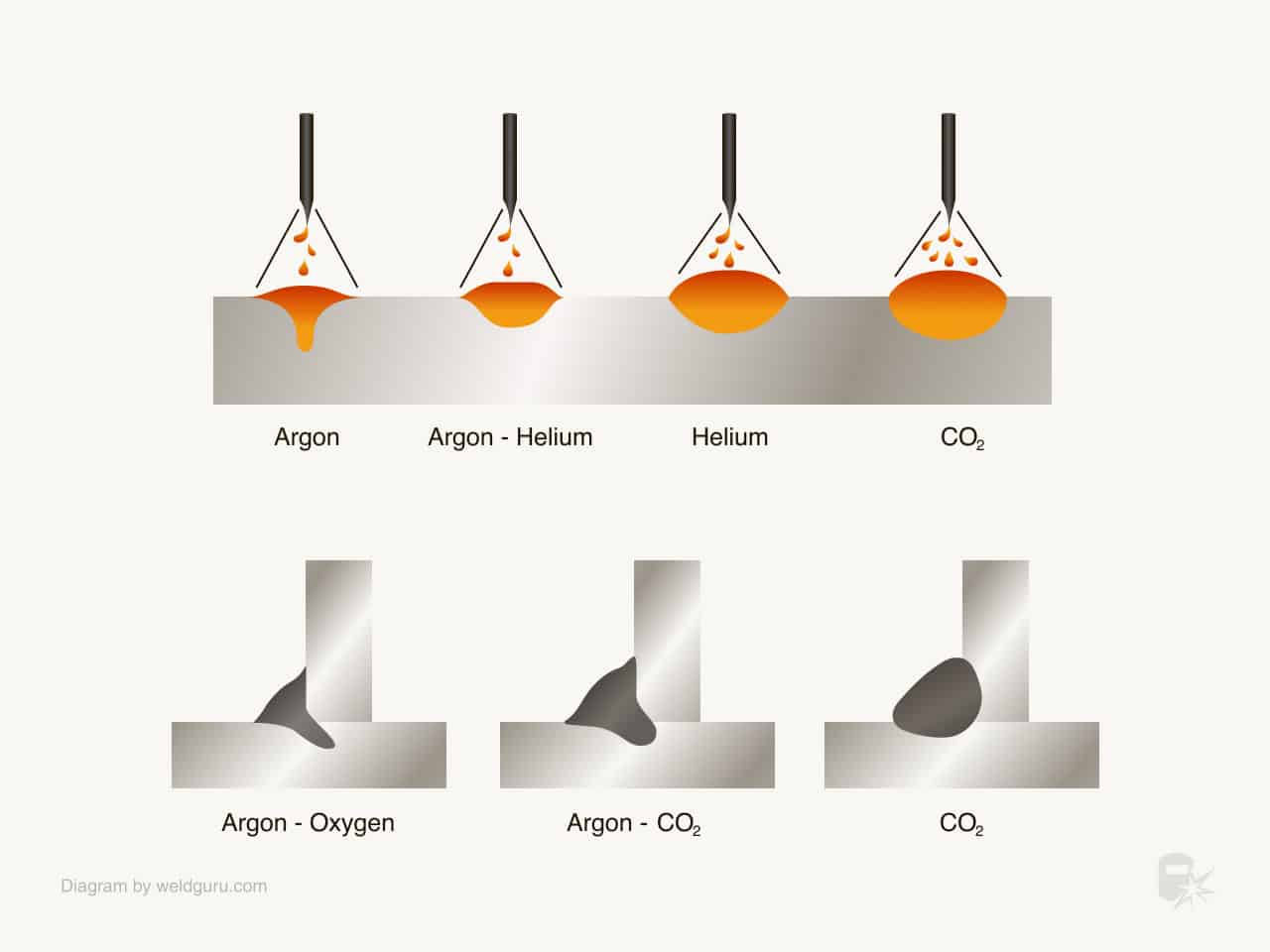
- CO2: Cheapest and most common for steel. Gives deep, narrow welds but more spatter.
- Argon/CO2 Mix: Reduces spatter, makes the arc more stable, and improves weld look.
- Argon/CO2/O2 Mix: Small amounts of oxygen can make the arc softer and the bead wider. Used for special steel types.
| Gas Type | Common Use | Effect on Weld |
|---|---|---|
| 100% Argon | Aluminum, Copper | Smooth, clean, low spatter |
| Argon/Helium | Thick non-ferrous | Hotter, deeper welds |
| CO2 | Steel | Deep, narrow, more spatter |
| Argon/CO2 | Steel | Smoother, less spatter |
| Argon/CO2/O2 | High-strength steel | Wide, soft arc |
The right gas mix can save time and improve weld quality. Always check the gas type before starting a new job.
Safety In Mig And Mag Welding
Both processes use high electric current, hot metal, and bright arcs. Safety is very important for all welders.
Main Safety Risks
- Electric Shock: Touching live parts can cause injury.
- Burns: The arc and hot metal can burn skin.
- Eye Damage: The bright light can harm the eyes (arc eye).
- Fumes: Welding fumes can be harmful if you breathe them in.
- Fire Risk: Sparks can ignite nearby objects.
Key Safety Tips
- Wear a welding helmet with the right shade lens.
- Use gloves, jacket, and boots made of leather or fire-resistant material.
- Work in a well-ventilated area to avoid fume build-up.
- Keep a fire extinguisher nearby.
- Check all cables and connections before starting.
A real-world tip: always check your surroundings for flammable items before welding. Sparks can travel several meters.
Common Mistakes In Mig And Mag Welding
Even experienced welders make errors. Here are some to avoid:
- Wrong Gas Selection: Using the wrong gas can cause poor welds or contamination.
- Dirty Metal: Failing to clean the metal leads to weak joints.
- Incorrect Wire Speed: Too fast or slow can make the weld bead uneven.
- Bad Technique: Holding the gun at the wrong angle or moving too fast causes problems.
- Poor Maintenance: Not checking the gun or cables can cause faults during welding.
Two insights that often go unnoticed:
- The contact tip size should match the wire size exactly. A mismatch causes feeding issues.
- Gas leaks at the regulator or hose are common. Always listen for hissing sounds before starting.
Credit: weldguru.com
Mig Vs Mag: Which Should You Choose?
The choice depends on your metal type, job size, cost, and location.
- Use MIG welding for aluminum, copper, and projects where a clean look is important. It is better for thin metals and indoor work.
- Choose MAG welding for steel structures, heavy jobs, and when cost matters. It is good for thick parts and outdoor use if you shield the area from wind.
Below is a quick comparison table to summarize the choice factors:
| Factor | MIG Welding | MAG Welding |
|---|---|---|
| Best For | Aluminum, thin metals | Steel, thick metals |
| Cost | Higher (gas cost) | Lower (CO2) |
| Weld Cleanliness | Very clean | May need grinding |
| Skill Level | Beginner-friendly | Needs more control |
| Outdoor Use | Not ideal | Possible with care |
If you only weld steel and want to save money, MAG is the better choice. If you need to weld many types of metals and want the best finish, go for MIG.
Maintenance And Troubleshooting Tips
Good maintenance keeps your welding machine and gun working well. Here are some practical steps:
- Clean the Gun Tip: Spatter can block the tip and cause wire feed problems.
- Check the Liner: Dirt in the liner can make the wire stick or slip.
- Inspect Cables: Look for burns, cuts, or loose connections.
- Check Gas Flow: Use a flow meter to set the right rate (usually 10-15 liters/minute).
- Replace Worn Parts: Tips, nozzles, and liners wear out over time.
If you see too much spatter, check your gas type and wire speed. If the weld is weak or porous, look for leaks or drafts blowing away the gas.
An overlooked tip: Always store gas cylinders upright and chain them to a wall for safety.
Training And Certification
Both MIG and MAG welding require skill. Many jobs in factories or shipyards need certified welders.
- Basic Training: Covers machine setup, safety, and basic welds.
- Advanced Courses: Teach how to weld in different positions, on special metals, and handle tricky joints.
- Certification: Organizations like the American Welding Society (AWS) or European Welding Federation offer tests. Certified welders often earn more and have more job choices.
For serious work, practice is key. Many welders spend years honing their skill.
Environmental Impact
Both processes use electricity and gases. MAG welding with CO2 releases more greenhouse gas than MIG. However, both methods are cleaner than older welding types like stick welding, which make more fumes and waste.
To reduce impact:
- Use gas mixes with less CO2 if possible.
- Recycle scrap metal.
- Use energy-efficient inverter machines.
For more on welding and the environment, visit the Wikipedia page on Gas Metal Arc Welding.

Credit: yeswelder.com
Frequently Asked Questions
What Is The Main Difference Between Mig And Mag Welding?
The main difference is the shielding gas. MIG welding uses inert gases like argon, which do not react with the weld. MAG welding uses active gases like CO2 or mixes, which can change the weld properties. MIG is best for aluminum and non-ferrous metals, while MAG is best for steel.
Can I Use The Same Machine For Both Mig And Mag Welding?
Yes, you can. Most modern machines can handle both MIG and MAG. You only need to switch the gas cylinder and sometimes the wire type. Always check the manual before changing gases.
Which Method Is Better For Beginners?
MIG welding is usually easier for beginners. The arc is more stable, and the process is more forgiving. The cleaner welds also make it easier to check your work. MAG welding can be harder to control, especially on thin metals.
Are Mig And Mag Welds Strong Enough For Structural Work?
Yes, both methods can make strong welds for structures if done correctly. MAG welding is often used in building frames, bridges, and cars. The key is using the right settings, clean metal, and proper technique.
Is Mig Or Mag Welding Safe For Home Workshops?
Both can be safe if you follow basic safety rules. Always wear protective gear, work in a ventilated space, and keep flammable items away. Home users should start with simple projects and read the machine manual fully before use.
Choosing between MIG and MAG welding depends on your metal, your budget, and your work style. Both methods offer great speed and strength if you use them the right way. Whether you work in a factory or a home garage, understanding the tools, gases, and techniques will help you get the best results.
Always focus on safety, keep your equipment in good shape, and keep learning new skills. This approach will give you clean, strong welds for any project.