Disclosure: This post contains affiliate links and I will be compensated if you make a purchase after clicking through my links. Learn More
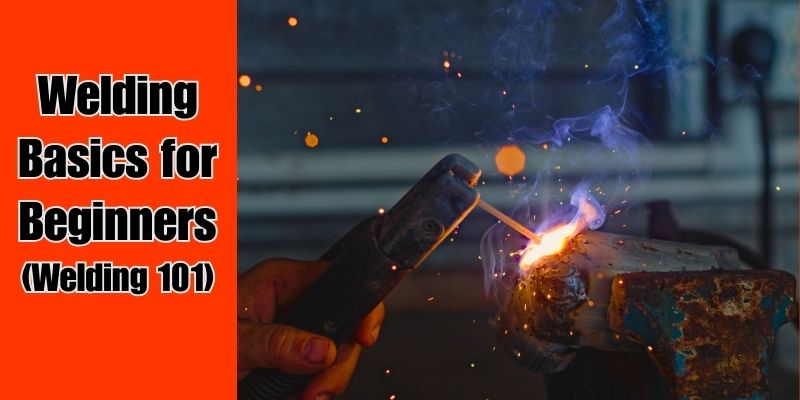
Welding joins two metal pieces by heating the metal edges until they melt and bond together. Many industries use welding every day. Builders weld steel frames for buildings. Mechanics weld vehicle parts. Pipeline workers weld long sections of pipe. Manufacturers weld machines, tools, and equipment.
A welder uses heat, pressure, or both to create a strong metal joint. In many cases the welder also adds filler metal. The filler melts and fills the gap between two pieces. After the metal cools, the parts become one solid structure.
Many people search online for simple answers about welding. Some want to learn welding basics. Some want to know how welding works. Others want to understand the different welding types before they start training.
This guide explains welding from the ground up. It covers welding basics for beginners in clear language. You will learn what welding means, how the welding process works, and how many welding types exist. The article also explains the most common welding processes used in industry.
If you are new to welding, this guide works as a full welding 101 lesson.
What Is Welding
Welding is a metal joining process. A welder heats the edges of two metal parts until the metal melts. The molten metal then cools and forms a solid joint.
Most welding processes use a heat source. Common heat sources include an electric arc, a gas flame, or a laser beam.
Three main elements exist in most welding operations.
Base metal: The base metal is the metal that the welder joins. Steel plates, aluminum sheets, and pipes are common examples.
Filler metal: The filler metal is extra metal added to the joint. The filler melts and fills the gap between two pieces.
Heat source: The heat source melts the base metal and filler metal. Electric arc welding is the most common heat method.
A welder also controls the weld pool. The weld pool is the small area of molten metal created during welding. After the pool cools, it forms the weld bead.
Many products depend on welding. Bridges use welded steel beams. Cars use welded frames. Ships use welded plates. Factories use welded equipment and structures.
Without welding, modern construction and manufacturing would be very difficult.
Brief History of Welding
Welding did not start with modern machines. Early metal workers used a simple method called forge welding.
Blacksmiths heated iron in a furnace. They placed the hot metal pieces together and hammered them until the metals fused. This method appeared thousands of years ago.
Modern welding began in the nineteenth century. Scientists discovered that electricity could create an electric arc. The arc produces very high heat. This heat can melt metal quickly.
During the early twentieth century, engineers developed several welding methods. Arc welding machines became common in factories and shipyards.
Later, new processes improved welding speed and precision. Gas Metal Arc Welding, often called MIG welding, appeared in the 1940s. Gas Tungsten Arc Welding, known as TIG welding, followed soon after.
Today welding technology continues to grow. Factories now use robotic welding systems. These machines produce consistent welds in large production lines.
How Welding Works
The welding process follows a simple idea. Heat melts the metal edges. The molten metal joins together and then cools into a strong bond.
Most welding jobs follow a clear sequence.
First, the welder prepares the metal surfaces. Dirt, rust, oil, or paint must be removed. Clean metal creates stronger welds.
Second, the welder positions the metal pieces. The parts must align properly so the joint forms correctly.
Third, the welder creates heat. In arc welding, electricity passes through an electrode and forms an arc. The arc temperature can reach more than 6000 degrees Celsius.
This heat melts the metal edges and creates a weld pool.
Fourth, the welder may add filler metal. The filler flows into the molten pool and fills the joint.
Fifth, the molten metal cools. As it cools, the metal solidifies and forms a weld bead.
Many welding systems also use shielding gas. Shielding gas protects the molten metal from oxygen and moisture in the air. If air reaches the weld pool, defects can form.
Different welding processes use different heat sources. The most common heat sources include:
- Electric arc
- Gas flame
- Laser beam
- Electrical resistance
Each method suits certain metals and applications.
How Many Types of Welding Are There
Many welding processes exist in industry. Some sources list more than thirty different welding methods. These methods fall into two main groups.
Fusion Welding
Fusion welding melts the base metal. The molten metal then cools and forms the joint.
Most common welding methods belong to this group.
Examples include:
- Arc welding
- Gas welding
- Laser beam welding
- Electron beam welding
Fusion welding often uses filler metal to strengthen the joint.
Pressure Welding
Pressure welding joins metal through force. Heat may assist the process, but the metal does not always melt completely.
Examples include:
- Resistance welding
- Friction welding
- Ultrasonic welding
Factories often use pressure welding in automated production lines.
For beginners, four welding processes appear most often in training programs. These methods also appear in workshops and fabrication shops across the world.
They include MIG welding, TIG welding, Stick welding, and Flux Core welding.
The 4 Most Common Types of Welding
Most beginner welders start with one of four welding methods. Each method uses a different tool setup and technique.
These welding processes dominate many workshops and training programs.
MIG Welding (Gas Metal Arc Welding)
MIG welding stands for Metal Inert Gas welding. The technical name is Gas Metal Arc Welding.
This process uses a welding gun that feeds a thin metal wire. The wire acts as the electrode and filler metal at the same time.
Electric current flows through the wire. This current creates an arc between the wire and the base metal. The arc produces high heat and melts the metal.
A shielding gas flows through the welding gun. This gas protects the molten metal from air contamination.
MIG welding offers several advantages.
The process is easy to learn. The wire feed system keeps the arc stable. A welder can produce long continuous welds with little interruption.
Many automotive repair shops use MIG welding for body panels and frames. Fabrication shops also use MIG welding for steel structures and metal furniture.
The process works well for thin and medium thickness metals.
Wind can disturb the shielding gas. For this reason many welders prefer indoor use for MIG welding.
TIG Welding (Gas Tungsten Arc Welding)
TIG welding stands for Tungsten Inert Gas welding. The formal name is Gas Tungsten Arc Welding.
This process uses a tungsten electrode. Tungsten has a very high melting point, so the electrode does not melt during welding.
The arc forms between the tungsten electrode and the base metal. The welder adds filler metal with a separate rod when needed.
Shielding gas protects the weld pool from air.
TIG welding gives the welder very precise control. The weld bead often looks clean and smooth.
Many welders use TIG welding for stainless steel, aluminum, and thin metal parts.
Aircraft components, food processing equipment, and stainless steel pipes often require TIG welding.
The process takes more practice. The welder must control the torch, filler rod, and foot pedal or current control at the same time.
The slower speed also means production time can increase.
Stick Welding (Shielded Metal Arc Welding)
Stick welding is one of the oldest electric welding methods still used today. The technical name is Shielded Metal Arc Welding.
This process uses a metal electrode rod. The rod has a special coating called flux.
When electric current passes through the rod, an arc forms between the rod and the base metal. The rod melts and fills the joint.
The flux coating burns during welding. It produces gas and slag that protect the weld pool from air.
Stick welding works well outdoors. Wind does not affect the process as much as gas shielded welding methods.
Construction sites often use stick welding for structural steel. Pipeline repair crews also use this process.
The equipment is simple and durable. Many beginners learn stick welding early in their training.
The weld can produce more slag and spatter compared with MIG welding. The welder must clean the slag after each weld pass.
Flux Core Welding
Flux Core welding looks similar to MIG welding. The process uses a wire electrode that feeds through a welding gun.
The difference lies inside the wire. The wire contains flux material at the center.
When the arc melts the wire, the flux produces shielding gas and protective slag. This protection allows the weld pool to stay clean.
Some flux core systems also use external shielding gas. Other versions operate without gas.
Flux Core welding provides deep weld penetration. This makes the process useful for thick steel plates and heavy fabrication.
Construction and shipbuilding industries often use flux core welding.
The process produces more smoke and slag than MIG welding. Proper ventilation is important.
Advanced Welding Processes
Many industries use advanced welding methods for precision work and large production jobs. These processes often require specialized equipment and trained operators.
Laser Beam Welding
Laser beam welding uses a concentrated laser to melt metal. The laser produces a very narrow and intense heat source. This allows the weld to remain small and precise.
Manufacturers use laser welding for automotive components, electronics, and medical devices. The process produces clean welds with minimal distortion.
Electron Beam Welding
Electron beam welding uses a stream of high speed electrons to create heat. The electrons strike the metal surface and generate extreme heat energy.
This process occurs in a vacuum chamber. The vacuum prevents air contamination and allows deep penetration welds.
Aerospace and nuclear industries often use electron beam welding for critical parts.
Submerged Arc Welding
Submerged arc welding uses an electric arc that burns under a thick layer of granular flux. The flux covers the weld area and protects the molten metal.
The process creates very strong welds and high deposition rates. Large structures such as pressure vessels, ship hulls, and heavy steel beams often use submerged arc welding.
Plasma Arc Welding
Plasma arc welding produces heat through a high temperature plasma arc. The arc forms between a tungsten electrode and the metal.
The plasma stream concentrates heat in a small area. This gives the welder precise control.
Industries use plasma arc welding for stainless steel, aerospace parts, and thin metal applications.
Resistance Welding
Resistance welding joins metals through electric current and pressure. The metal surfaces resist the electric current. This resistance produces heat.
The heat softens the metal surfaces and pressure forms the weld.
Automotive factories often use resistance welding to join sheet metal panels in car bodies.
Welding Joint Types
The strength of a weld depends greatly on the joint design. Welders prepare joints so the molten metal flows correctly and forms a solid connection.
Five basic welding joints appear in most welding work.
Butt Joint
A butt joint forms when two metal pieces meet edge to edge. The welder deposits filler metal along the seam.
This joint appears often in pipelines, pressure vessels, and structural steel work.
Lap Joint
A lap joint forms when one metal piece overlaps another. The welder fills the edge where the two surfaces meet.
Sheet metal fabrication often uses lap joints.
Tee Joint
A tee joint forms when one metal piece stands perpendicular to another. The joint looks like the letter T.
Frames, supports, and brackets often use tee joints.
Corner Joint
A corner joint forms when two metal plates meet at a right angle. The weld fills the inside corner.
Box frames and metal cabinets often use corner joints.
Edge Joint
An edge joint forms when two metal edges lie parallel and the weld runs along the edge.
This joint appears in thin metal work and sheet metal parts.
Two common weld shapes appear in many joints.
Fillet weld forms a triangular shape and appears in tee joints and lap joints.
Groove weld fills a prepared groove between two metal edges.
Welding Positions Explained (1G, 2G, 3G, 4G, 5G, 6G)
Welding position affects how the molten metal moves during welding. Gravity changes the behavior of the weld pool, so the welder must adjust technique and heat control for each position. Training programs and welding certification tests classify weld positions with numbers and letters. These codes help describe the direction of the weld and the position of the metal.
Learning different welding positions helps welders work on many types of structures such as steel frames, pipelines, pressure vessels, and machinery parts.
Flat Position (1G)
The flat position places the joint on top of the work surface. The welder deposits the weld from above and moves the electrode along the joint.
Gravity helps keep the molten metal inside the weld area. This makes the weld pool easier to control. Many beginners start with the flat position because it allows smooth electrode movement and stable weld formation.
Horizontal Position (2G)
The horizontal position places the weld line across the vertical surface of the metal. The welder moves the electrode sideways along the joint.
Gravity pulls the molten metal downward during welding. The welder must control the weld pool carefully to prevent sagging or uneven weld beads.
Vertical Position (3G)
The vertical position places the weld line in an up and down direction. The welder moves either upward or downward along the joint.
The molten metal tends to flow downward. The welder must balance heat input and travel speed to keep the weld pool stable. Vertical welding requires more skill than flat or horizontal welding.
Overhead Position (4G)
The overhead position places the weld under the metal surface. The welder performs the weld from below the joint.
Molten metal can drip downward if the heat becomes too high. The welder must keep a short arc length and control the weld pool carefully. Proper protective clothing and face protection are very important during overhead welding.
Pipe Welding Positions
Pipe welding uses additional position codes because pipes require circular welds.
The 5G position places the pipe horizontally while the welder moves around the pipe to complete the weld.
The 6G position places the pipe at an angle, usually around forty five degrees. The welder must weld through flat, horizontal, vertical, and overhead areas during the same weld.
Many professional welding certifications use the 6G position because it tests a wide range of welding skills and techniques.
Welding Rod Types and Electrodes
Welding rods play a key role in many welding processes, especially in stick welding. The welding rod carries electric current from the welding machine to the metal. The heat from the arc melts the rod and the base metal. The molten metal then forms the weld joint.
Many welding rods also contain a special coating called flux. This coating burns during welding and produces shielding gas and slag. The gas protects the molten weld pool from air contamination. The slag covers the weld bead and protects it while the metal cools.
Different welding rods work better with certain metals and welding conditions. A welder must choose the correct rod based on the metal type, thickness, and welding position. Using the right rod helps produce stronger welds and better penetration.
E6013 Welding Rod
The E6013 welding rod is one of the most common electrodes used in general welding work. It produces a stable arc and creates a smooth weld bead. The slag also removes easily after welding.
Many beginners choose this rod for practice because it is easy to control. It works well on mild steel and can handle several welding positions. Fabrication shops often use E6013 rods for light construction and repair work.
E7018 Welding Rod
The E7018 welding rod contains a low hydrogen flux coating. This design helps reduce hydrogen related cracking in the weld.
These electrodes produce strong and durable welds. Structural steel projects often require E7018 rods because they provide high strength and reliability.
Bridge construction, heavy equipment repair, and building frames commonly use this electrode type. Welders often store E7018 rods in special rod ovens to keep them dry and maintain performance.
E6011 Welding Rod
The E6011 welding rod creates deep weld penetration. It performs well on metal that may contain rust, paint, or light contamination.
Maintenance crews and field repair welders often use E6011 rods. The rod works well on thick steel and can weld through slightly dirty surfaces. This makes it useful for outdoor work and repair jobs.
How Welders Choose the Right Rod
Welders consider several factors before selecting a welding rod.
Metal type
Joint design
Welding position
Required weld strength
Metal thickness
Each electrode has specific characteristics that affect arc stability, penetration, and weld bead shape. Proper rod selection improves weld quality and helps prevent defects such as porosity or weak fusion.
Welding Equipment and Tools
Every welder uses several essential tools to perform welding safely and produce strong joints. Each tool has a specific role during the welding process. The right equipment helps control heat, guide the electrode, and keep the weld clean.
Welding Machine
The welding machine supplies the electric current that creates the welding arc. The arc forms between the electrode and the base metal. This arc generates the heat needed to melt the metal and form the weld pool.
Welding machines differ in output power, duty cycle, and supported welding process. Some machines support only one process, while others support multiple welding methods.
Common machines include MIG welding machines, TIG welding machines, stick welding machines, and multi process welding machines. Each machine works with a different electrode type and welding setup. If you want to understand the differences between these machines, you can read a detailed guide on types of welding machines.
Modern welding machines also include adjustable current settings. These controls help welders manage heat input, metal penetration, and weld bead shape.
Electrode Holder or Welding Gun
The electrode holder holds the welding rod during stick welding. It carries electric current to the electrode and allows the welder to control the arc.
MIG and flux core welding use a welding gun instead. The gun feeds wire through the nozzle automatically. This wire acts as both the electrode and the filler metal.
Ground Clamp
The ground clamp connects the welding machine to the workpiece. It completes the electrical circuit required for welding.
Without a proper ground connection, the electric arc cannot form correctly. A strong ground connection helps create a stable arc and consistent weld quality.
Shielding Gas Cylinder
Some welding processes use shielding gas to protect the molten weld pool from air. Oxygen and moisture in the air can cause defects such as porosity.
Shielding gas flows through the welding gun and surrounds the weld area during welding. Argon, carbon dioxide, and argon carbon dioxide mixtures are common gases used in MIG and TIG welding.
Additional Tools
Welders also use several supporting tools to prepare and clean metal surfaces.
Angle grinders remove rust, paint, and old welds before welding begins. Wire brushes clean the metal and improve arc contact. Chipping hammers remove slag after stick welding or flux core welding.
These tools help maintain clean metal surfaces and improve weld strength.
Welding Safety Basics
Welding produces intense heat, bright light, and metal fumes. Proper safety practices protect the welder and the surrounding work area.
A welding helmet protects the eyes from arc light. The helmet lens filters harmful ultraviolet and infrared radiation.
Welding gloves protect hands from heat and sparks. Fire resistant clothing protects the body from hot metal particles.
Good ventilation removes welding fumes from the work area. Poor ventilation can expose workers to harmful gases.
A welder should also keep flammable materials away from the welding area. Sparks can travel several meters and start fires.
Many workshops keep fire extinguishers nearby for safety.
Safe welding habits reduce injuries and create a better working environment.
Common Welding Defects
Welding defects occur when the weld metal does not form correctly. These defects weaken the joint and may cause failure.
Porosity
Porosity appears as small holes inside the weld metal. Gas becomes trapped in the molten metal during solidification.
Contaminated metal surfaces and poor shielding gas flow often cause porosity.
Cracks
Cracks form when metal shrinks during cooling. Stress inside the weld can cause small fractures.
Improper heat control or wrong filler metal can lead to cracks.
Undercut
Undercut forms as a groove along the weld edge. Excess heat melts the base metal without filling it properly.
Correct welding speed and heat control can reduce this defect.
Lack of Fusion
Lack of fusion occurs when the weld metal fails to bond with the base metal.
Low heat input or incorrect welding angle can cause this problem.
Proper technique and correct machine settings help prevent many welding defects.
Best Welding Process for Beginners
Many training schools start beginners with MIG welding.
The wire feed system keeps the arc stable and easy to control. A beginner can focus on weld movement and joint alignment.
MIG welding also produces cleaner welds with less slag compared with stick welding.
Stick welding also appears early in many training programs. The process works well outdoors and on thicker steel.
Learning both processes gives beginners a strong foundation for future welding skills.
Key Takeaways About Welding
Welding joins metals through heat and sometimes pressure. The process melts metal edges and forms a strong joint after cooling.
Many welding processes exist, but four methods appear most often in beginner training. These include MIG welding, TIG welding, stick welding, and flux core welding.
Weld quality depends on joint design, welding position, and proper electrode selection.
Safety practices protect the welder from heat, light, and fumes.
With training and practice, welding becomes a valuable skill used across construction, manufacturing, transportation, and many other industries.
FAQs About Welding
What is welding in simple terms
Welding is a process that joins two metal pieces by melting their edges and allowing the molten metal to cool into a solid joint. The welder often adds filler metal to strengthen the connection. Heat from an electric arc, gas flame, or other energy source creates the melting process.
How many types of welding exist
More than thirty welding processes exist in modern manufacturing and construction. Most beginners focus on four main types: MIG welding, TIG welding, stick welding, and flux core welding. These methods cover many common welding jobs and form the foundation of welding training.
Which welding method is easiest for beginners
Many beginners start with MIG welding. The wire feed system supplies the electrode automatically, which makes arc control easier. MIG welding also produces clean welds with less slag. This allows new welders to focus on torch movement, joint alignment, and proper heat control.
What are the four basic welding types
The four most common welding types are MIG welding, TIG welding, stick welding, and flux core welding. These processes use electric arc heat to melt metal and form a weld joint. Training schools and workshops teach these methods because they cover most common fabrication and repair tasks.
What is the 6G welding position
The 6G welding position is a pipe welding position used in certification tests. The pipe sits at an angle, usually around forty five degrees. The welder must weld around the pipe in several directions. This position tests skill in flat, vertical, and overhead welding.
Which welding rod is good for beginners
Many beginners start with the E6013 welding rod. This electrode produces a stable arc and smooth weld bead. It works well on mild steel and handles different welding positions. The rod also starts easily and creates less spatter compared with some other electrodes.